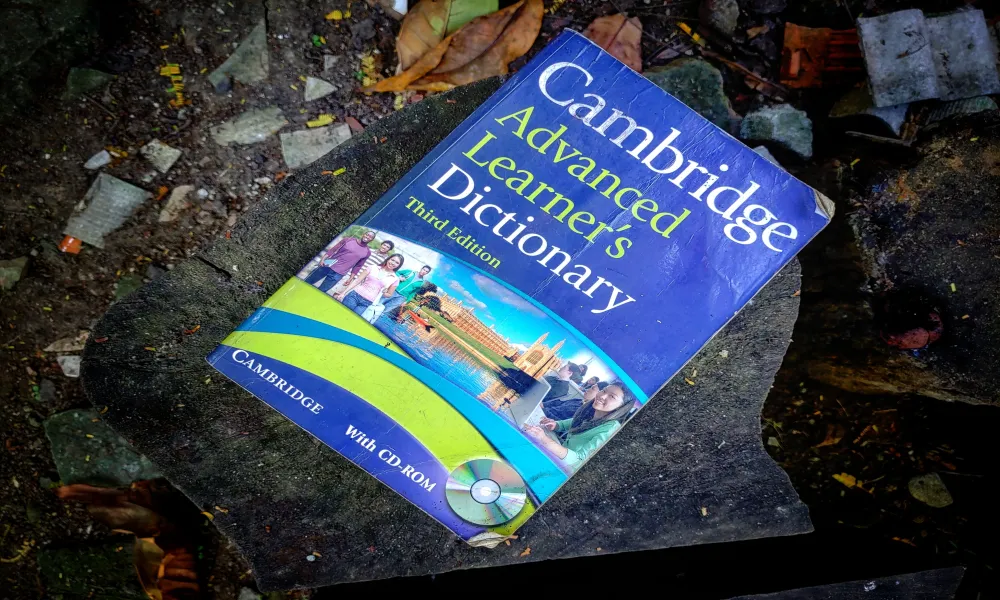

The Cambridge Dictionary has selected "human" as its Word of the Year for 2026, citing growing questions about the boundaries between people and machines as artificial intelligence becomes increasingly embedded in everyday life.
The dictionary defines "human" as possessing the qualities, flaws and emotions that belong to people, as distinct from gods, animals or machines.
A response to the rise of AI
According to Cambridge lexicographers, the choice captures the spirit of a year dominated by discussions about artificial intelligence and its impact on work, creativity and society.
Lexicographer Francesca Woodward said the word reflects growing public interest in what it means to be human at a time when AI is becoming more capable and concerns are increasing that some jobs could be replaced by automated systems.
The dictionary's editors have also noted a rise in expressions such as "human-made" and "human author", highlighting a growing desire to distinguish work created by people from content generated by AI.
What makes humans different?
Tom McClelland, a philosopher of science at the University of Cambridge, said advances in AI are forcing society to re-examine fundamental questions about human identity.
"We are trying to understand the difference between a human mind and an artificial mind, between living beings like us and the artificial beings we are creating," he said.
Questions surrounding consciousness, creativity and empathy are increasingly central to that debate.
Other terms under consideration
Among the other contenders for Word of the Year was "agent", referring to AI systems capable of performing complex tasks and making decisions with limited human intervention.
The dictionary is also considering adding:
- FOBO (fear of becoming obsolete), describing anxiety about being replaced at work by AI.
- Dusking, a term referring to the practice of watching the sunset as a way to relax and unwind.
The selection of "human" underscores how discussions about artificial intelligence are increasingly shaping language as well as public debate.
Source: AFP