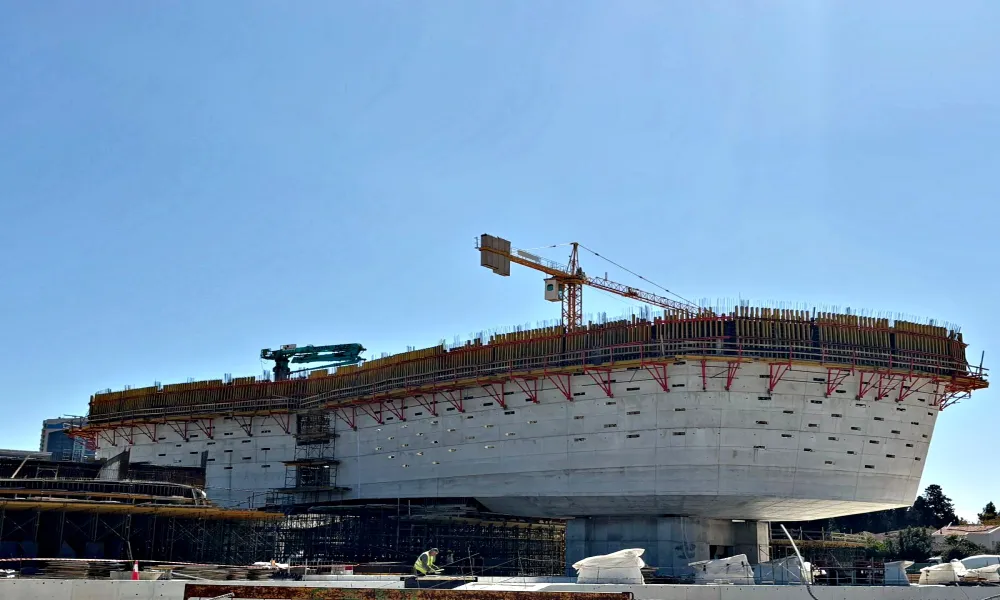

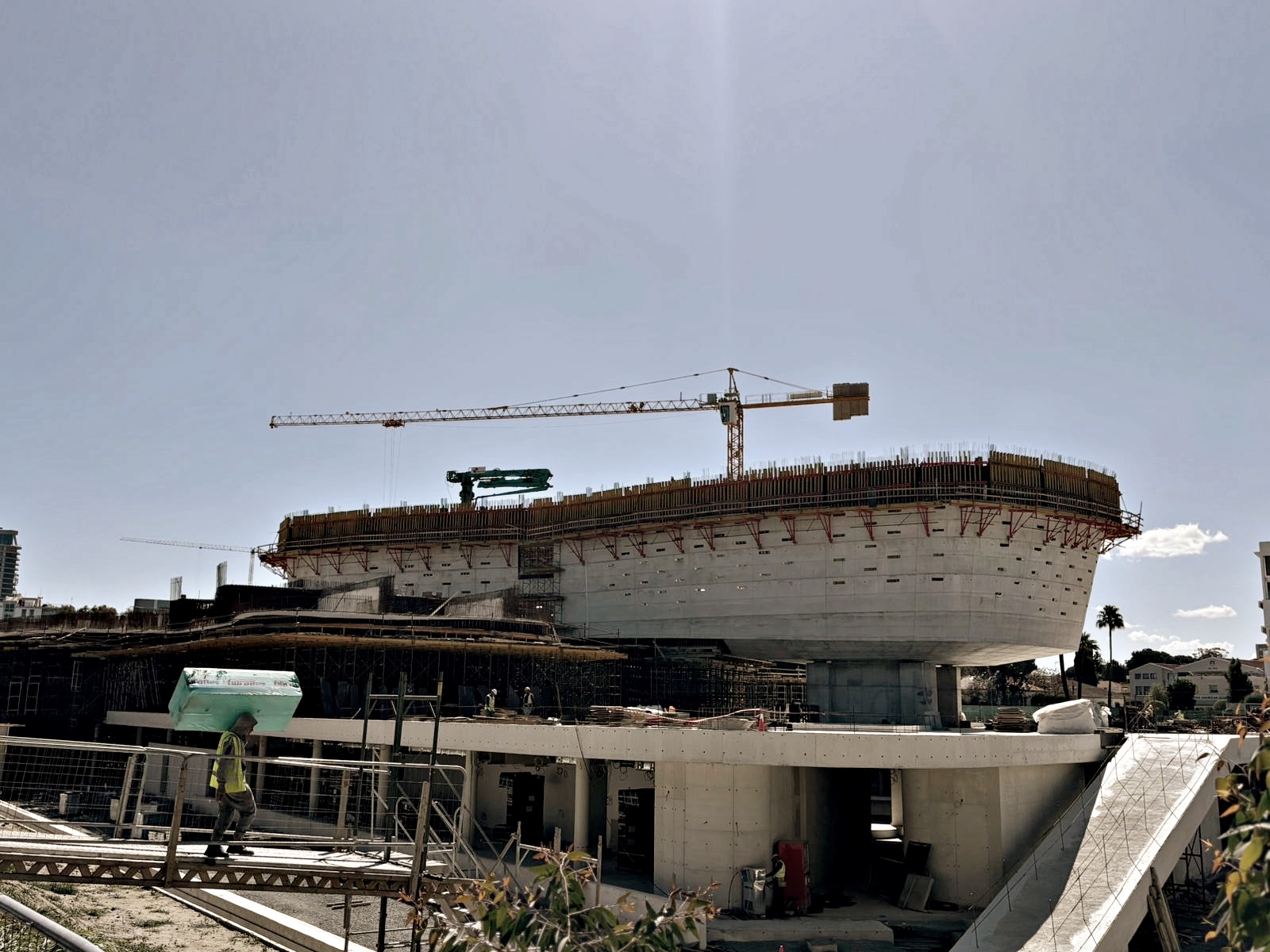
One of Nicosia’s most emblematic ongoing projects – the new Cyprus Archaeological Museum – is now beginning to reveal its form. The elevated structural volumes that will house the permanent exhibition are already visible, gradually transforming the surrounding area and hinting at a building with a strong architectural identity, set to become a new point of reference and part of the city’s evolving historical landscape.
Behind the visible progress on site lies a highly complex undertaking with increased technical demands and significant challenges that are affecting the pace of construction and creating uncertainty around the final timeline. In simple terms, the contractor may deliver the project as agreed—barring unforeseen circumstances – but the procedures required by the Department of Antiquities, including the placement of exhibits, may take more than 18 months. If all goes well, the museum may not be ready for the public before 2029.
High complexity
Construction of the new museum is far from a typical building process. It is a project with a distinctive architectural character that requires specialised materials and exceptional precision in execution. The extensive use of exposed coloured concrete, while a contemporary design choice, relies heavily on manual craftsmanship and meticulous attention to detail. As the Public Works Department told Politis, it is impossible to isolate one element as the project’s most difficult aspect; the entire structure is characterised by complexity. The architectural form, specialised materials and unique construction details make the project demanding at every stage.
Where the work stands
Progress is most evident in the basements and superstructure. In the second basement, the structural frame, masonry and nearly all electromechanical installations have been completed, with finishing works at an advanced stage. The first basement’s main structure is also complete, masonry is nearly finished, and electromechanical installations are proceeding alongside flooring and interior finishes. Regarding the project’s current status, the Public Works Department said the middle building of the superstructure is expected to be completed in the coming months, paving the way for interior works by specialised crews. Elsewhere, complex construction operations are underway, including curved slabs and double‑curvature walls. External infrastructure is also well advanced, with key components such as the pumping station, chiller and generator areas and the EAC substation already completed.
Delays
Despite significant progress, delays remain a major concern. The contractor has submitted claims for extensive extensions – reportedly up to 500 days. Sources told the newspaper that while some claims may be justified, others appear excessive. So far, four extensions have been approved, totalling 96 calendar days, without financial compensation. The Public Works Department confirmed that approved extensions relate to strikes, unforeseen subsurface conditions and weather issues, and that additional contractor claims are currently under review.
Construction completion
Based on approved extensions to date, the new completion date for construction works is 13 October 2026. The Public Works Department confirmed the revised deadline, noting that it may change further depending on pending claims. If the contractor fails to deliver the project by the final contractual deadline, a penalty of €5,000 per day of delay will be imposed.
Museum opening timeline
Completion of construction does not mean the museum will open immediately. After handover, approximately 18 months will be required for the transfer and installation of exhibits and for museographic arrangements. The Public Works Department noted that this phase falls under the remit of the Department of Antiquities and is expected to take around 18 months after construction ends. The original schedule envisioned a five‑year timeline and delivery in 2028, but current conditions have already pushed this back.
Costs remain stable
Despite delays and challenges, the project’s contract value remains unchanged. The cost stands at €121 million. The Public Works Department clarified that the contract includes a contingency provision for unforeseen expenses, used when needed without altering the total contract amount. The overall project investment, including related works, reaches roughly €144 million.
One major challenge during construction was related to unexpected underground findings. During the first months of excavation, scattered deep concrete masses resembling columns were discovered – features not detected in prior geological surveys. Managing such unforeseen conditions required additional time and design adjustments.
A new landmark for Nicosia
The new Cyprus Archaeological Museum is expected to become a major landmark for Nicosia. Covering 30,000 square metres on a 40,000‑square‑metre plot directly opposite the Municipal Garden and the House of Representatives, the building will house exhibition halls, conservation laboratories, antiquities storage, educational facilities, an auditorium, a library and dining areas. Special emphasis is also placed on the surrounding outdoor spaces, where plans include a public plaza with water features – enhancing the renewed urban landscape in the capital, which has recently been transformed by projects such as the old GSP redevelopment, Eleftheria Square, Makarios Avenue and other key upgrades that promote sustainable urban mobility.