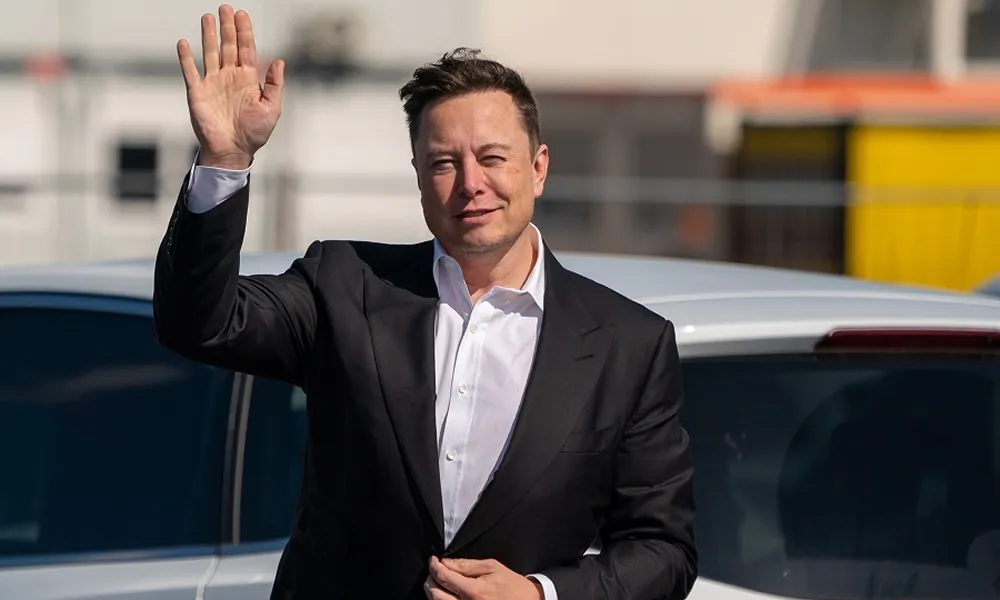

In China, Elon Musk is both an object of admiration and, at times, of resentment.
The Tesla chief is seen on the one hand as a visionary, and on the other has come under criticism from Chinese regulators and the public over what are described as clumsy responses to customer complaints.
In addition, the dominance of SpaceX and its satellite system, Starlink, has provoked anger within the People’s Liberation Army.
As the gap narrows between Tesla and its Chinese competitors in the electric vehicle sector, Musk risks losing both prestige and influence in the country.
Musk is currently among a group of more than a dozen chief executives and senior business figures accompanying US President Donald Trump to Beijing for a summit with Chinese President Xi Jinping. The delegation also includes Apple CEO Tim Cook and Nvidia chief Jensen Huang. It is made up largely of executives seeking to resolve outstanding issues with Beijing, and the world’s richest man is well acquainted with the ups and downs of doing business in China.
Speaking to journalists on Thursday as he left the Great Hall of the People following a welcoming ceremony – where he stood behind Trump’s cabinet alongside 13 other CEOs – Musk said he hoped to achieve ‘many good things’ in China.
While Tesla is coming under increasing pressure from local electric vehicle manufacturers on both technology and pricing, the company – and Musk himself – continue to wield influence in the country.
Musk-Beijing alignment
That is partly because Musk’s interests align with Beijing’s priorities, said Kyle Chan, a researcher on Chinese technology at the Brookings Institution.
‘When you look at Beijing’s technological priorities, many of them align almost perfectly with those of Elon Musk,’ Chan said, citing electric vehicles, autonomous driving, artificial intelligence, humanoid robots, brain-computer interfaces and satellites.
Tesla’s autonomous driving technology is still regarded as the industry benchmark in China, Chan added.
In 2018, Tesla became the first foreign carmaker allowed to set up an automotive manufacturing operation in China without a local partner.
Last year, the company sold around 626,000 vehicles in China, making Tesla the country’s fifth-largest automaker in terms of electric and plug-in hybrid sales, according to the China Passenger Car Association, the main analyst body for the Chinese auto market.
China accounted for roughly one fifth of Tesla’s revenue last year, according to company figures.
Inspiration
Tesla’s focus on battery performance and software-driven car design has been ‘one of the biggest inspirations for many Chinese car manufacturers’, said Felipe Munoz, a veteran automotive industry analyst.
During the pandemic, as traditional automakers struggled with lockdowns and semiconductor shortages, Chinese companies made a concerted effort to study Tesla vehicles and develop their own versions, Munoz said.
However, China’s military and diplomatic establishment have targeted other parts of Musk’s business empire. SpaceX’s near-monopoly in low-Earth orbit satellites providing cheaper and more reliable communications – and its role in the ongoing war between Russia and Ukraine – has alarmed Beijing and pushed it to develop domestic alternatives.
‘Global idol’
Although Musk’s social media platform X is banned in China, he has 2.3 million followers on the Chinese platform Weibo. During previous visits, local social media users have described him as a ‘pioneer’, ‘Brother Ma’ and a ‘global idol’.
Even Musk’s mother has achieved a degree of celebrity status in China.
This week’s visit comes as Musk seeks to purchase $2.9bn worth of equipment from Chinese suppliers to manufacture solar panels, Reuters reported in March. That effort could now face complications, as China considers restricting exports of its most advanced technologies to the United States.
Tesla is also seeking regulatory approval to expand the use of its full self-driving system.
Musk has navigated China carefully, as the world’s largest car market and its vast supply chains remain essential to supporting his empire in electric vehicles, solar energy and space technology.
In 2021, Tesla was forced to apologise to Chinese consumers after failing to respond promptly to a customer complaint. The move followed an incident in which a disgruntled customer climbed onto a Tesla vehicle at the Shanghai auto show to protest the company’s handling of brake malfunction claims. The episode went viral on Chinese social media and triggered criticism from state media.
That same year, Tesla vehicles were banned from entering military facilities over security concerns related to onboard cameras. The ban was lifted only after Musk visited China in 2024 and an automotive industry association approved the vehicles’ compliance with data regulations.
In the long term, the biggest threat to Musk’s popularity in China may come from the continued rise of the country’s domestic auto industry.
‘As Chinese companies catch up with or even surpass Musk’s technological empire, his standing in China may begin to fade,’ said Chang Yan, founder of Supercharged, a popular Weibo blog focused on electric vehicles.
‘But he will likely remain an icon in China’s tech industry for what he has achieved,’ he added.
Source: AMNA