
A few weeks before the opening night of the 24th Cyprus Film Days International Festival, the conversation unfolds across two time zones. On one side of the screen, New York. On the other, Nicosia. Creative directors Petros Charalambous and Argyro Nicolaou connect via Zoom to speak about the thinking behind this year’s edition.
With the opening ceremony approaching at Rialto Theatre on 17 April, the discussion turns not to introducing the festival itself, which already has a devoted audience, but to something deeper: the creative process behind the programme, the support of Cypriot cinema, and the role of festivals in a world shaped by uncertainty and rapid change.
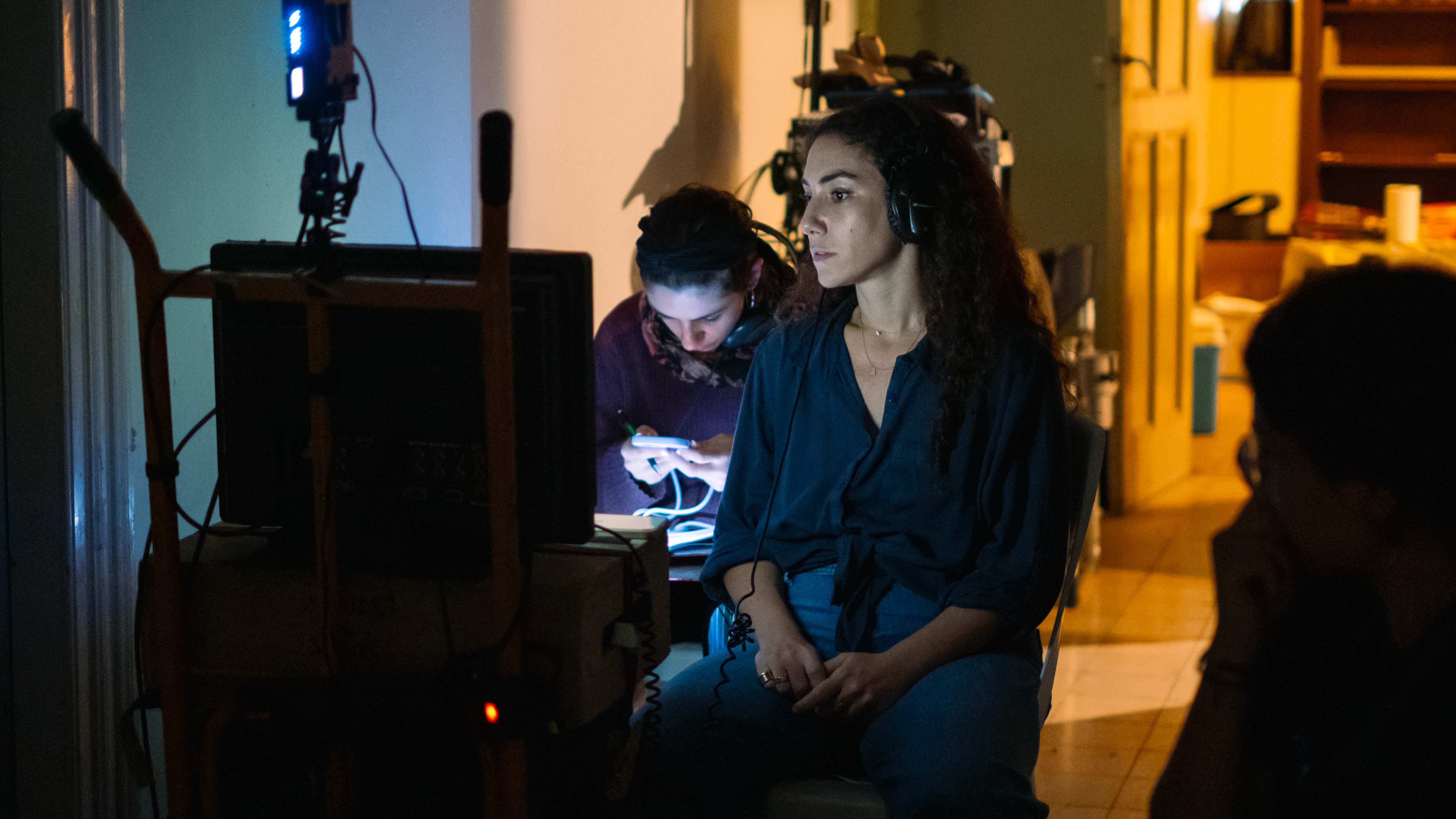
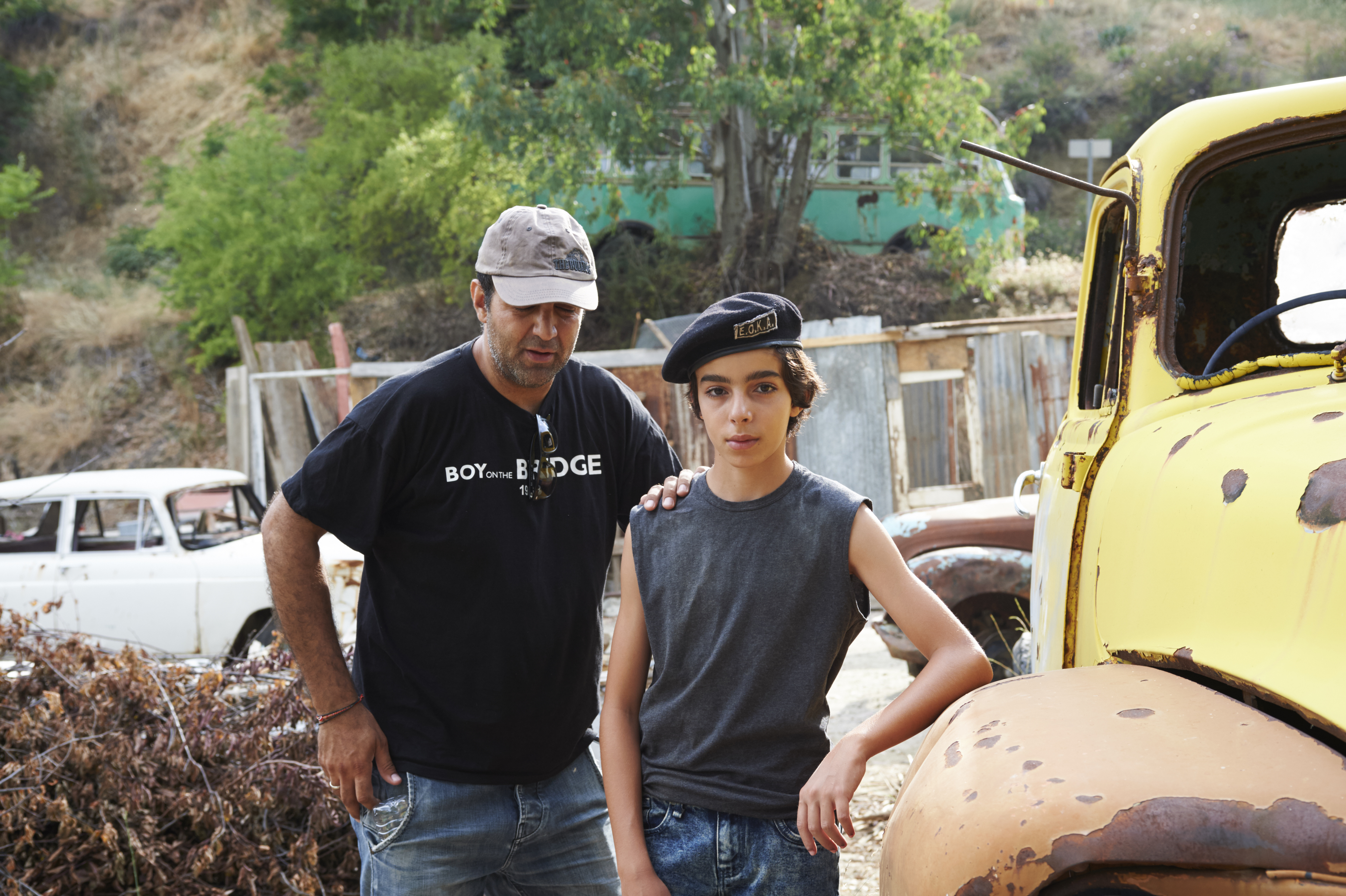
Argyro Nicolaou during the filming of her short film Athalassa in 2023.
Photo Credits: Tony Josephides
The concept behind the 2026 edition
Each edition of Cyprus Film Days carries a distinct curatorial identity. What is the central concept or thematic thread guiding the 2026 programme?
Argyro Nicolaou: We approached the curation of this year’s festival fully aware that the state of the world, and our region particularly, has made people feel hopeless, fearful and unmotivated. We asked ourselves: what is cinema’s role in a world that serves grim news every day?
Ultimately, any art form, and cinema in particular, is an affirmation of life. Both because the creative act is by definition hopeful and because being exposed to the multiple facets of other lives on screen is empowering. So this year we are focusing on cinema’s connection to life.
What is new this year
What distinguishes the 2026 edition from previous years? Are there new sections, initiatives or collaborations that audiences and industry professionals should look out for?
Petros Charalambous: This year’s edition is particularly dynamic because it deepens what Cyprus Film Days has been building over time: a dialogue between local voices and global cinema.
One of the highlights is an exceptionally strong Cypriot competition programme, arguably one of the most diverse and confident we have seen, featuring films by four Cypriot directors, in a year of unprecedented success for Cypriot cinema. It is a programme that reflects a maturing national cinema that is outward-looking while remaining deeply rooted.
In addition to Global Images, our International Competition section, and Viewfinder, the non-competition section that features some of the most critically acclaimed films from the international festival circuit, this year’s edition also includes two special programmes. Cinemas of Dissent is dedicated to cinema as a form of resistance and activism, with films spanning from the 1970s to the present day, while the special section Common Ground showcases films that explore social inclusivity and diversity.
It is worth noting that for the first time in our festival’s history, more than half of the competing films are directed by women. This year also marks a record number of Cypriot co-productions in the programme, with five international productions featuring Cypriot professionals among their key contributors.
We would also like to draw attention to the Children and Youth section of the festival, under the creative direction of Athena Xenidou, which features a rich programme of films and workshops aimed primarily at children and young people under 18.
The films of this year’s programme
What kinds of films will audiences experience this year? Are there particular trends, storytelling approaches or geographical perspectives that stand out in the selection?
AN: This year’s programme is as diverse and rich as ever. We have films from Jordan, Palestine, Germany, Egypt, Iran, Bulgaria, Spain, Croatia, Greece, Italy, Israel, Czechia, Lebanon, France and of course Cyprus.
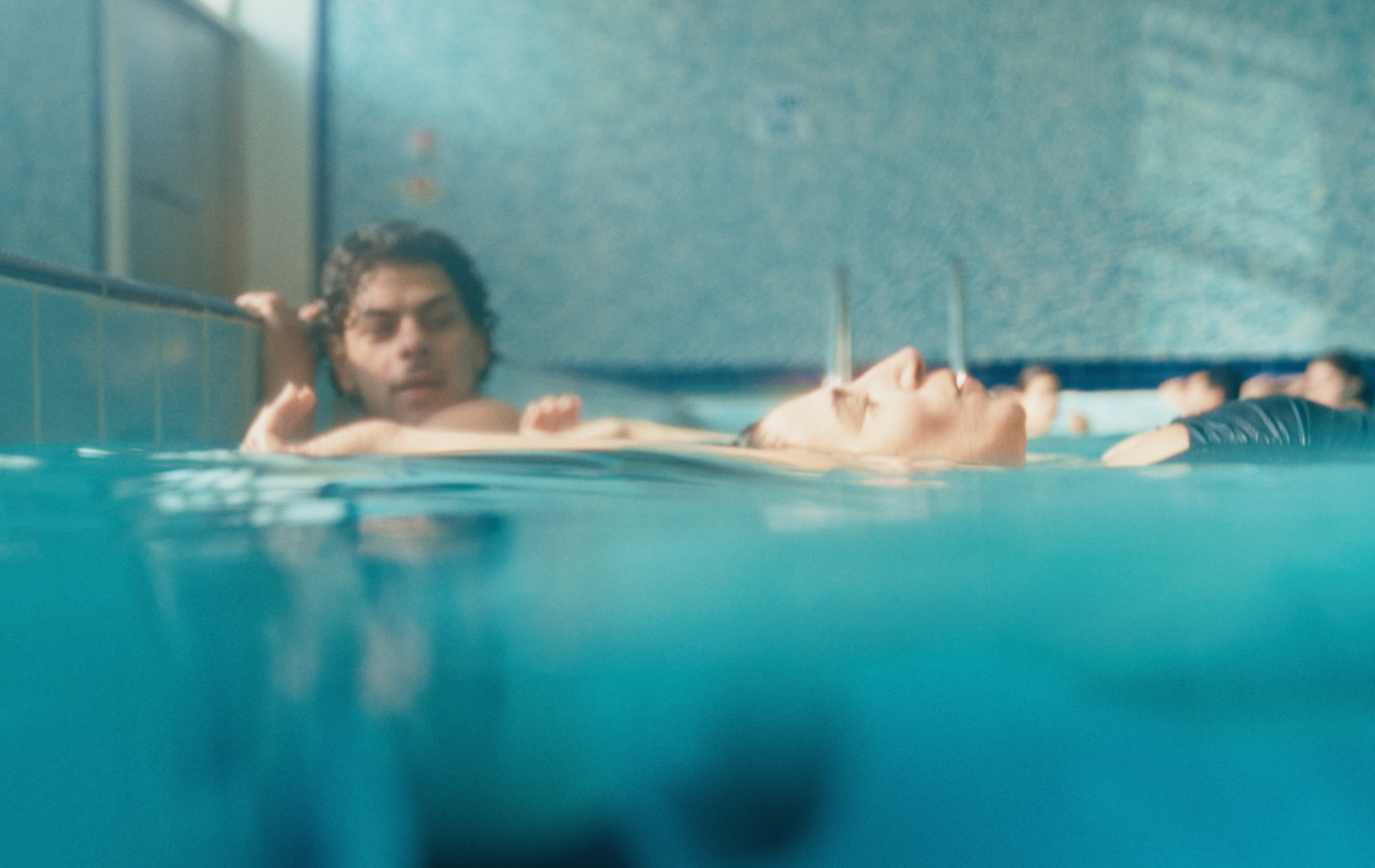
Rialto Theatre 22/04, 20:00 | Zena Palace 23/4, 20:00
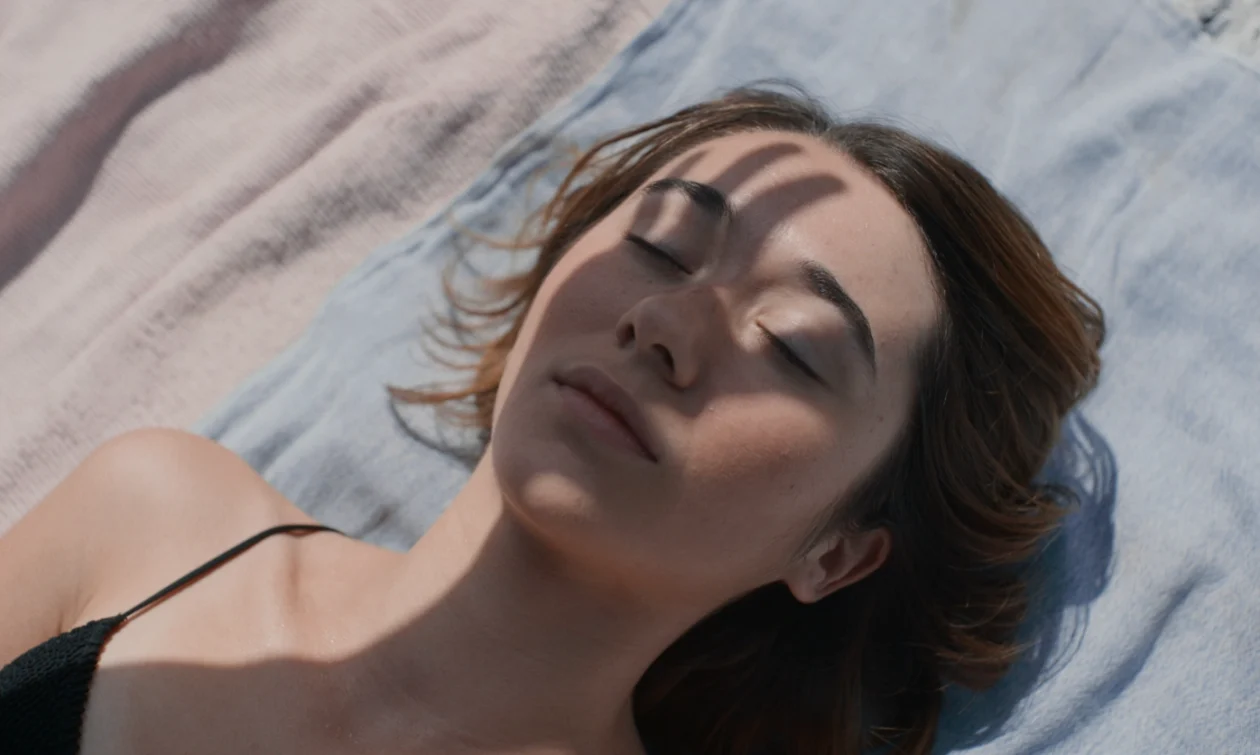
Rialto Theatre 21/04, 20:00 | Zena Palace 22/04, 20:00
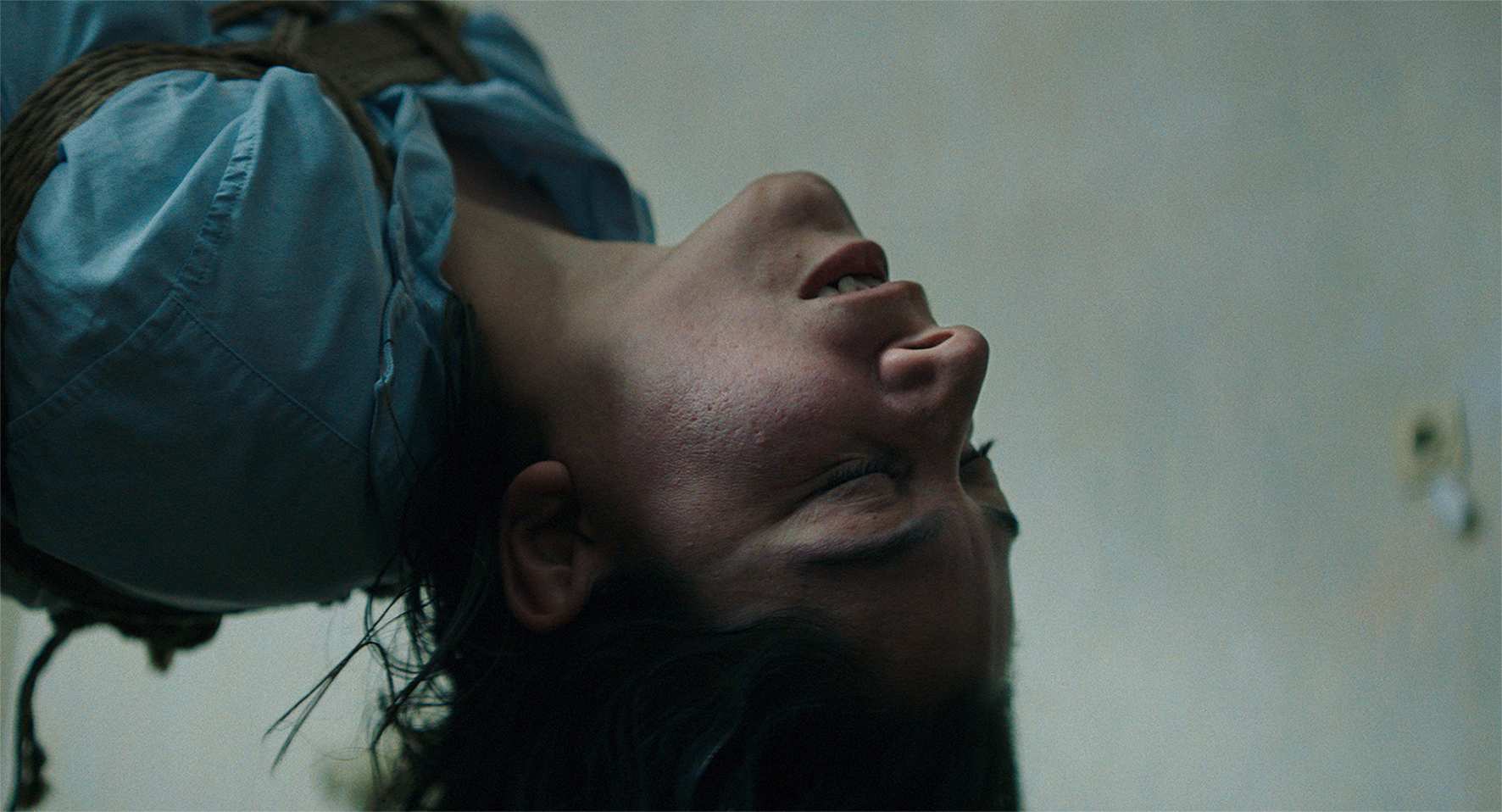
Rialto Theatre 23/04, 20:00 | Zena Palace 24/04, 22:00
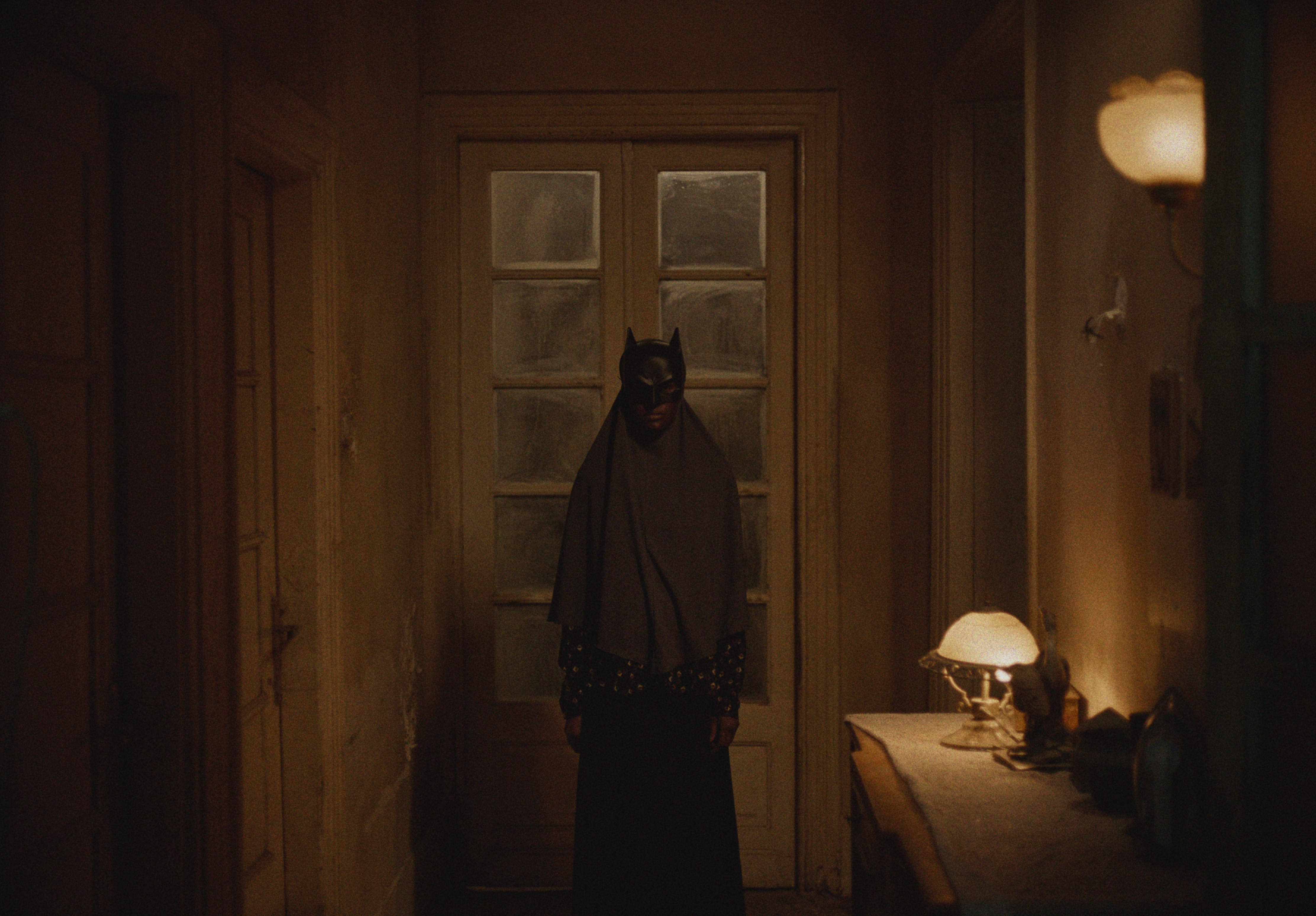
Rialto Theatre 21/04, 20:00 | Zena Palace 22/04, 20:00
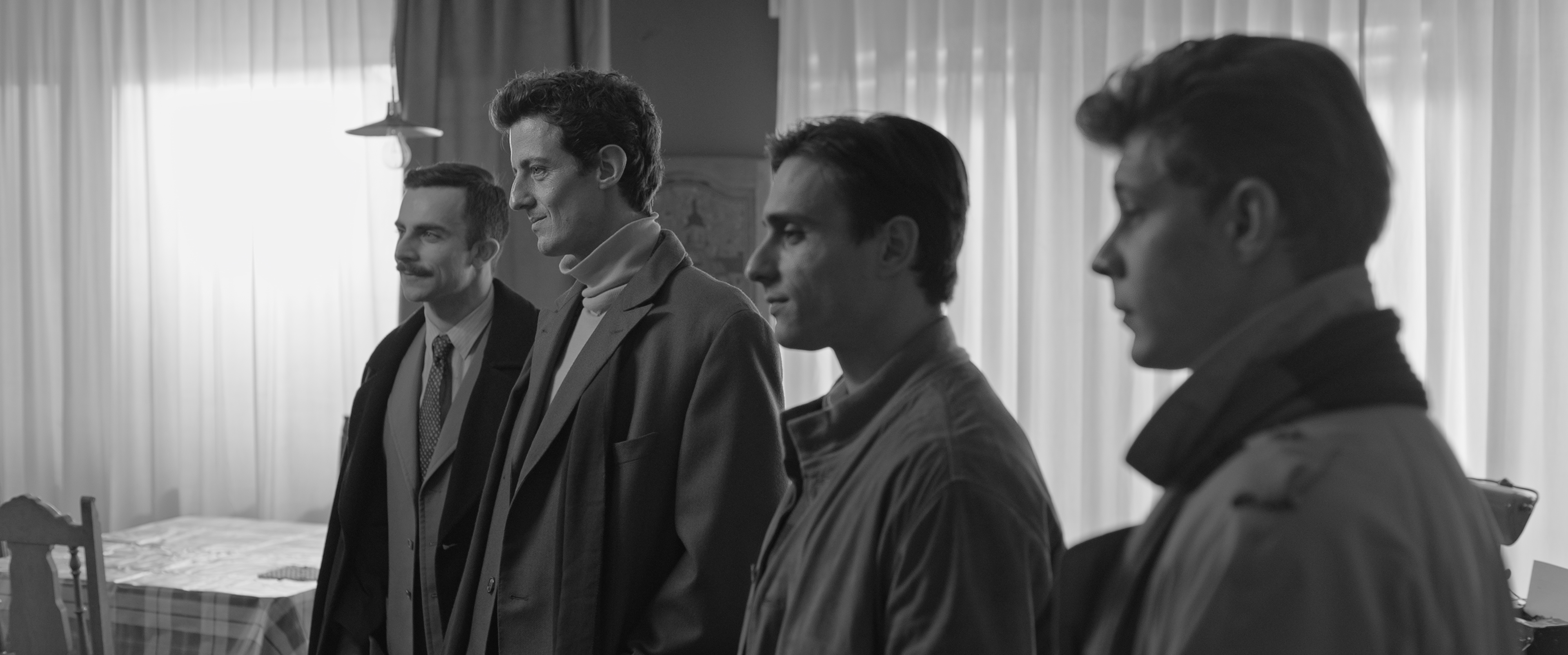
Rialto Theatre 19/04, 18:00 | Zena Palace 23/04, 22:00
From the moodier, poetic directorial vision of the Cannes Film Festival winner Mascha Schilinski’s Sound of Falling, the intergenerational historical drama of Palestinian resistance in All That’s Left of You, and the frenetic energy of Nadav Lapid’s scathing critique of his home society Yes!, to bittersweet family dramas, contemporary thrillers and historical horror films, this edition has something for everyone.
We have noticed that filmmakers are choosing to grapple with the most pressing social issues of our time, including migration, intergenerational memory, histories of conflict and trauma. At the same time, there are intimate stories that are all the more touching for their immediacy: a young man confronting a cancer diagnosis, a mother coming to terms with her son’s mental illness, the unbearable grief of losing a family member. Stories that connect with the whole range of life’s challenges.
Cinema and the present moment
We are living in a rapidly shifting political, technological and cultural environment. How does contemporary cinema reflect or respond to this moment?
PC: Cinema today is navigating a world defined by instability, acceleration and fragmentation. What we are seeing is a shift away from clear-cut genre distinctions and formulaic narratives towards more ambiguous and ambitious forms, films that resist easy categorisation.
Many filmmakers are responding to the present moment not by explaining it, but by creating spaces of reflection and emotional truth. Themes such as displacement, war, identity and ecological anxiety recur often in subtle, poetic ways but also in overtly political ones.
There is also a renewed interest in intimacy and subjectivity, a cinematic language that privileges personal experience as a way of understanding larger systems. In that sense, cinema becomes less about answers and more about attention, presence, statement and perspective.
The role of festivals today
In a landscape dominated by streaming platforms and constant digital content, what role do film festivals still play in shaping cinematic culture?
AN: Festivals are places where people come together. That is something streaming services and digital content, so intensely focused on our personal devices, can never replicate.
A festival should be a meeting point. A place for discussion, for fiery exchanges of ideas, for hanging out, for partying, for learning new things and meeting new people. This is what keeps festivals alive. Our inextinguishable need to be with people.
Workshops and industry development
Cyprus Film Days has consistently invested in workshops, masterclasses and professional training. Why is this professional development so important for the festival?
PC: For us, offering opportunities for professional development and knowledge sharing is not just a parallel activity. It is at the core of the festival’s identity.
A festival should not only present finished works but also participate in the making of future cinema. Through workshops, masterclasses and mentoring programmes we create spaces where emerging filmmakers can test ideas, receive feedback and build meaningful professional relationships.
This year we have four workshops on offer. The masterclass The Rewriting Mind, in collaboration with the Cyprus Directors Guild and led by Christina Lazaridi, focuses on practical approaches to script rewriting.
Meanwhile, One Minute Monologue, a full-day workshop featuring internationally renowned casting agents Lucinda Syson, Juliette Ménager and Alexandra Montag, organised in collaboration with Filmmakers Europe, offers professional actors the opportunity to work on monologues for the camera and present them live to an audience.
Continuing our collaboration with the CYENS Centre of Excellence, the two-day workshop AI Cinema, led by award-winning director Elettra Fiumi, will give participants the opportunity to explore the latest artificial intelligence tools. Additionally, the workshop Let’s Grade!, led by Manthos Sardis, explores the relationship between cinematography and colour grading in collaboration with Copper Island.
In a relatively small film ecosystem like Cyprus, such opportunities help bridge the gap between local talent and international networks and professionals, offering continuity beyond the festival itself.
Many of the Cypriot films that have gone on to premiere and receive distinctions at major international festivals have been nurtured through development processes, including workshops, consultations and pitching platforms, both within our festival’s ever-growing industry event Dot.on.the.Map, led by director and producer Danae Stylianou, and across other international initiatives.
Ultimately, we see our workshops and masterclasses as an investment not just in individual careers but in the long-term vitality of cinema in Cyprus and in the region.
Training the next generation
What do emerging filmmakers gain from participating in these workshops and industry programmes beyond technical skills?
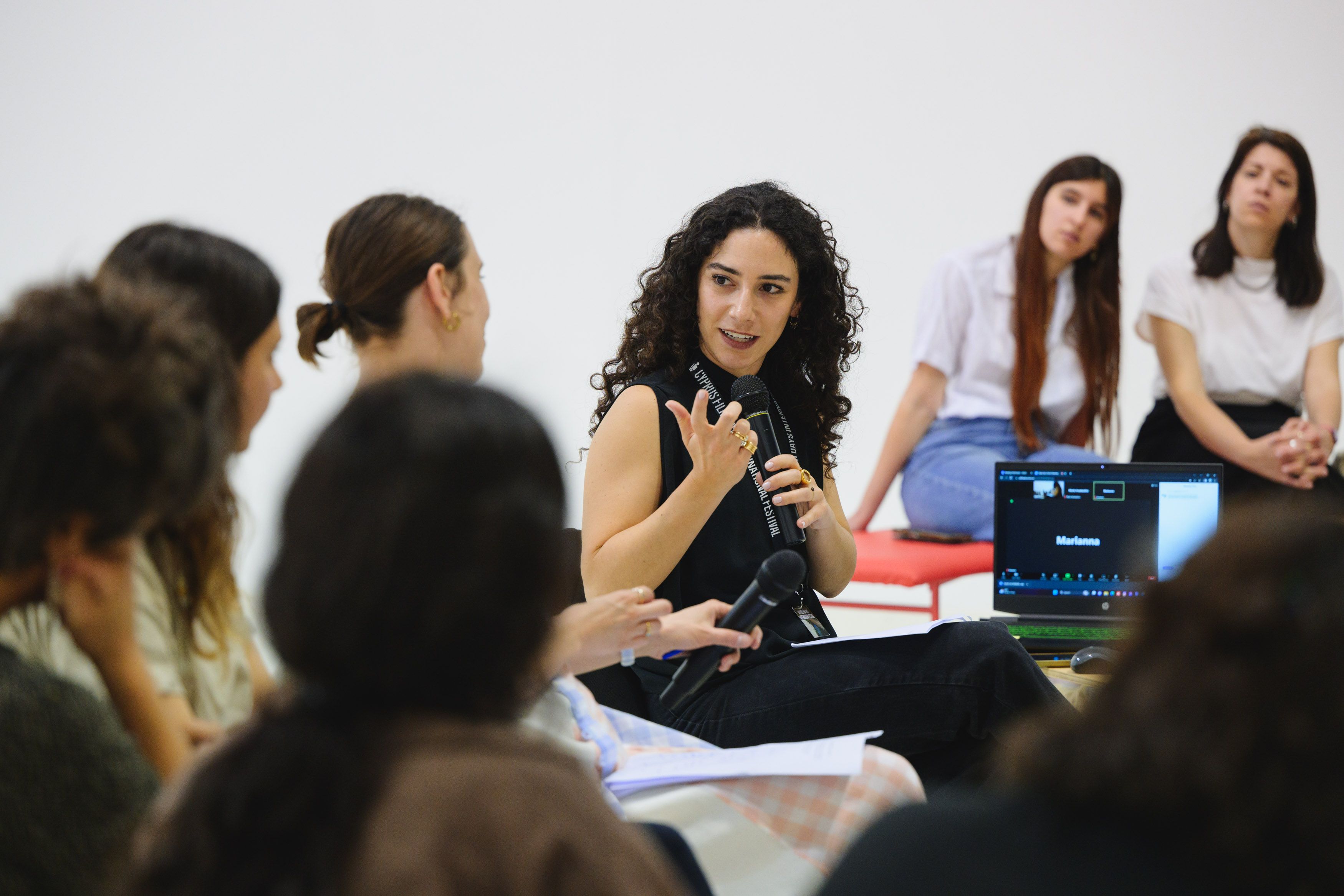
AN: Making movies is a team sport. Beyond the technical skills that filmmakers can learn at our free workshops and masterclasses, the most valuable thing they can gain is meeting other filmmakers. Connecting with fellow creatives can give rise to friendships and collaborations that are the backbone of our industry.
Staying relevant in a fast-changing industry
Cinema is evolving quickly, particularly with the rise of artificial intelligence and new forms of visual storytelling. How can filmmakers and cultural institutions remain relevant in such a rapidly transforming environment?
PC: Relevance today is less about adopting every new tool and more about maintaining a clear artistic voice within changing conditions.
Artificial intelligence and new technologies are undoubtedly transforming the landscape, but they also raise fundamental questions about authorship, creativity and meaning. Filmmakers who remain curious, adaptable and critically engaged with these tools will find ways to integrate them meaningfully into their practice.
For institutions like festivals, relevance comes from flexibility and listening, to audiences, to artists and to the broader cultural moment. It also means creating spaces where different forms of storytelling, cinematic, digital and hybrid, can coexist without hierarchy.
What matters most is not speed but depth and integrity.
Cinema as an artistic response to change
In times of technological acceleration and social uncertainty, why do you believe the arts, and cinema in particular, remain essential?
AN: Technology is moving in a direction that aims to take people outside their social environments. Unfortunately, this is how big tech makes its money, by capitalising on our attention and by drawing our attention away from society and towards our personal devices, isolating us so that every free minute can be monetised.
The arts should resist technology’s oppressive demands on our attention. And they do so when they create spaces of collectivity and social interaction.
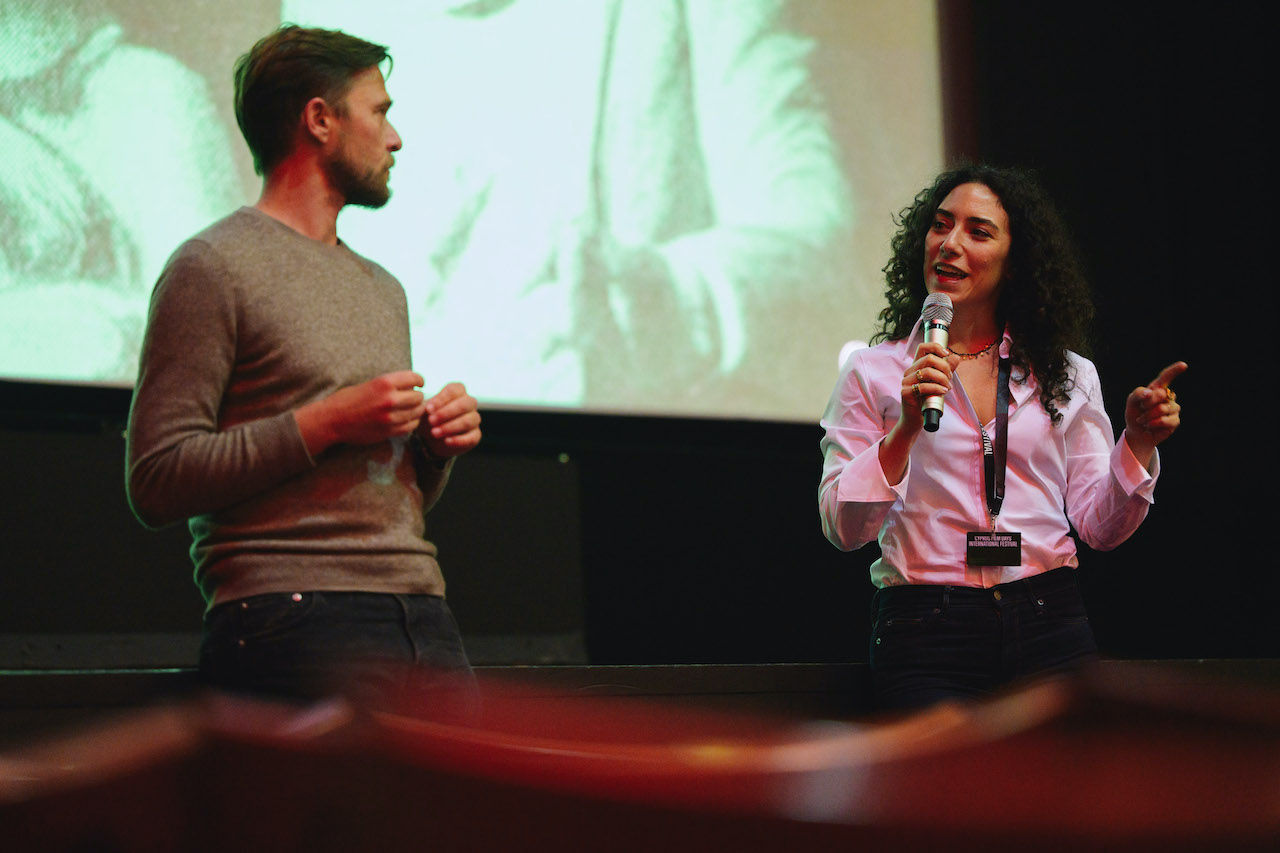
Cinema, in its traditional collective format, with its slower pacing and larger-than-life images on the screen, is central in reclaiming our attention and keeping us connected to the real world, the human, material and tangible experiences of life.
The international dimension of Cyprus Film Days
How does the festival position Cyprus within the broader international film ecosystem?
PC: Cyprus Film Days operates as a cultural bridge, geographically, politically and artistically.
We are in a unique position at the crossroads of Europe, the Middle East and North Africa, and this informs both our programming and our industry initiatives. The festival actively brings international professionals to Cyprus while also supporting local filmmakers in reaching global platforms.
Through the industry event Dot on the Map, our masterclasses, workshops and partnerships, we aim to position Cyprus not as a peripheral player but as a point of convergence, a place where stories from different regions meet, resonate and evolve.
For the audience
For someone attending Cyprus Film Days for the first time this year, what should they expect from the experience?
AN: Expect amazing films and the rare opportunity to have marathon screening sessions at two iconic venues, Rialto Theatre and Zena Palace.
Expect the opportunity to ask your most burning questions directly to the creators of the movies shown. Expect to meet lots of new people, to socialise over drinks and food, and even to dance. In other words, expect a festival experience in the fullest sense of the word.
Festival information
- €5 per screening | €30 festival pass for all screenings
- Free entry for university students with a valid student ID
- Free entry for pupils attending the children’s programme
- Free entry for disability card holders
All screenings, except the children’s programme, are suitable for audiences aged 18 and over. Films will be screened in their original language with Greek and English subtitles, while films in the Cypriot competition will also include Turkish subtitles.
The festival is organised by the Department of Contemporary Culture of the Deputy Ministry of Culture and the Rialto Theatre.
The 24th Cyprus Film Days International Festival will take place 17–25 April 2026 at the Rialto Theatre in Limassol and Zena Palace Cinema in Nicosia.