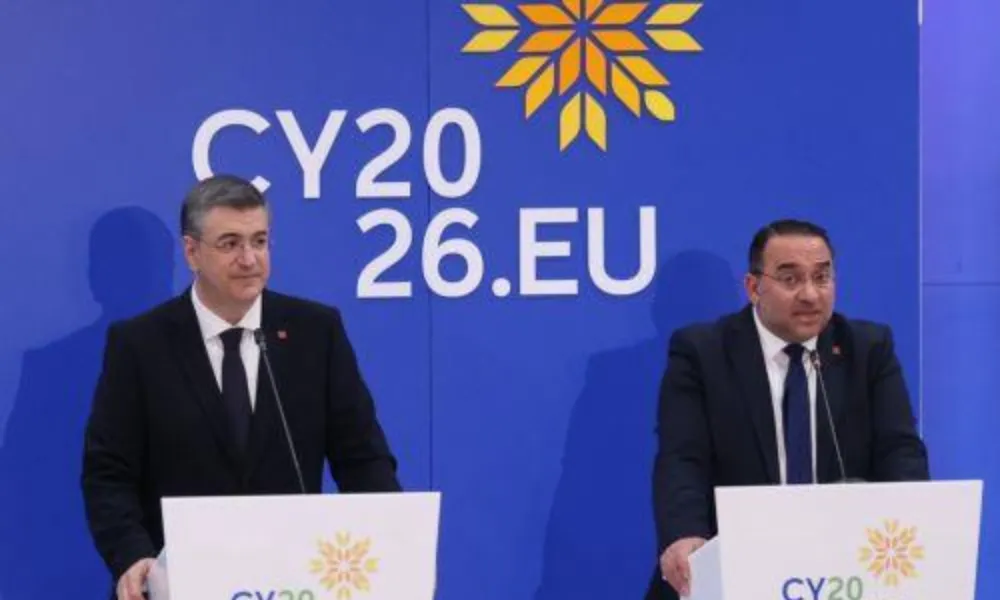
An informal meeting of EU tourism ministers in Nicosia on Friday placed the development of the bloc’s first-ever strategy for sustainable tourism at the centre of discussions, with officials aiming to present the plan by 2026.
Speaking at a press conference, Cyprus Deputy Minister for Tourism Costas Koumis, who chaired the meeting, and European Commissioner for Sustainable Transport and Tourism Apostolos Tzitzikostas highlighted growing consensus among member states on the need for a coordinated, long-term framework.
'Historic milestone'
Tzitzikostas, who is leading the initiative, said he intends to unveil the strategy within 2026, noting that Cyprus had played a “significant role” in shaping the effort during its presidency of the Council of the EU. He added that the presidency had kept tourism high on the political agenda while promoting the exchange of best practices towards a more sustainable, resilient and competitive sector.
Koumis described the discussions as “substantive and constructive”, underlining a shared commitment among EU countries to place tourism at the heart of the bloc’s economic and social agenda. He called the forthcoming strategy a “historic milestone” expected to guide tourism policy at European level over the long term.
Four pillars
Delegates examined four key pillars proposed by the European Commission: addressing imbalances in tourism development, improving sustainable connectivity, boosting competitiveness and skills, and promoting Europe under a common tourism identity.
“There was broad convergence among member states on the need for a coherent strategy that strengthens long-term sustainability, competitiveness and resilience of the European tourism ecosystem, while fully respecting national and regional specificities,” Koumis said.
He added that several countries stressed the importance of robust EU-level crisis management mechanisms for tourism, drawing lessons from recent shocks including the COVID-19 pandemic, Russia’s war in Ukraine and ongoing tensions in the Middle East.
Support for small and medium-sized enterprises (SMEs) also featured prominently. Koumis said maintaining their competitiveness, creativity and capacity to deliver high-quality services is essential, noting that SMEs account for around 99% of tourism businesses in Europe and form the backbone of the sector.
Impact of regional conflicts
Reaffirming Cyprus’s commitment, he said the presidency remains focused on strengthening the competitiveness, resilience and sustainability of the EU tourism ecosystem through close cooperation between member states, institutions and stakeholders.
Tzitzikostas warned that geopolitical instability and regional conflicts continue to affect tourism, from airspace closures to energy supply disruptions, underscoring the urgency of building resilience.
“This is no longer optional. It is a prerequisite for the long-term stability of an industry that supports the livelihoods of millions of Europeans,” he said, noting that tourism contributes around 10% of EU GDP and supports roughly 20 million jobs.
Business-friendly environment
He added that the strategy aims to tackle challenges such as climate change, uneven tourism flows, an ageing workforce and skills shortages, while unlocking tourism’s potential as a driver of growth, jobs and territorial cohesion.
“Sustainability goes hand in hand with competitiveness and long-term resilience,” he said, pointing to the need to balance economic growth with environmental protection and the wellbeing of local communities, while preserving cultural heritage and better managing seasonality.
On SMEs, he confirmed that financial and technical support provided in recent years will continue. “If we strengthen our SMEs by creating a more business-friendly environment, we strengthen tourism as a whole – and if we strengthen tourism, we strengthen Europe,” he said.
Opening the press conference, Tzitzikostas also stressed that the presence of representatives from all 27 EU member states in Nicosia demonstrated confidence in Cyprus as a safe destination.
“Cyprus is a safe and stable tourist destination, fully prepared to welcome visitors for the new summer season,” he said, adding that there were no security concerns affecting the island.
CNA