By Andrie Daniel
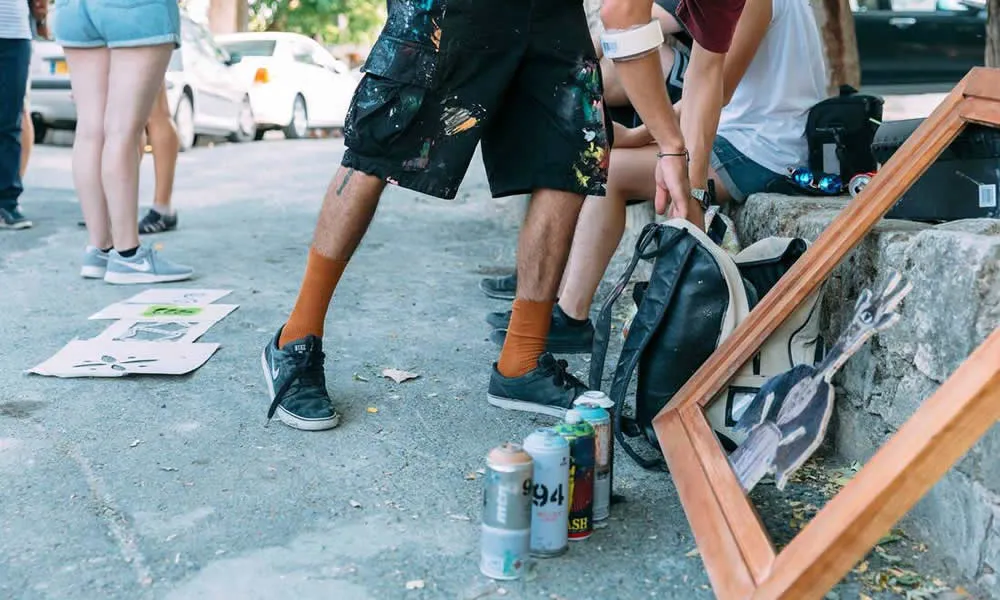
Street artists speak through their work, stencils and graffiti scattered across alleys, neighborhoods, and building walls. They don’t ask for permission, and above all, no one can silence their freedom of expression. The artist Twenty Three shares his perspective with Politis, responding to recent debates around antisemitic slogans and the calls to erase certain works.
“I am politically engaged,” he says in an interview, commenting on the letter sent to the Republic of Cyprus by Israel's Diaspora Minister urging stronger action against antisemitism and hate speech. The letter explicitly referred to street art and included directives to remove specific works, guidelines later circulated to local municipalities. “It bothers me,” he stresses, “that third countries send instructions to the Republic of Cyprus, and those orders are passed on to our local authorities.”
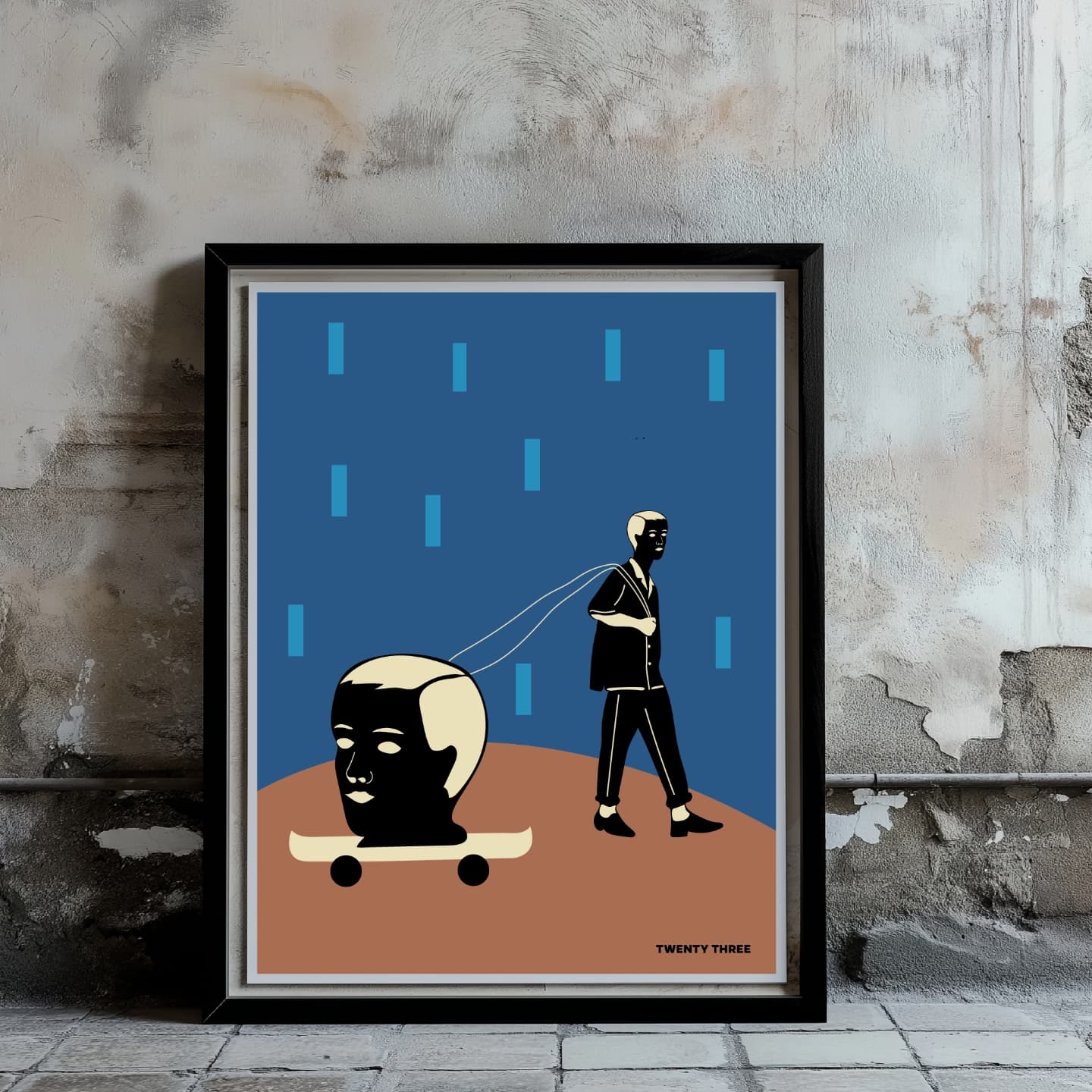
Defending Street Art
Standing up for fellow artists, and in particular the works signed EIVA that drew official complaints, Twenty Three explains that these pieces are not antisemitic but rather voices against genocide. They use imagery without words or slogans, he says, yet deliver a clear and urgent message.
He strongly criticized attempts to censor such work: “Street art addresses those in power. Any attempt to silence it only fuels more creation, because freedom of expression cannot be suppressed.”
Street art, he adds, flourishes precisely where it is least welcome. Efforts to censor it often have the opposite effect—sparking more works, amplifying more voices, and multiplying expressions of resistance.
Respecting Historical Spaces
Respect for historical buildings, he emphasizes, is central to the ethos of street artists. Care is taken when choosing where to open a dialogue through art: the aim is to provoke reflection and conversation while minimizing disruption to neighborhoods or residents.
“Usually, works are placed in public spaces, which belong to everyone, and the messages are aimed at governments,” he explains. “The goal is not to paint over someone’s home or destroy property. Respect is an inseparable part of street art.”
The Power of Symbolism
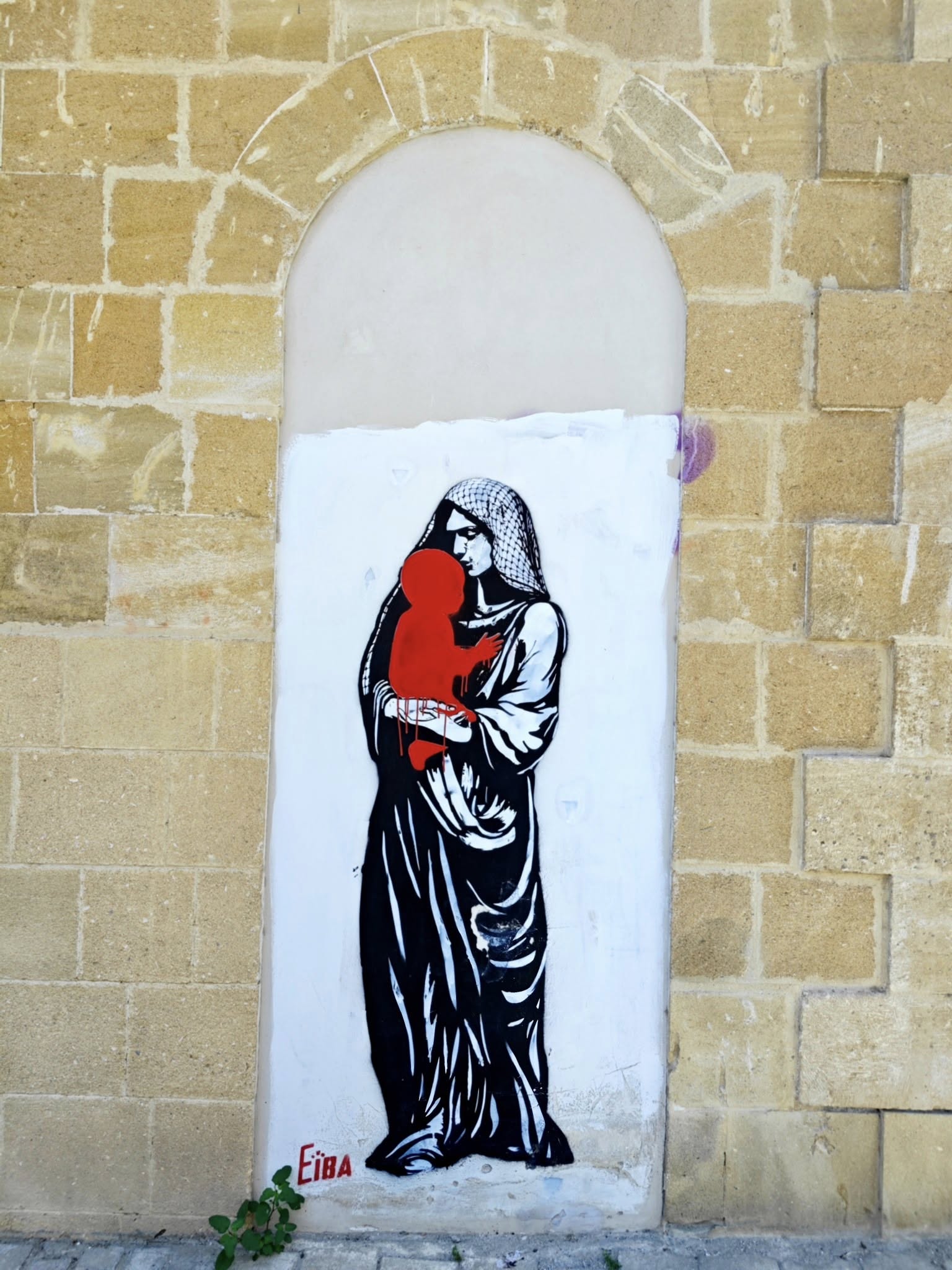
Street art often relies on symbolism to send messages that anyone can grasp immediately. One striking work signed EIVA depicts a black-and-white figure of a woman in a headscarf, holding a baby painted in vivid red, dripping blood.
For Twenty Three, this piece communicates a stark message about children dying every day. “This is one of the powers of street art, it can send a message directly, without requiring prior knowledge or explanation.”
Street Art Cannot Be Silenced
Street art never dies. It has existed for decades, it keeps evolving, and every challenge only makes it stronger,” says Twenty Three.
Its influence, he adds, is proven by the very efforts to silence it. “At best, censorship will only ensure these works are reborn.”