
Airport terminals are increasingly being designed as more than functional transit spaces, with architecture drawing on local landscapes, cultural traditions and natural forms.
A recent selection by the Prix Versailles international architecture awards highlights seven airport terminals around the world, including two in the United States, for designs ranging from flower-inspired structures in China and India to a terminal shaped by Cambodia’s architectural heritage.
Guangzhou Baiyun International Airport, China
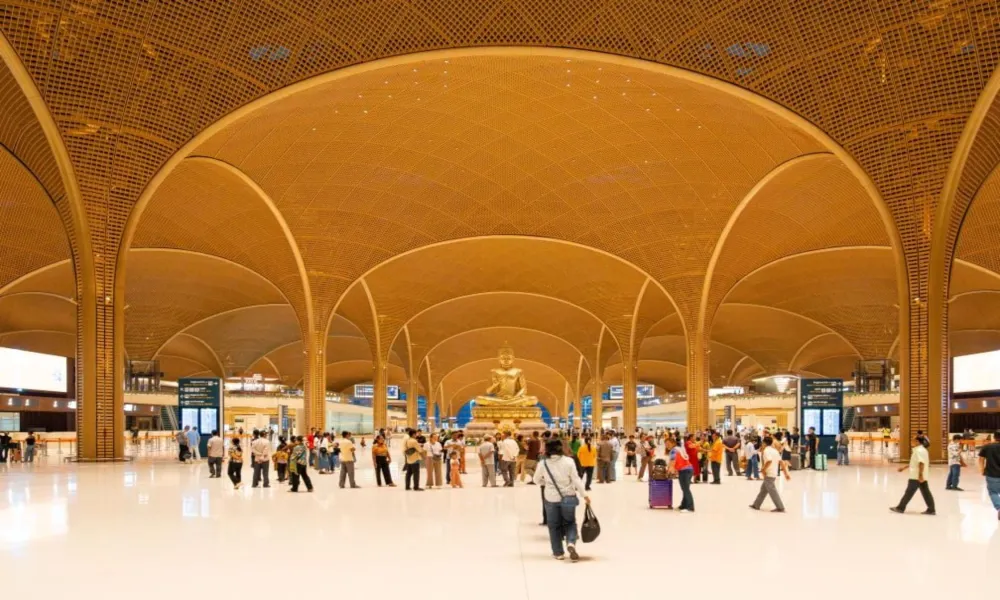
The new Terminal 3 at Guangzhou Baiyun International Airport takes inspiration from Guangzhou’s reputation as the City of Flowers.
Its Blossom in Guangzhou concept appears through curved forms, terraces, gardens and atriums, while extensive natural light and the use of wood instead of predominantly metal and plastic create a warmer interior.
Frankfurt Airport, Germany
Frankfurt’s new Terminal 3 looks to cities rather than nature for inspiration.
Gates, piers and lounges are arranged to resemble streets and public squares, alongside a roughly 694,000-square-foot marketplace containing shops and restaurants.
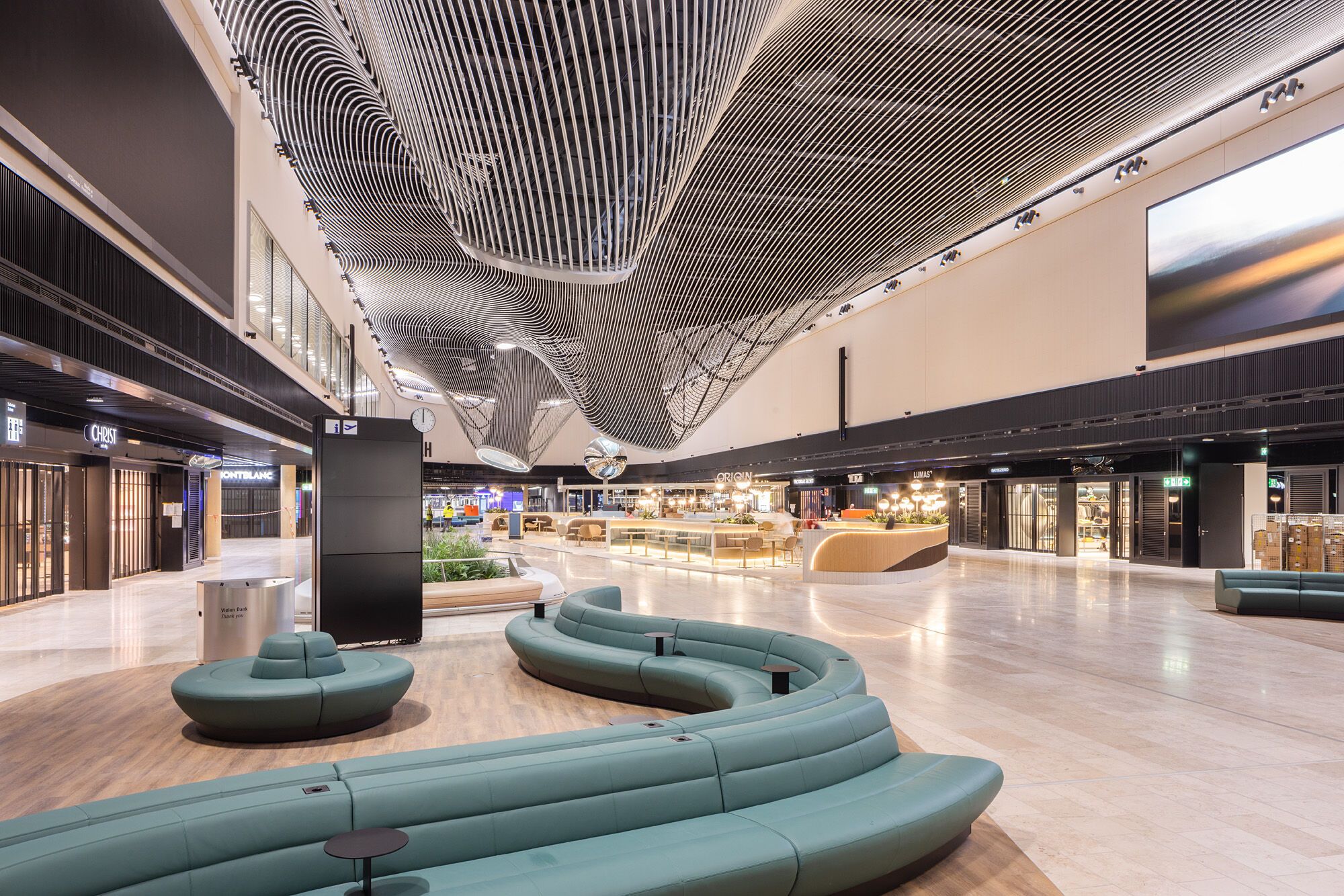
At 1.89 million square feet, the terminal covers an area almost comparable to Frankfurt city centre.
Guwahati International Airport, India
The design of Terminal 2 at Lokapriya Gopinath Bordoloi International Airport was inspired by the bamboo orchid.
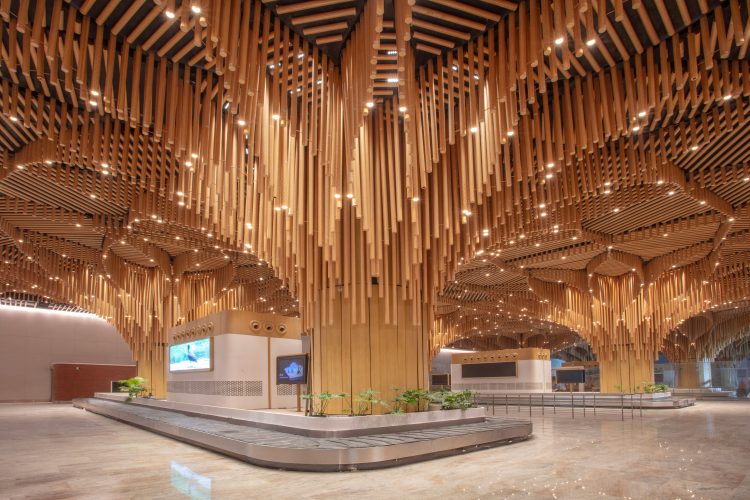
Architect Nuru Karim translated the plant into a terminal resembling an oversized bamboo forest. Waiting and transit areas also feature indigenous artwork and local handicrafts.
Navi Mumbai International Airport, India
At Terminal 1 of Navi Mumbai International Airport, the lotus flower provides the central architectural motif.
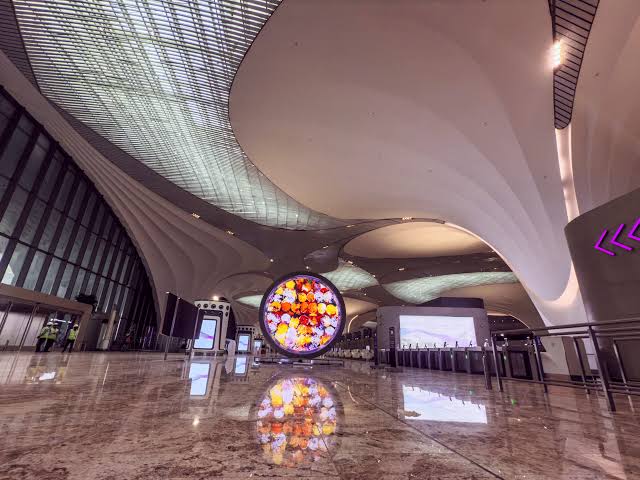
Zaha Hadid Architects incorporated the form throughout the airport, from its expansive roof to fluted, flower-like columns. Interactive digital artworks positioned between the columns add colour to the passenger areas.
Techo International Airport, Cambodia
Foster + Partners looked to Cambodian palaces and temples when designing Techo International Airport in Phnom Penh.
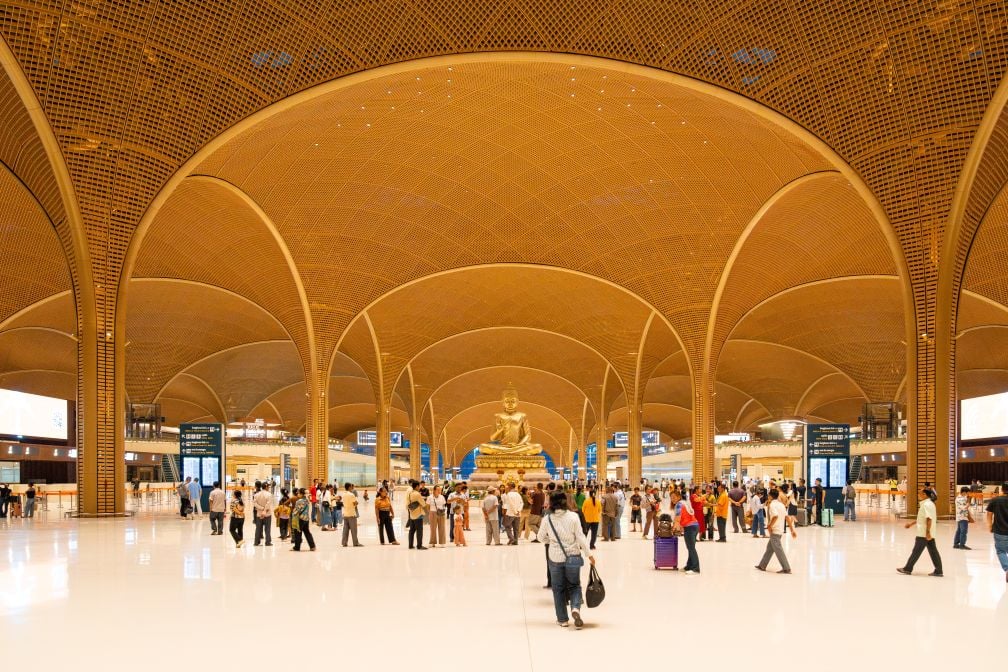
Its sweeping roof and ceilings evoke traditional woven bamboo and rattan, while also serving an environmental purpose by filtering strong tropical sunlight and reducing reliance on mechanical cooling.
Sustainability features include an on-site solar farm, rainwater harvesting and vertical gardens. Cambodia’s national flower, the Rumduol blossom, is also planted throughout the interior alongside local species.
Pittsburgh International Airport, US
The roof at Pittsburgh International Airport draws on the surrounding Allegheny Mountains.
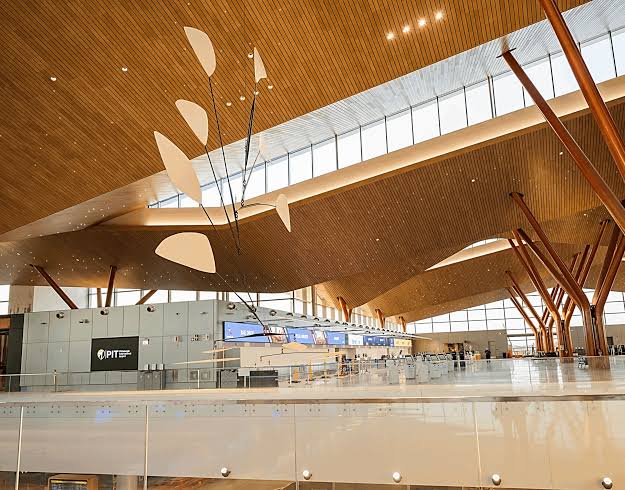
Designed by Gensler and HDR with Luis Vidal + Architects, the terminal uses 38 tree-like steel columns to evoke an indoor forest.
Large glass façades maximise daylight, while four outdoor terraces allow passengers to step outside while waiting for flights.
San Diego International Airport, US
Originally built in 1967, Terminal 1 at San Diego International Airport has undergone an extensive redesign by Gensler.
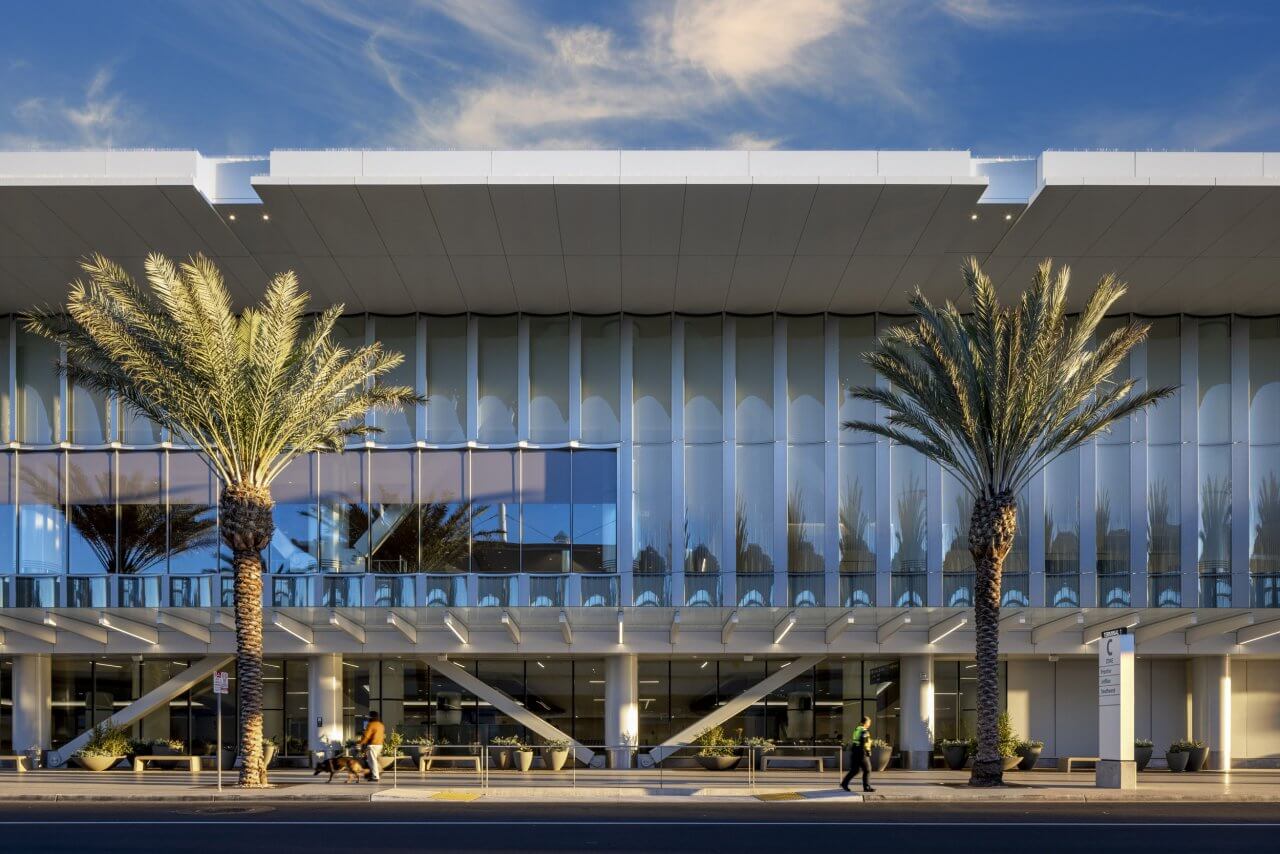
A defining feature is its 800-foot curved glass façade, developed with artist and architect James Carpenter, which brings large amounts of natural light into the terminal.
Together, the seven terminals demonstrate how contemporary airport architecture is increasingly incorporating regional identity, natural materials, sustainability and biophilic design into spaces traditionally focused primarily on passenger movement.
Source: Architectural Digest