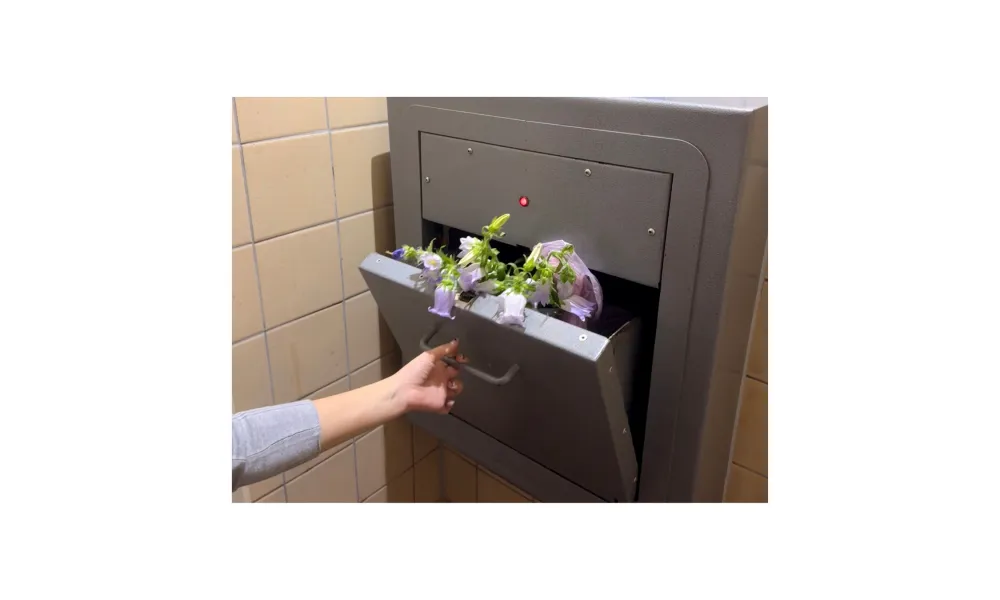
Will we finally pull the flowers out of the cesspit? The flowers, in this case the fruit of artistic creation, are the ones that end up bearing the cost of the image the Deputy Ministry of Culture has acquired. That image took shape after the Audit Office published its special report on how the Department of Contemporary Culture manages its sponsorship programmes.
The problems are many, and hardly unknown to those of us who follow what happens on the cultural scene. Any form of scrutiny is, of course, welcome. This column, at least, is not convinced of the "benefits" the report will bring, unless, that is, a decision is taken to actually pursue a cultural policy.
What the Audit Office ultimately shows is that we have never taken culture seriously. We simply create relationships of dependency that we fail to control in any meaningful way. At the same time, we tighten the reins, as though artists might somehow turn a profit without the state's help.
Suppose, for example, we were listened to, and companies were finally given an incentive, through tax relief, to fund cultural activities. Perhaps there would then be neither the overwhelming volume of applications nor the problem that not every organisation with a worthwhile proposal receives funding.
In any case, we take what the Audit Office presents very seriously. The question is whether the government of Nikos Christodoulides is content merely with announcements and funding pledges. Of late, these have ranged from cars to hundreds of thousands of euros for football clubs and for activities of Paphos Municipality.
€1.1 million for a Christodoulides pledge
Last week, the Audit Office report may have monopolised attention, but Friday had fresh surprises in store. The supplementary budget tabled in Parliament provides for new grants.
Specifically, the 2026 supplementary budget, approved by the Council of Ministers on Tuesday, provides for additional appropriations of €2.266 million for the Deputy Ministry of Culture. Almost half of that sum, €1.1 million, is earmarked for a single grant to Paphos Municipality. The grant is for the renovation and restoration of the Paphos Free Radio Station and its conversion into a museum.
The amount is entered under the "Various Grants" line of the Deputy Ministry's central offices, for which the original budget provided just €150,000. A further €6,000 is added to support the Kormakitis Folklore Museum. With that, the line soars to €1.256 million, more than eight times the original provision.
At the same time, a total of €150,000 is provided as additional support for two of the most important sponsorship programmes for artistic creation: THYMELI for theatre and TERPSICHORE for dance.
Hailing from Paphos, our President evidently holds his home town closer to heart. He is delivering yet another promise, made in July 2024 at an event held by the Metropolis of Paphos to mark 50 years since the coup and the Turkish invasion.
A year later, in September 2025, he announced that agreement had been reached with the Nicolaides family to convert the site into an exhibition space. Throughout this period, however, the President never specified how much state funding would be involved.
Acting Mayor of Paphos Angelos Onisiforou spoke of successive contacts with the Deputy Ministry of Culture. He put the initial cost of the project at €65,000 and said it would be covered entirely by the state.
Six days after those statements, on 17 November, the Council of Ministers approved the supplementary budget, which provides for a €1.1 million grant to Paphos Municipality. The Deputy Ministry, naturally, acted at once and included it in this year's supplementary budget.
Are we really supporting festivals?
Let us also recall the €150,000 grant the President approved last May for the Pafos Aphrodite Festival.
Meanwhile, the KYPRIA arts festivals sponsorship programme, which the Audit Office examined for 2024-25, has an annual budget of €600,000. The maximum funding per festival for 2026 is €49,500, even for proposals scoring between 91 and 100 points.
This year, it must be said, 35 of the 39 valid applications achieved the required score, yet only 17 festivals were funded. Total approved funding came to €575,328. Another 18 worthwhile proposals were left without funding because the budget line was insufficient.
For a single event in Paphos, then, the President approved more than three times the maximum the Deputy Ministry itself sets for arts festivals. That sum is equivalent to a quarter of KYPRIA's annual budget.
We note, however, the Council of Ministers' decision of 25 June 2025. It approved the €150,000 grant to the Pafos Aphrodite Festival "for the last time", and authorised the then Deputy Minister of Culture to examine alternative ways of including opera in cultural activities.
Did someone mention understaffing?
Last week's plenary also brought the unanimous passage of two amending bills. They transfer responsibility for classifying films and protecting their commercial exploitation from the Ministry of Interior to the Deputy Ministry of Culture.
All well and good so far. It should have happened long ago. However, the official correspondence accompanying the two bills, submitted to Parliament, reveals some interesting details about how the Deputy Ministry of Culture operates. These did not appear to trouble our MPs unduly.
On 1 July 2025, the then Director-General of the Deputy Ministry of Culture wrote to the Ministry of Interior. In the letter, she described the cinema sector of the Department of Contemporary Culture as "extremely understaffed". She pointed out that two of its three staff were employed on service contracts expiring in April 2026.
She cited the Department's increased obligations during the forthcoming Cyprus Presidency of the Council of the EU. This is our only cultural success this year, according to Ms Piki's platform. On that basis, she requested two additional officers, so that the new responsibilities could be taken on and the relevant legislation modernised.
The correspondence also explicitly refers to responsibilities passing from the Press and Information Office to the Deputy Ministry of Culture, and specifically to the Department of Contemporary Culture. Yet under the amended legislation, the chair of the Film Classification Board goes to the Deputy Ministry's Director-General.
According to information, the original plan was for the Director of the Department of Contemporary Culture to replace the Director of the Press and Information Office on the board. That department, after all, holds the expertise on film matters. Along the way, however, the plan changed.
We suspect that this issue, along with concerns over the responsibilities and roles of the individual departments, will be "resolved" by the Audit Office's second report. According to its spokesman Marios Petrides, that report will cover operating expenses. It will also examine a possible merger of the services under the Deputy Ministry: the Department of Contemporary Culture, the Department of Antiquities, the State Archives and the Cyprus Handicraft Service.
Might it resolve the understaffing too?
For our part, we are waiting to see what MPs will say and do. From the Christodoulides government, this year, we have seen enough.
And so as not to speak only ill of Iphigeneias Street, our information tells us that steps have been taken, at least preliminary ones, on another matter we had expected by the end of this year.
That, for now, is the hopeful note in what is happening inside the Deputy Ministry of Culture. Or, if you like, it is the seed we are waiting to see blossom into the flower that is culture.