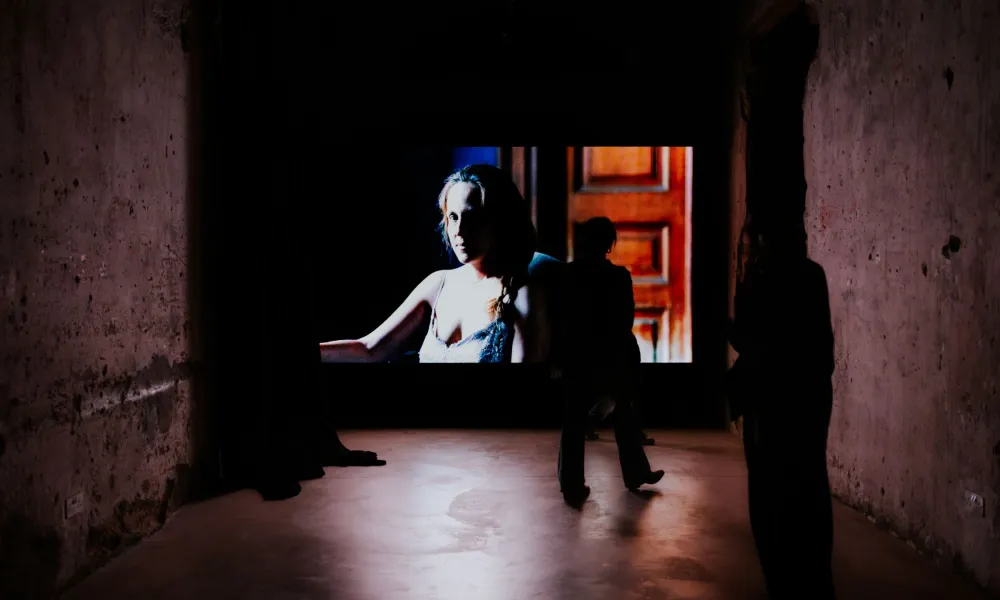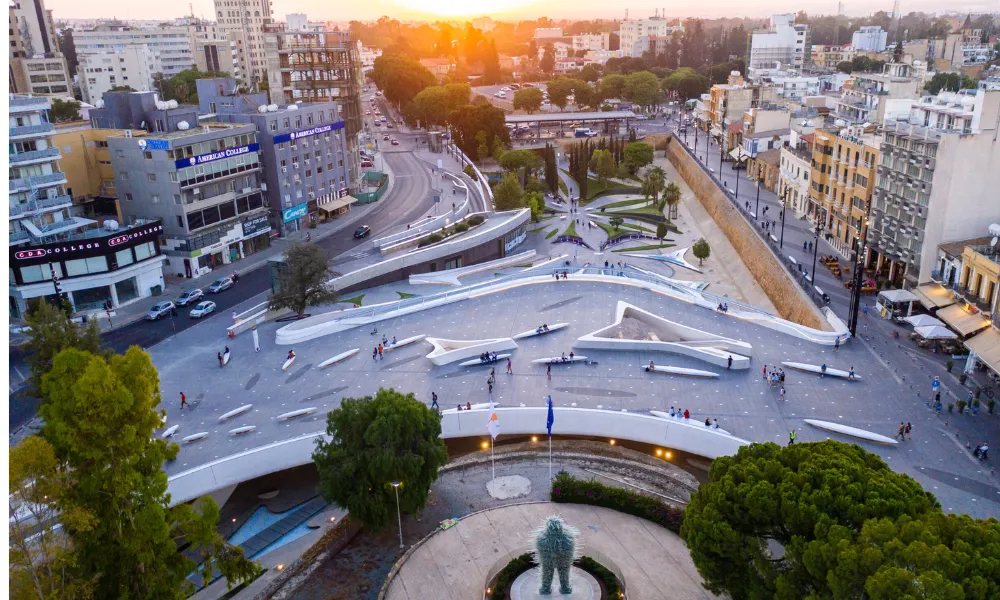

This week, the Phrase of the Day section of Politis to the Point turned to contemporary architects, as a tribute to beauty and the genius of architects who shape the spaces we live in. Seven voices, from Zaha Hadid to Renzo Piano, showed the way they see the world and introduced readers to the art of noticing things differently.
Architecture as a way of seeing
You don’t have to choose a building the way you choose a book or a painting. Anyone who walks past one sees it, lives with it and passes through it. The architects featured this week ask us to look again: at light falling across a wall, at a curve where we expected a corner, at the space between things. In doing so, they teach us to appreciate the difference and the unseen beauty in the world around us.
Zaha Hadid and Frank Gehry on breaking convention
Zaha Hadid, the Iraqi-British architect who in 2004 became the first woman to receive the Pritzker Architecture Prize, once asked a simple question: “There are 360 degrees, so why stick to one?” Her flowing designs, among them the MAXXI museum in Rome and the London Aquatics Centre, set aside the right angle and suggested that buildings could move like landscapes. Hadid died in 2016, and her influence on a generation of architects remains.
Frank Gehry, the Canadian-American architect behind the Guggenheim Museum Bilbao, put it this way: “Architecture should speak of its time and place, but yearn for timelessness.” When the titanium-clad museum opened in 1997, it changed the image of an industrial city and showed how much a single building can do for the place around it.
Daniel Libeskind and Tadao Ando on wonder and light
For Daniel Libeskind, the Polish-American architect of the Jewish Museum Berlin and master planner of the World Trade Center site in New York, the starting point is emotional rather than material: “Architecture is not based on concrete and steel and the elements of the soil. It’s based on wonder.”
Tadao Ando, the self-taught Japanese architect and 1995 Pritzker laureate, offers a quieter view: “I don’t believe architecture has to speak too much. It should remain silent and let nature in the guise of sunlight and wind speak.” His Church of the Light near Osaka, where daylight enters through a cross cut into a concrete wall, puts that idea into practice.
Norman Foster and Bjarke Ingels on designing for how we live
Norman Foster, the British architect who received the Pritzker Prize in 1999 and designed the glass dome of the Reichstag in Berlin, reflects on the architect’s position in time: “As an architect you design for the present, with an awareness of the past, for a future which is essentially unknown.”
Bjarke Ingels, the Danish founder of BIG (Bjarke Ingels Group), whose CopenHill power plant in Copenhagen has a ski slope on its roof, brings the idea back to everyday life: “Architecture is the art and science of making sure that our cities and buildings actually fit with the way we want to live our lives.”
Renzo Piano on the responsibility of the architect
Renzo Piano, the Italian architect who co-designed the Centre Pompidou in Paris with Richard Rogers and later designed The Shard in London, reminds us that beauty carries a responsibility: “Architecture is a very dangerous job. If a writer makes a bad book, people don’t read it. But if you make bad architecture, you impose ugliness on a place for a hundred years.”