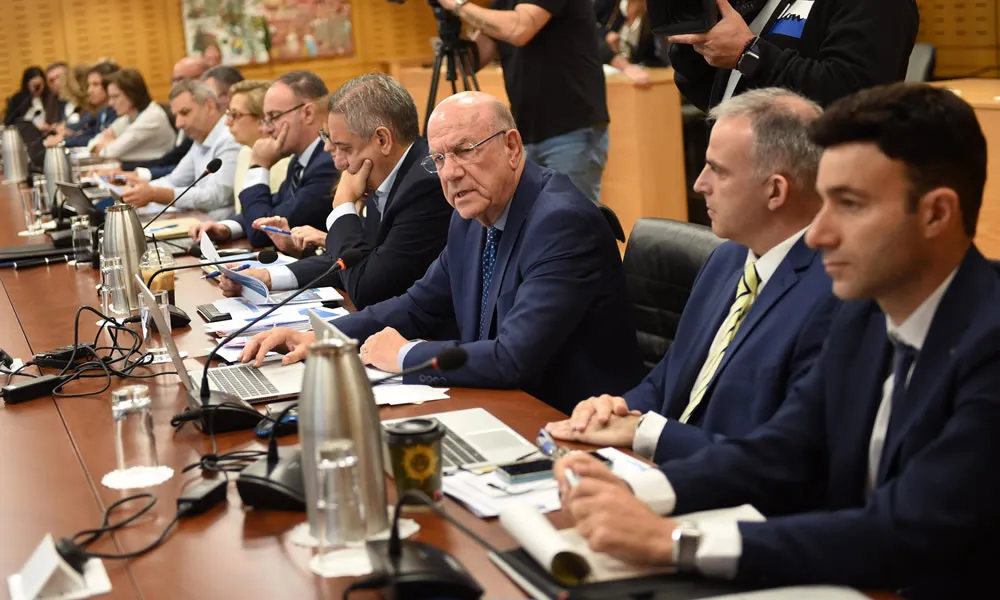

Finance Minister Makis Keravnos presented the 2026 state budget and the 2026-2028 Medium-Term Fiscal Framework before Parliament, setting out the government’s main fiscal priorities while warning of emerging risks from both domestic and international developments.
He said the 2026 Budget focuses on maintaining a budget surplus, reducing public debt in the medium term, advancing the green transition and digital transformation, promoting sustainable growth in key sectors, keeping public-sector employment under control, and ensuring a robust financial system.
According to the ministry’s baseline scenario, Cyprus’s medium-term economic outlook remains positive, though subject to external uncertainty. Despite the ongoing wars in Ukraine and the Middle East, economic activity accelerated in 2024, with growth rising to 3.4% from 2.8% in 2023. For 2025, growth is projected at 3.2%, with similarly strong levels expected through 2026-2028.
Inflation is expected to ease sharply to 0.7% in 2025 from 2.3% the previous year, before rising again to 2.1% in 2026 and 2.5% in 2027, and stabilising at 2% in 2028. Unemployment is projected to fall to 4.6% of the labour force during 2025-2027, down from 4.9% in 2024, and to 4.5% in 2028, a level considered close to full employment.
Keravnos highlighted a number of vulnerabilities that could affect fiscal performance. He pointed to risks arising from the termination of works at the Vasiliko LNG terminal and the international arbitration proceedings currently underway in the United Kingdom. He also noted that potential state payments related to Cyprus’s contribution to the Great Sea Interconnector project could weigh on public finances if required before the project’s completion.
Additional fiscal risks, he said, stem from non-performing loans issued in previous years by state-owned entities and financial organisations, which may activate state guarantees. Further exposures may arise from unsustainable pension funds, ongoing court cases, or poor financial performance by state organisations and local authorities involved in public-private partnerships.
Keravnos also warned that non-compliance with EU legislation could lead to financial penalties, citing as an example the potential fine related to Directive 91/271/EEC on urban wastewater treatment. Moreover, the state may face additional pressure from the need to cover OKYPY (State Health Services Organisation) deficits for longer than permitted by law, which currently allows financial support only until 31 December 2026.
He added that the fiscal outlook could be further affected by climate-related costs, such as natural disasters and agricultural compensation, as well as broader economic shocks from Eurozone economies or the imposition of U.S. tariffs on EU goods, which could indirectly affect Cyprus.
Despite these risks, Keravnos concluded that Cyprus’s economy remains on a stable growth path, supported by prudent fiscal management, structural reforms, and an emphasis on resilience and sustainability.