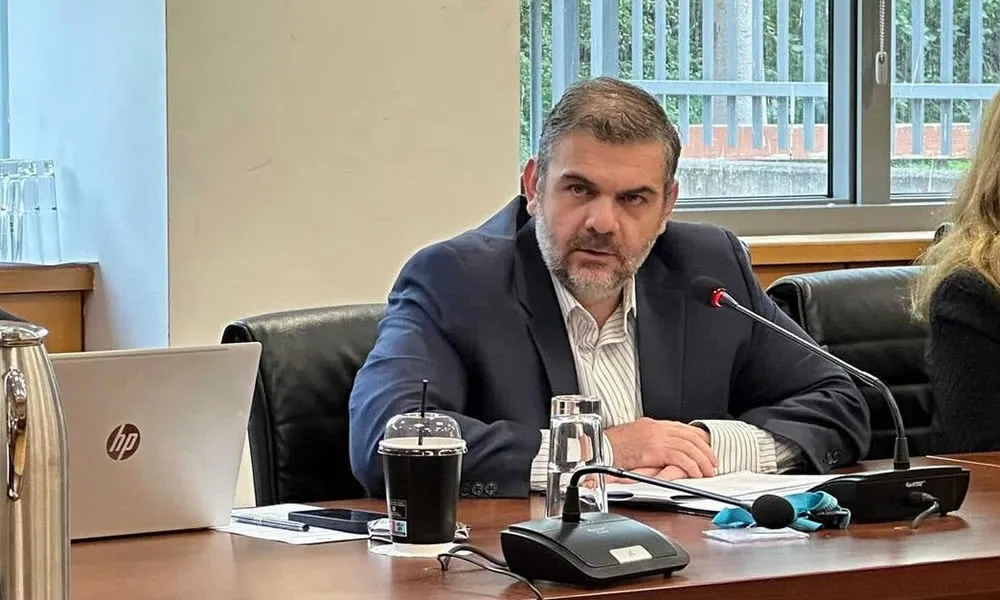

The outlook for Cyprus’ public finances remains “very satisfactory,” the president of the Fiscal Council, Michalis Persianis, told Parliament’s Finance Committee on Monday as debate began on the 2026 state budget. Yet he cautioned against “a large volume of external risks and potential expenditures” that could derail the country’s medium-term fiscal stability.
“Public finances are on a good path, but risks are mounting”
Persianis said the Council had validated the budget’s assumptions and found them broadly sound, praising the Finance Ministry for meeting the key goal of reducing public debt to around 60% of GDP. However, he warned that non-discretionary expenses continue to absorb a large share of total spending, “trapping each government in a pro-cyclical policy that would be dangerous if the economic climate were to reverse, something that will inevitably happen at some point.”
He listed numerous uncertainties and potential outlays not fully reflected in the fiscal framework: “There are many external risks and potential expenditures, both in number and in cost, which can alter the data of the Medium-Term Fiscal Framework,” he said.
Potential spending pressures: CoLA, gas terminal and GSI
Asked by journalists which expenditures he meant, Persianis cited the Cost-of-Living Allowance (CoLA), the Vasiliko LNG terminal, and the Great Sea Interconnector (GSI) among projects that could weigh heavily on future budgets. He also pointed to a long list of political commitments that may eventually start to materialise.
He noted that operational spending by the state has risen significantly, “many of these increases are justified, such as water purchases,” he said, but the trend still poses medium-term risks: “All these together, up to 2028, constitute a significant risk for public finances. This is why debt reduction remains the first and most important move to protect the Republic from unforeseen developments.”
Inside the committee, Persianis said that under the EU’s fiscal governance framework, Cyprus is technically in overspending territory, adding that “there is high risk in the calculations to correct this trajectory.” Still, he argued that as long as debt remains below 60% of GDP, Cyprus is unlikely to face corrective measures from Brussels. The 2026 correction plan, he said, is “better designed than last year’s, though still carries a high implementation risk.”
Responding to a question from DISY MP Haris Georgiades, Persianis described CoLA as “an inflationary burden on the economy.” “Our concern remains that payroll costs are increasing without a corresponding rise in the volume or quality of public services,” he said. While a potential new CoLA agreement was not included in the fiscal projections, he said that “for 2026 the issue is not serious due to the low coefficient, but it continues to exert pressure on the wage bill.”
He reiterated that nearly one-third of state expenditure, about 28%, remains locked in non-discretionary spending, a long-term structural weakness for public finances.
Unknown public cost for the Great Sea Interconnector
Asked about the public share of costs for the Cyprus-Greece electricity interconnection, Persianis admitted: “We do not know, and cannot know, the exact public expenditure,” referring to the state’s annual commitment of €25 million. “We have many questions about this project that must be answered before it proceeds,” he added, while acknowledging its importance for national and energy security and its potential economic benefits.
Responding to AKEL MP Andreas Kafkalias, Persianis stressed the importance of factoring in the secondary cost of not implementing major projects. On the halted Vasiliko LNG terminal, he warned that “non-completion means we lose all the benefits initially counted when we decided to proceed.” These losses, he said, are difficult to quantify but represent “a major, almost permanent missed opportunity.”
Debt to the Social Insurance Fund
Persianis was also questioned by MPs Andreas Kafkalias and Alexandra Attalidou about the government’s €12 billion debt to the Social Insurance Fund (SIF). He reassured them that the Fund is not in danger, but noted that the liability creates a long-term fiscal burden and “represents a lost opportunity for productive investment.”
He suggested the SIF could have retained part of these funds for investment rather than converting them into current expenditure: “The issue is not how much is spent, but on what.” Persianis recalled that there is a public promise that once debt reaches 60% of GDP, an agreement will follow between the Finance and Labour ministries to reinvest SIF surpluses more productively, “and we expect announcements soon,” he said.
The Fiscal Council also expressed concern over the government’s decision to remain out of bond markets and rely instead on its cash reserves. Persianis called the strategy “dangerous,” warning that “by doing so, we are excluding ourselves from markets,” and urged the Debt Management Office not to revise its current strategy, which could otherwise “lead to self-exclusion.”
Revenue growth not fully explained
Independent MP Alexandra Attalidou asked whether high revenue inflows would continue. Persianis said rating agencies, the IMF and EU institutions have all questioned the sources of this growth. “No one has a complete answer,” he said, attributing it to a combination of inflation and growth but noting that neither fully explains the trend.
He pointed to structural factors: the introduction of Gesy (National Health System), wider card payment acceptance laws, higher employment, faster clearance of old tax files, and the entry of high-tech companies that boosted corporate and income tax. However, he warned that the current pace of revenue growth is not sustainable long-term.
Energy, climate and the economic model
Persianis also voiced concern about delays in implementing the National Energy and Climate Plan, calling it both an obligation and a tool for self-protection. On the economic model, he described foreign direct investment as a “blessing” but warned that Cyprus’s current strategy risks creating a dual economy, with wages in finance and ICT far higher than national averages.
“The bad thing,” he said, “is that productivity has become completely disconnected from wages in non-tradable services,” leading to pressures on households and an economy where inflation in services persists while wages stagnate.
Modernising service schemes
Finally, responding to DIKO MP Chrysis Pantelides, Persianis said the Council’s own service plans need revision. “We asked that engineering degrees be added to the eligible qualifications,” he said, calling the ministry’s refusal, claiming it would “target” candidates,“ a rather absurd comment.” Current rules, he noted, allow only accountants to be hired, making it “almost impossible” to staff positions properly.
The Council will ask the Finance Ministry to send the updated plans to Cabinet and Parliament for approval, stressing that STEM expertise is essential for modern financial governance.