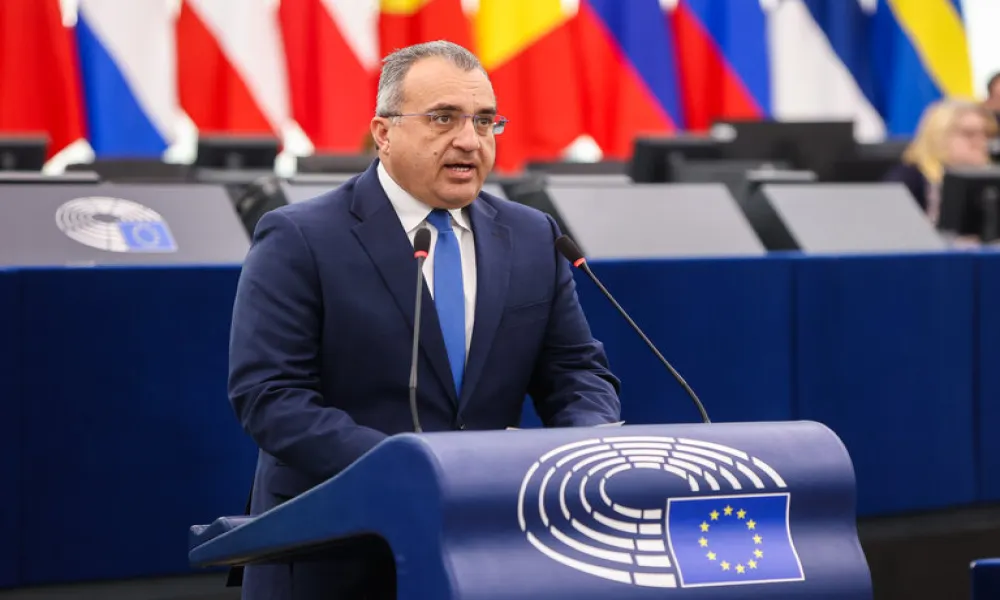



As Cyprus aligns itself with the European Union’s 15 percent minimum corporate tax rate, questions naturally arise about how much room remains for national discretion and whether smaller economies will come under pressure as the European tax debate evolves. According to MEP Michalis Hadjipantela who spoke to Politis to the point, the view from Brussels is more pragmatic than many fear.
Rather than viewing Cyprus’s approach as a loophole or an outlier, EU institutions largely interpret it as a balanced adjustment that respects common standards while preserving national economic tools. The adoption of the minimum rate signals alignment with shared European rules, but it does not eliminate domestic tax autonomy. On the contrary, Hadjipantela argues that flexibility remains a structural necessity within the Union, particularly for smaller and more open economies.
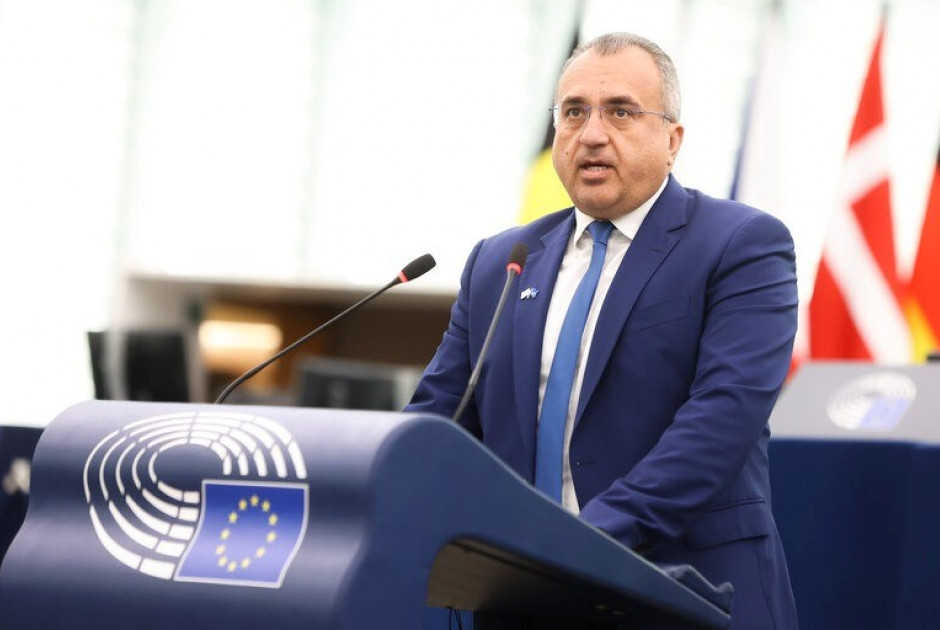
“A degree of national flexibility is necessary within the European Union, particularly for smaller and more open economies, so that they can maintain competitiveness and support growth while remaining fully aligned with common European standards”, he notes.
Size still matters
At the heart of this thinking lies an acknowledgement that Europe is not economically uniform. Policymaking that overlooks differences in scale, structure and capacity risks favouring larger member states. Cyprus, like other small economies, depends on targeted national instruments to attract investment and sustain growth. When these tools operate transparently and within the agreed European framework, they are not seen as distortions but as legitimate expressions of economic diversity within the Single Market. “As long as Cyprus’s tax system operates with transparency, simplification and fairness within the common European framework, it meets the criteria set by our partners”, Hadjipantela notes.
The broader discussion on taxation at EU level is also shifting. Instead of focusing narrowly on headline rates, attention is increasingly directed at how tax systems function in practice. Simplicity, predictability, administrative efficiency and perceived fairness are emerging as the key benchmarks. In this environment, competitiveness is no longer defined by how low taxes go, but by how clearly and efficiently they are applied.
Competitiveness through clarity
Within this context, Cyprus’s effort to maintain a business friendly framework while aligning with European norms is presented as a case study in balance. Hadjipantela stresses that the ability of smaller economies to remain attractive within the European Union depends more on offering clarity, stability and manageable compliance costs. This approach, he argues, is fully compatible with participation in the EU Single Market.
That logic also underpins Hadjipantela’s recent report to the European Parliament on tax simplicity and fragmentation. Adopted by a strong majority, the report warns that excessive complexity functions as a hidden tax on competitiveness. When rules are opaque and administrative burdens grow, investment, innovation and compliance suffer. Simplification, digitalisation and reduced red tape are framed not as concessions, but as essential economic infrastructure.
Positioning Cyprus within the EU debate
By drawing on European and international best practices, particularly in supporting small and medium sized enterprises, Cyprus can defend its tax model as a move towards coherence. In Hadjipantela’s view, safeguarding competitiveness does means shaping it around how economies actually function, especially those at the Union’s periphery.
In a debate often dominated by fears of harmonisation and loss of sovereignty, the message from Brussels, at least for now, is more nuanced. Cyprus’s challenge is not that it has retained national tools, but whether it continues to apply them in ways that are transparent, fair and administratively sound. On those terms, alignment and competitiveness are not opposing forces, but part of the same European equation.