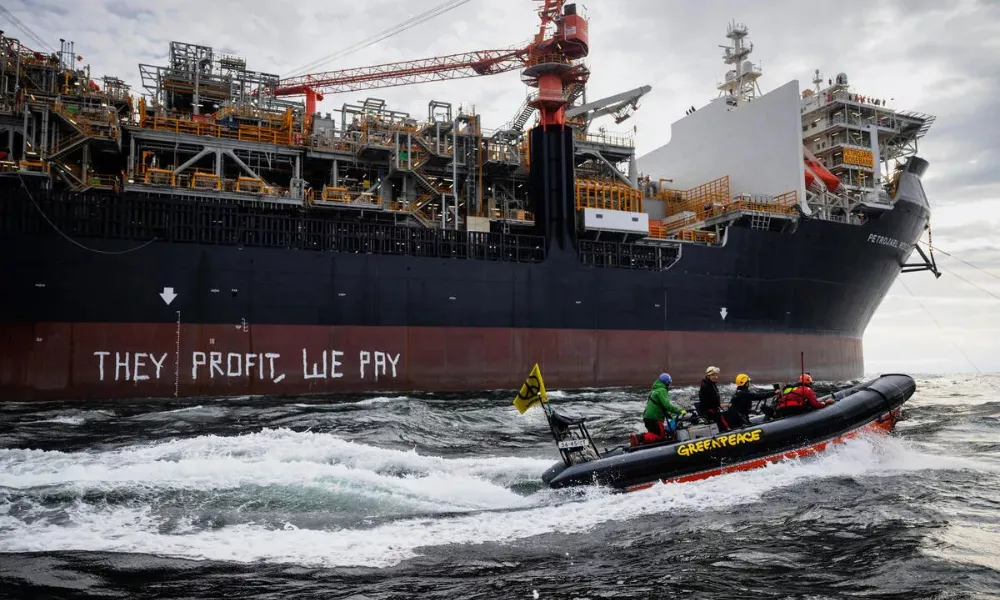
A report commissioned by Greenpeace states that oil companies have recorded what it describes as “excess profits” exceeding €80 million per day since the start of the war in the Middle East. According to the organisation, these gains are linked to widening profit margins between crude oil prices and fuel prices at the pump.
Estimated scale of the profits
The report estimates that these additional profits reached approximately €2.5 billion in March alone.
To reach this figure, the analysis examined the difference between crude oil prices and retail fuel prices at filling stations. It compares data from January and February 2026 with the first three weeks of March 2026, concluding that the gap between the two increased during this period.
In a statement issued on Wednesday, Greenpeace said the findings indicate that price increases at the pump have been significantly higher than the rise in underlying crude oil prices.
Diesel margins increased more than petrol
According to the report, the increase in the margin is far more pronounced for diesel than for petrol.
- Diesel sales: estimated €75.3 million in additional profits per day
- Petrol sales: estimated €6.1 million in additional profits per day
These figures refer to sales of diesel for cars and trucks as well as petrol across European markets.
Countries with the largest profit increases
The report identifies several countries where the difference between crude oil prices and pump prices increased the most, including:
- Netherlands
- Sweden
- Denmark
- Austria
- Germany
When the margin increase is combined with sales volumes, the highest estimated excess profits are recorded in:
- Germany: approximately €23.8 million per day
- France: approximately €11.6 million per day
In France, however, the report notes that the gap in petrol prices slightly decreased, falling by 3.4 cents per litre.
Call for windfall taxes
Greenpeace France is calling on European governments to introduce additional permanent taxes on the profits of oil and gas companies.
According to the organisation, the revenues from such measures could be used to:
- reduce household energy bills, and
- accelerate Europe’s energy independence.
Impact of the Middle East conflict on oil prices
The report links the rise in fuel prices to the war in the Middle East, which escalated after a joint attack by the United States and Israel against Iran on 28 February.
The conflict has pushed oil prices higher as a result of disruptions to Gulf crude exports, caused by the near paralysis of the Strait of Hormuz and strikes on energy infrastructure.
Fuel prices have since risen sharply. According to data published by the French government, the average weekly price of diesel reached its highest level since 1985 last week, surpassing the peaks recorded after Russia’s invasion of Ukraine.
Source: Greenpeace