- “Netanyahu travelled to Florida to seek the American green light for the Israeli army to disarm Hamas in Gaza, Hezbollah in Lebanon, and to carry out a new Israeli operation in Iran, this time targeting its ballistic arsenal.”
- “The government in Tehran appears to be facing serious internal difficulties, with the value of the rial steadily declining and inflation rising.”
- “If Lebanon does not rid itself of sectarianism, external dependencies will persist and any agreements signed will remain open to question.”
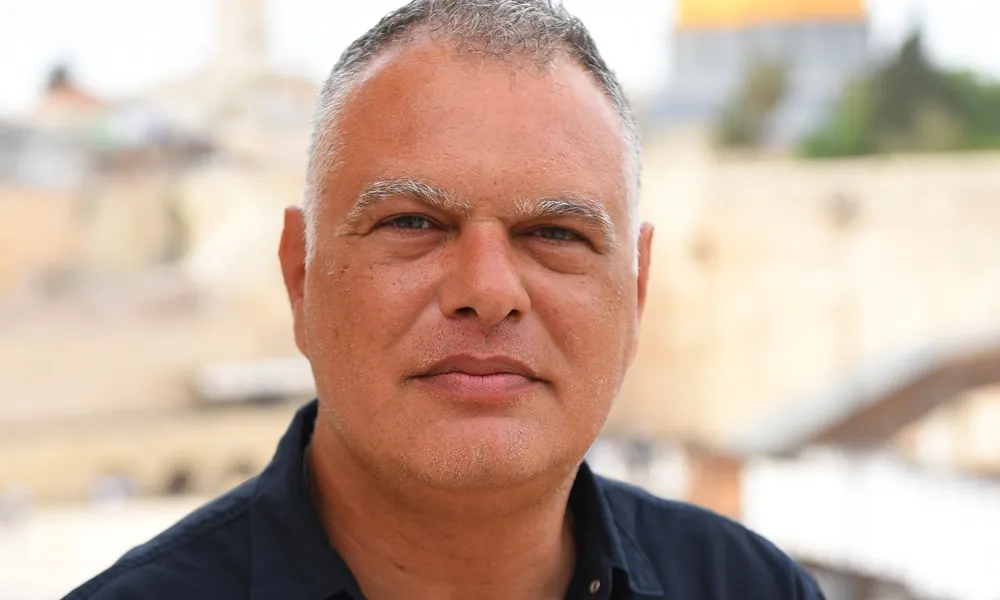
The only truly substantive piece of news to emerge from the recent meeting between US President Donald Trump and Israeli Prime Minister Benjamin Netanyahu concerns the setting of a short deadline for Hamas to disarm voluntarily, said Gabriel Haritos, visiting professor of international relations at Panteion University and senior researcher at the Cyprus Institute of Political and Democratic Studies (CIPDD), speaking to Politis.
He expressed the view that ahead of Israel’s upcoming parliamentary elections there does not appear to be any significant ideological opponent capable of replacing Netanyahu in today’s Israeli political system, while also voicing doubts as to whether there is any Israeli politician willing to shoulder the burden of a war that has yet to end. He went on to say that the government in Beirut has now realised that the era of militias must come to an end, while describing the major impasse facing Syria’s interim president Ahmad al-Sharaa.
He also analysed developments in Iran, the unexpected front that has emerged between Saudi Arabia and the United Arab Emirates in Yemen, and the reasons behind Netanyahu’s decision to proceed with the recognition of Somaliland. Finally, he outlined the active fronts of 2026, adding to them the dispute between Israel and the White House.
The Trump-Netanyahu meeting
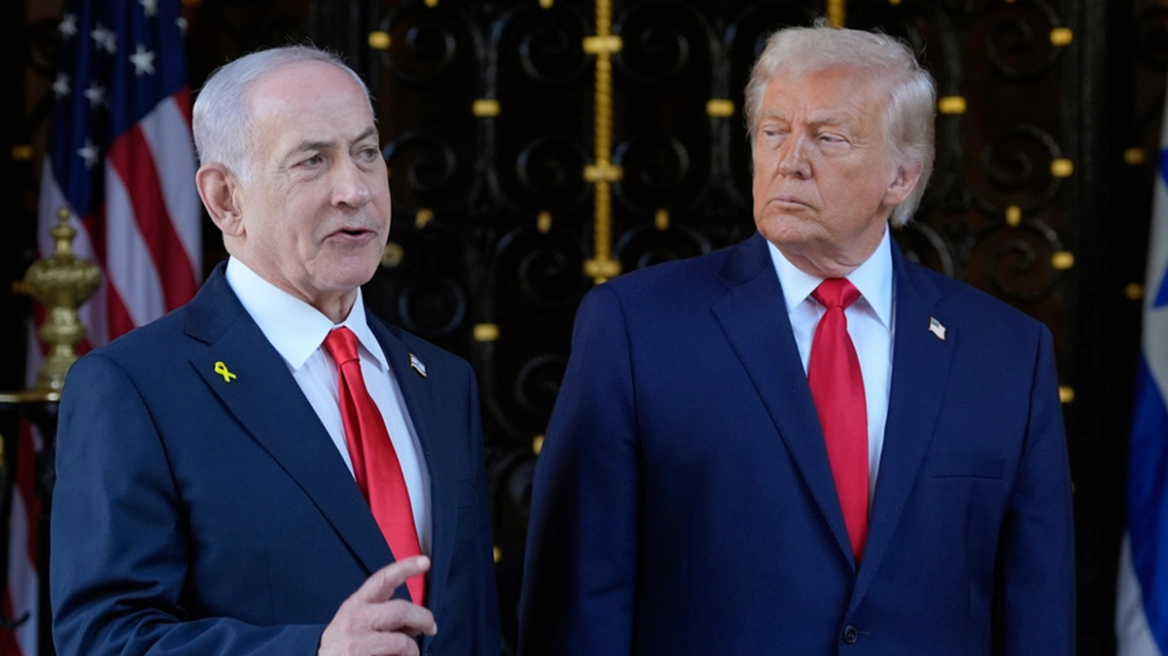
2025 ended with the meeting between Trump and Netanyahu, which was considered critical for the course of the war in Gaza and more broadly. Did it ultimately prove significant?
Judging by what was said in front of the cameras, probably not. Especially if we take into account that in the immediately preceding period Netanyahu did everything in his power to clearly define his “red lines” and his country’s demands ahead of the meeting at Mar-a-Lago, the outcome of the meeting with Trump should logically have disappointed him.
Netanyahu travelled to Florida to seek the American “green light” for the Israeli army itself to disarm Hamas in Gaza, Hezbollah in Lebanon, and to carry out a new Israeli operation in Iran, this time targeting its ballistic arsenal. He stated that Israel would “demand” that the United States refrain from selling F-35 fighter jets to Turkey and Saudi Arabia in order to maintain Israel’s military superiority in the region - which he framed as “regional balance”.
He reiterated that Israel’s veto remains in place against any Turkish presence in Gaza within the framework of the peace plan. Israeli media were encouraged to highlight the (indeed) anti-Turkish tone of the recent Cyprus–Greece–Israel trilateral meeting, which (also indeed) seeks to revive the 3+1 framework. Finally, he recognised the secessionist entity of Somaliland, partly to remind Trump of the controversial “evacuation plan” for Gaza’s population and partly to drive another wedge into the Turkish factor, which maintains a significant presence in Somalia.
With the same move, Netanyahu strengthened the regional Israel–UAE axis, as the Emirates have supported Somaliland economically since its establishment in 1991, thereby signalling to Saudi Arabia “where its limits lie” both in Yemen and in Syria.
In short, Netanyahu’s carefully calibrated moves over the past 14 days were designed to prepare the agenda of his demands when he sat down at the same table with President Trump. Ultimately, however, Trump’s responses did not clarify the murky landscape, nor did they “force” him to admit that the Gaza peace plan simply cannot be implemented in practice, since no country — Arab, Muslim or Western - is willing to take up arms to disarm Hamas.
As for Turkey, while it may declare itself ready to send troops, for the time being it may even feel relieved by the Israeli veto, which is doing everything it can to avoid Turkish soldiers being forced to disarm Hamas - an organisation that has been almost sanctified by Turkish public opinion. Is it conceivable today that the average Turkish citizen would believe the Turkish army would go to Gaza to strip Hamas of its weapons? To Turkish ears, this sounds like national betrayal.
Hamas
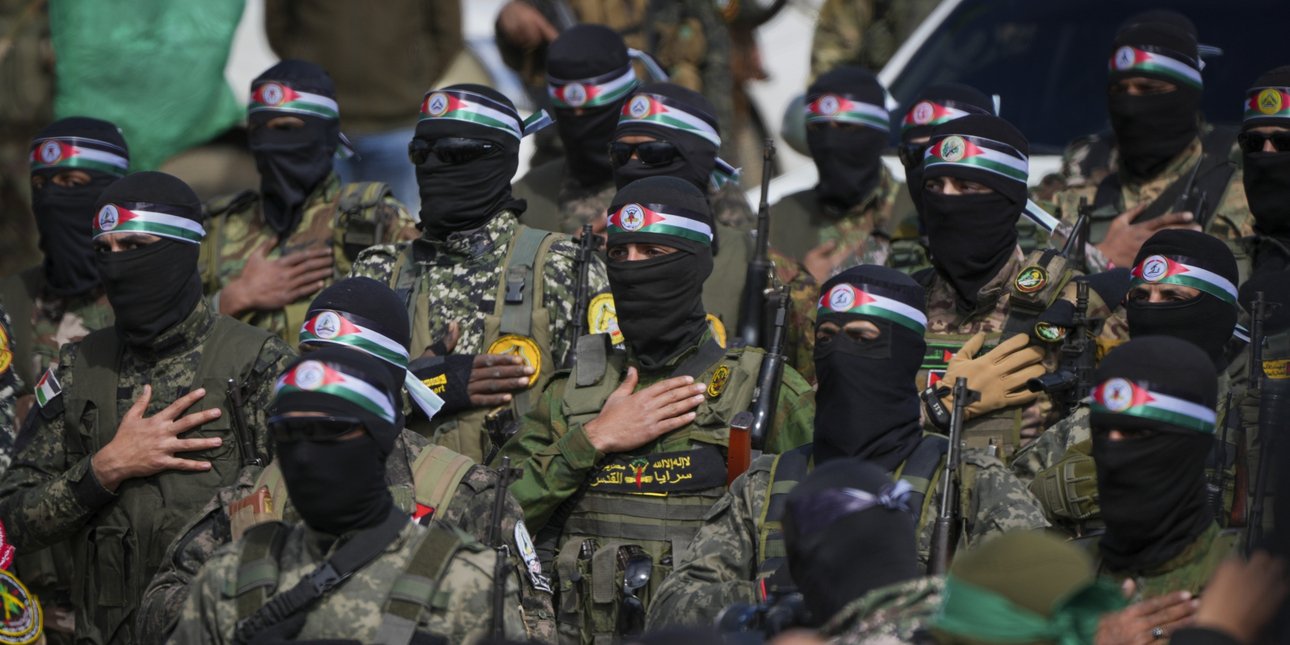
Is a short deadline likely to be imposed for Hamas to disarm voluntarily?
Yes, that is indeed the only substantive development to emerge from the Trump–Netanyahu meeting, along with the fact that the exact timeframe will be set through the mediation of the Witkoff–Kushner duo. This comes at a time when the body of the last Israeli hostage has yet to be returned, meaning the first phase of Trump’s plan has not formally concluded.
However, a crucial variable must be taken into account: Hamas announced a week ago that it would elect a new leader. The process involves electors both inside and outside Gaza. Even if we assume this process will not take long, it is worth noting who the two leading candidates are. On the one hand, Khalil al-Hayya, aligned with Iran; on the other, Khaled Mashal, aligned with the Qatar–Turkey axis.
The timing of this manoeuvre by Hamas is clearly not coincidental. Can the “unscathed” Witkoff–Kushner duo cope with such negotiations amid this Middle Eastern backdrop? One can only hope.
Is Trump’s plan unworkable?
The only tangible result of this plan has been the release of living and deceased hostages, which effectively “stripped” the Israeli opposition of its arguments against the previous handling of the war by the Netanyahu government. It also created the impression in international public opinion that “the war is over”, weakening the demands of pro-Palestinian protests in Europe and the US, which had indeed begun to become “irritating” for governments.
The war, however, has not ended. Hamas has not disarmed. No country has volunteered to send troops, with Jordan flatly rejecting any involvement and the UAE asking what exactly such an international force would do other than fight Hamas.
Moreover, unlike what we have known of Washington since the Second World War, while it appears very willing to demand that foreign — and particularly Muslim — countries become actively involved militarily in Gaza, it states clearly that “no American boots will set foot in Gaza”. Without your own boots on the ground, however, you cannot impose your own order. This is precisely where the pathology of Trump’s plan lies, and the main reason I have never believed it would end the war. So far, I believe events are proving me right.
If the United States were to decide to send troops to Gaza, the situation would change. Otherwise, the only army that truly wants — and perhaps is able — to disarm Hamas is the Israeli army.
Lebanon and Hezbollah
Does this resemble the Israel–Hezbollah front?
Exactly - with one crucial difference. The government in Beirut has now realised that the era of militias must come to an end. President Joseph Aoun’s problem is that he is unable to bring that era to a close. The deadline for Hezbollah’s disarmament by the regular Lebanese army expired on 31 December.
The US special envoy, Morgan Ortagus, has done excellent work and is attempting, through a series of “harmless” contacts between Israel and the Lebanese government, to delay the next explosion. Even so, I would be pleasantly surprised if a new Israeli operation in Lebanon were ultimately avoided.
Syria
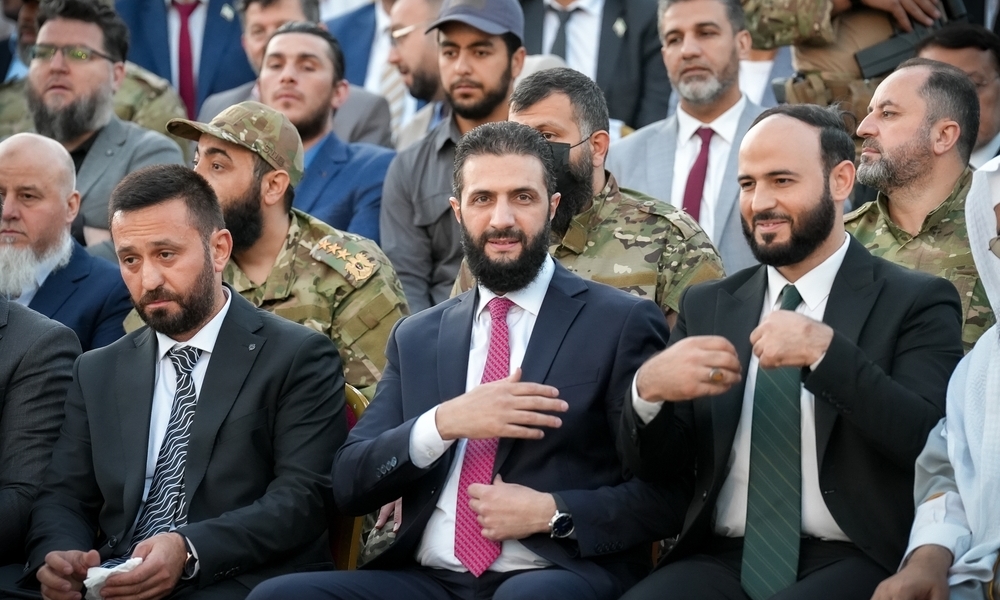
On the other hand, the new government in Damascus appears to have won the confidence of the international community.
It is true that interim President Ahmad al-Sharaa has managed to capitalise on the opportunities presented to him so that Syria appears to be regaining its statehood after many ordeals. He has received a vote of confidence from Erdoğan, then Trump, later Saudi Crown Prince Mohammed bin Salman, Qatar, the Arab League and the majority of European leaders. He has received significant financial support from Qatar and expects similar backing from Saudi Arabia.
One could describe this as a Syrian success story — but we should not deceive ourselves. Syria may appear to be doing well externally, but internally al-Sharaa’s governance faces serious cohesion problems.
Iran
Iran, meanwhile, following its withdrawal from Syria and the so-called Twelve-Day War with Israel, appears weakened - or perhaps not?
It is true that since last June Iran has become more inward-looking. The government in Tehran appears to be facing serious internal difficulties, with the value of the rial steadily declining and inflation rising. However, its primary concern continues to be regions inhabited by ethnic minorities, particularly the Azeri population in the north-west and the Sunni population along the southern border with Iraq.
While the possibility of a new Israeli strike always exists, the activation of separatist movements within Iran is considered a far greater threat to regime stability.
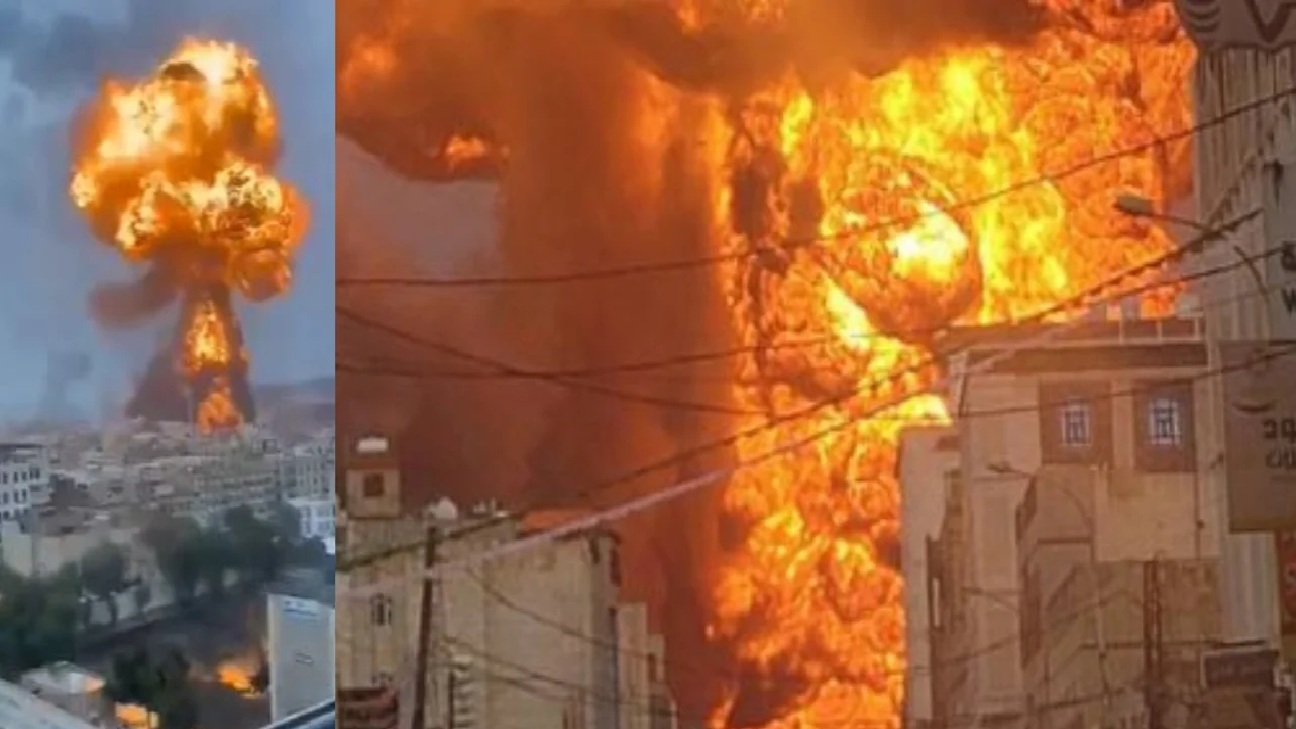
Yemen
The end of 2025 also highlighted other surprising fronts, notably the rivalry between Saudi Arabia and the United Arab Emirates in Yemen.
This is indeed an “unexpected” front between two countries that have maintained close relations and shared common positions on almost all regional issues. Yemen today is divided into three zones of influence. The north and west are controlled by the Iran-backed Houthi rebels. The internationally recognised government controls large parts of eastern Yemen and the southern coastline. Meanwhile, UAE-backed rebels seek control over southern and eastern Yemen.
Just days ago, Saudi Arabia bombed Emirati weapons and military vehicles located in areas controlled by pro-Emirati rebels. This development highlights just how fluid regional balances have become.
Elections in Israel
Looking ahead to Israel’s 2026 parliamentary elections, Netanyahu faces no internal challenger. Polls consistently place Likud first. The Israeli political map since 7 October 2023 can best be described as “many shades of the right”.
The key question is not who wants to cooperate with Netanyahu, but whom Netanyahu will choose to cooperate with. No credible ideological rival capable of replacing him is currently visible, and it is doubtful whether any Israeli politician would want to take on the burden of an unfinished war.
The fronts of 2026
Nothing was resolved in 2025, and therefore nothing has ended. Israel describes the war as one with “seven fronts”: Gaza, Lebanon, Syria, Iran, Houthi-controlled Yemen, the West Bank and Iraqi Shiite militias. I would add one more - the front between Israel and the White House.
Under Joe Biden, differences between Israel and the US became more apparent than ever. Israelis celebrated Trump’s return to power, only to find themselves facing a confusing tripartite American position: the predictable “deep state” represented by Secretary of State Marco Rubio; the Witkoff–Kushner duo, expressing a superpower-as-business mindset; and Trump himself, with his ambiguous and often incendiary statements.
Israelis are exhausted, and history shows that exhaustion and constant tension often lead to spasmodic and unpredictable reactions - towards both enemies and allies.