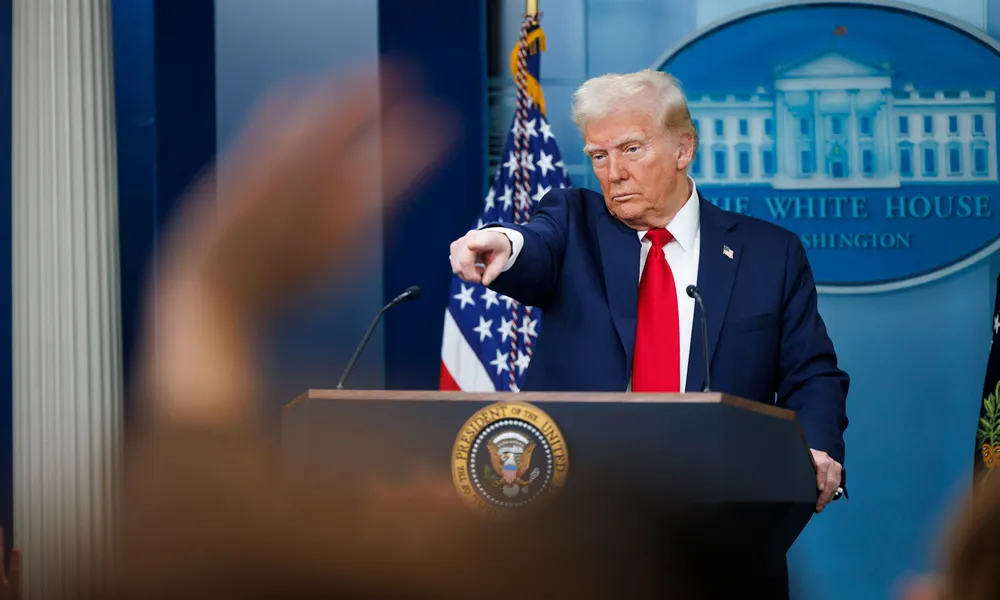
The United States is weighing a range of military and non military options in response to ongoing protests in Iran, as President Donald Trump warned that Tehran is approaching a “red line” while also indicating that Iranian leaders have reached out to seek negotiations.
This is Tehran tonight 11 January! After mass massacre against peaceful protesters in recent days. Iranian people decided to win this fight, it's time to support brave people of Iran #IranRevolution pic.twitter.com/Outr8oTzZV
— Hamed (@Me_Hamed_Myself) January 11, 2026
US reviews response options
According to US officials, President Trump has been briefed on several possible courses of action as protests across Iran have resulted in dozens of deaths and thousands of arrests. CNN reports that some military options under review focus on Iranian security and enforcement agencies involved in suppressing demonstrations, amid concerns about retaliation or a potential rally around the government.
Thousands of Iranians are back on the streets again tonight in a major uprising against current leadership pic.twitter.com/kFfqRWgDYZ
— 6ixBuzzTV (@6ixbuzztv) January 10, 2026
Warning on attacks against US bases
Speaking to reporters aboard Air Force One on Sunday, Trump said the US military is examining “very strong options” regarding Iran. He warned that any attack on US bases in the region would be met with a response “stronger than ever.”
Families are searching for their loved ones among the piles of corpses that Iran’s murderous Khamenei regime has stacked at a warehouse in Tehran.
— Nazgol (@nazgolaneh) January 11, 2026
The regime has shut down entire internet and phone and is brutally killing protesters.#DigitalBlackoutIranhttps://t.co/rECeeggp8D
“Iran is starting to cross my red line,” Trump said, citing reports of people being killed during the unrest. He added that the issue is being examined “very seriously” by the military and the administration.
BREAKING:
— Visegrád 24 (@visegrad24) January 11, 2026
New footage shows the bodies of more than a hundred murdered anti-regime protesters brought to the Kahrizak Forensic Medical Center in Tehran on January 8th.
It proves that the death toll in Iran is much higher than previously thought, and is likely in the thousands pic.twitter.com/8bqhwpj6Xj
Claims of outreach from Tehran
Trump also said that Iranian leaders contacted his administration to seek talks following his warnings of possible military action. He told reporters that a meeting was being prepared but added that “we may have to take action before” any such talks occur.
Non military measures under consideration
In parallel, CNN reports that the administration is also considering non kinetic measures, including:
- Cyber operations targeting military or state systems to disrupt repression efforts.
- Additional sanctions against senior Iranian figures or key economic sectors, including energy and banking.
- Support for communications technology, such as Starlink, to help protesters communicate despite internet restrictions. Similar assistance was provided by the previous US administration during protests in 2022.
Trump has said that if Tehran uses lethal force against civilians, the US would respond without deploying troops, instead opting to “strike where it hurts.”
No final decision yet
Sources told Reuters that multiple options have been presented to the president, including actions targeting non military infrastructure in Tehran. The White House declined to comment beyond Trump’s public statements and recent social media posts, in which he wrote that “Iran is seeking freedom” and that the United States is “ready to help.”
A US official told Reuters that Trump is expected to meet senior national security advisers on Tuesday. Politico reported that no final decision is expected at that meeting and that sending US troops to Iran is not under consideration. The developing plan reportedly includes a mix of kinetic and non kinetic actions, with an emphasis on cyber and covert operations.
Iranian and regional reactions
Iranian parliamentary speaker Mohammad Bagher Ghalibaf warned that US military and commercial bases would be considered legitimate targets in the event of intervention.
Israel is closely monitoring developments. Prime Minister Benjamin Netanyahu is expected to hold a limited security meeting focused on Iran and Lebanon.
Protests and casualties
Large scale demonstrations continue across Iran, initially triggered by soaring inflation and later expanding into protests against the clerical leadership of Supreme Leader Ali Khamenei. According to sources and international human rights organisations, more than 500 protesters and 48 members of the security forces have been killed nationwide, including 169 children, while more than 10,600 people have been detained. These figures have not been independently verified.
Verified videos by international media organisations show bodies in morgues near Tehran and widespread street clashes involving fires, gunfire and improvised barricades. Security forces are reported to be using live ammunition.
Iranian authorities have labelled protesters “enemies of God,” while President Masoud Pezeshkian accused the United States and Israel of inciting the unrest. Khamenei described demonstrators as “vandals” acting to serve US interests.
Digital shutdown and Starlink restrictions
Internet access across Iran has been severely restricted, limiting communication and verification of information. Coverage relies largely on videos and testimony from internal sources and human rights groups.
According to reports, Tehran has intensified digital repression efforts by attempting to block access to Starlink, which had become a key channel of communication following the state imposed nationwide internet blackout.
Opposition call from Reza Pahlavi
Exiled opposition figure Reza Pahlavi called on Iranians to enter a “new phase” of national uprising aimed at overthrowing the Islamic Republic. He urged protesters to occupy main roads, called on security forces and workers to side with the public, and asked citizens to raise the national flag instead of symbols associated with the current regime.
Sources: Reuters, CNN, Politico, international media reports