Nearly half a century has passed since the last war in Cyprus. The children who experienced it are now grandparents, while today’s parents grew up in a country where war existed mainly in history books, documentaries or family memories.
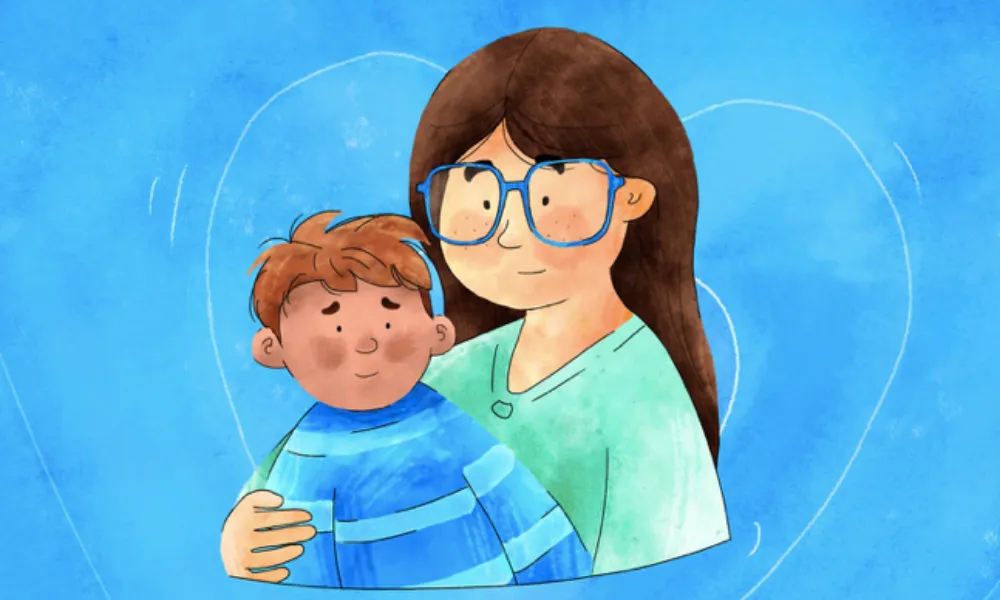
As conflict dominates international headlines once again, many parents face a difficult question: how do you explain war to children? Guidance from UNICEF offers practical ways to approach these conversations with care, honesty and reassurance.
Start by asking what children already know
Children often encounter news through television, school conversations, social media or discussions between adults.
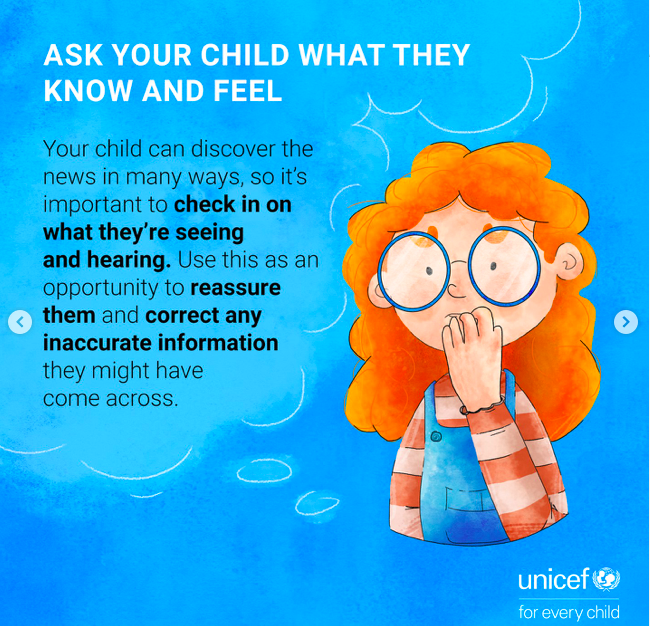
UNICEF recommends beginning by asking children what they have already seen or heard and how they feel about it. This allows parents to understand possible fears or misconceptions and gently correct inaccurate information.
Listening first also creates a space where children feel safe to express their concerns rather than internalising them.
Keep explanations calm and age-appropriate
Children have the right to understand what is happening in the world, but explanations should match their age and emotional maturity.
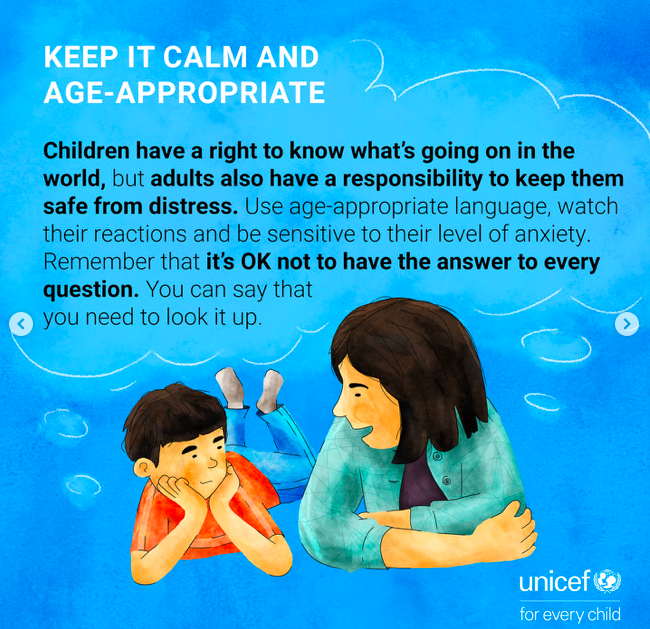
Simple, clear language can help avoid unnecessary anxiety. Parents are encouraged to observe their child’s reactions and adjust the conversation accordingly.
It is also acceptable not to have every answer. Adults can acknowledge uncertainty and suggest looking for information together.
Encourage empathy rather than fear
Conflict coverage can sometimes lead to prejudice or generalisations about people from certain countries or backgrounds.
UNICEF advises parents to emphasise compassion and human solidarity, reminding children that everyone deserves safety.
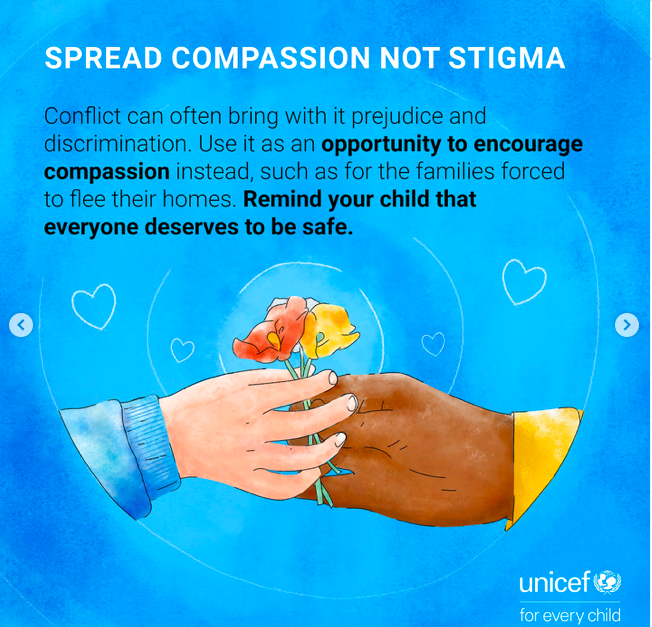
Discussing the experiences of families forced to leave their homes or communities affected by violence can help children understand the human impact of war without framing entire groups as enemies.
Focus on the people who help
Talking about individuals who assist others during crises can offer children a sense of hope and agency.
Parents can highlight the work of first responders, humanitarian organisations and volunteers who provide support to those affected by conflict.
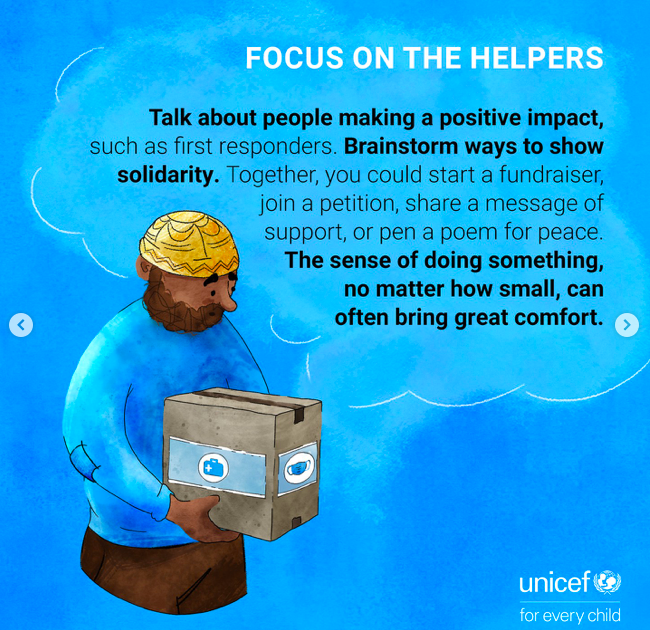
Children may also find comfort in small acts of solidarity, such as writing messages of support, participating in fundraising initiatives or learning about peace efforts.
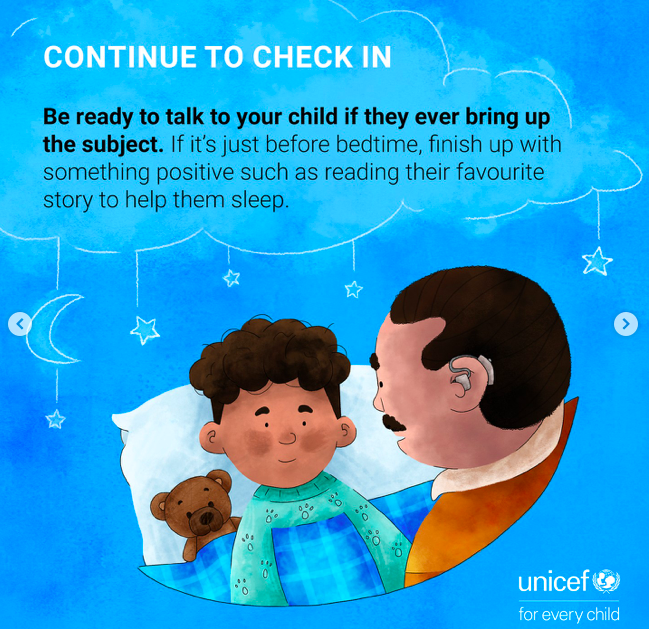
Continue the conversation over time
Children may return to the subject days or weeks later as they process what they have heard.
Parents are encouraged to keep communication open and respond when children raise the topic again. If discussions occur close to bedtime, ending with a calming activity such as reading a favourite story may help reduce anxiety.
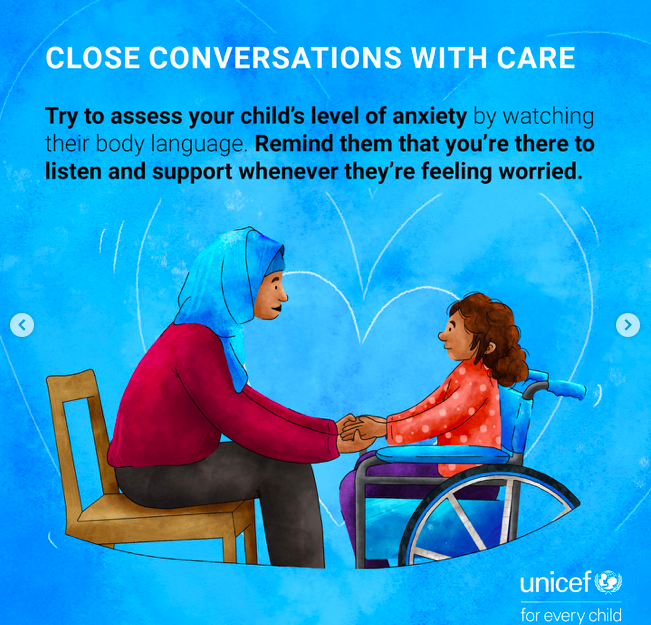
Observing body language and emotional cues can also help adults understand when a child may need reassurance.
Limit exposure to distressing news
Continuous exposure to dramatic headlines or images can be overwhelming, particularly for younger children.
UNICEF advises parents to be mindful of how much news children consume and to consider switching off television broadcasts or notifications when younger children are present.
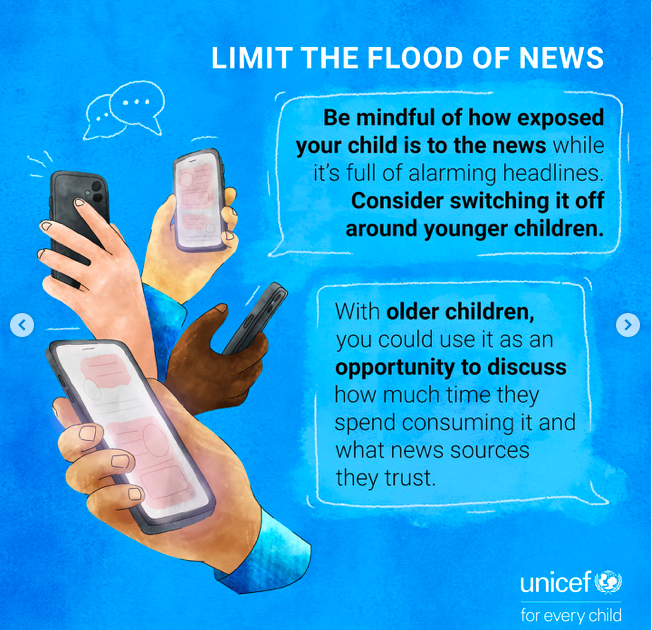
With older children, discussions about media consumption can become an opportunity to talk about trustworthy sources and how to interpret information critically.
Caring for parents as well
Conversations about conflict can be emotionally demanding for adults too.
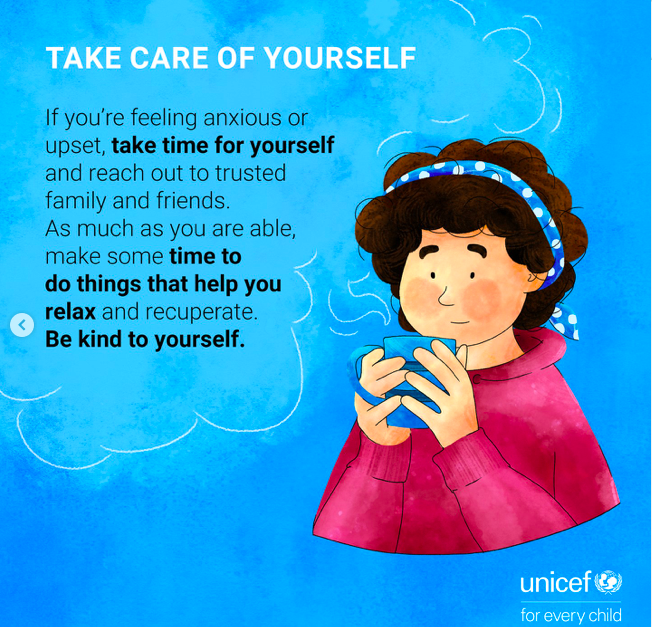
Parents who feel anxious or distressed are encouraged to seek support from trusted family members or friends and to make time for activities that help them relax and recover. Taking care of their own wellbeing allows adults to provide a more stable and reassuring presence for children.
For many families in Cyprus, war has long been part of collective memory rather than personal experience. The challenge today is different: explaining global conflict to children without drawing from lived experience.
Guidance from UNICEF provides a framework that prioritises calm communication, empathy and reassurance, helping families navigate difficult conversations in uncertain times.
Source: UNICEF guidance on discussing war and conflict with children.