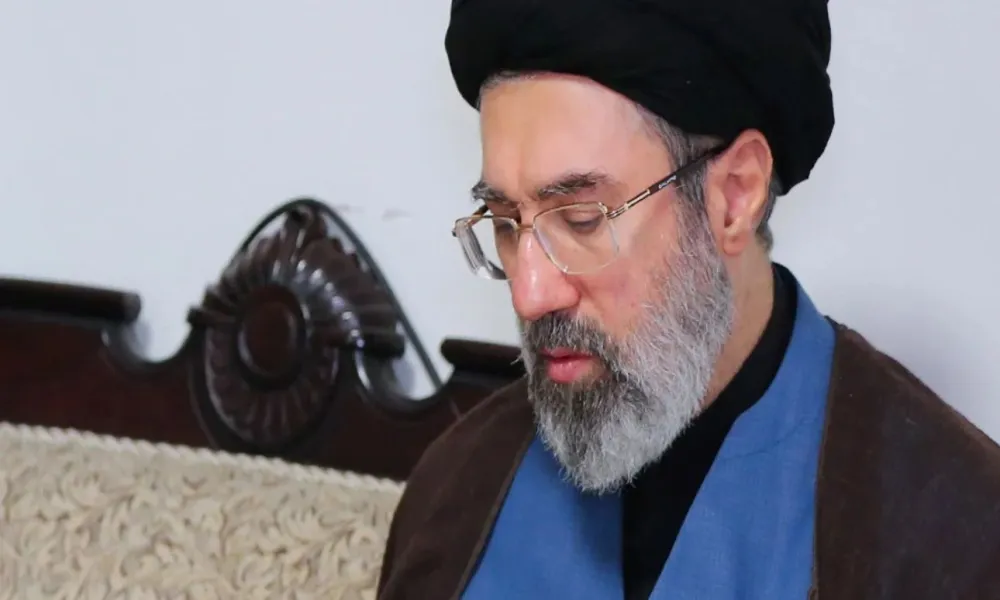

Iran’s clerical establishment has appointed Mojtaba Khamenei as the country’s new Supreme Leader following the death of his father, Ayatollah Ali Khamenei. The decision was taken by the Assembly of Experts, the constitutional body responsible for selecting Iran’s highest political and religious authority.
The succession comes at a moment of heightened regional tensions, after the elder Khamenei was killed during the first day of the United States and Israeli strikes on Iran on 28 February.
Selection by the Assembly of Experts
Iranian state media reported that the 88-member Assembly of Experts selected Mojtaba Khamenei to assume the leadership of the Islamic Republic. The body called on the Iranian public to maintain unity and to pledge allegiance to the new Supreme Leader.
Under Iran’s constitution, the Assembly of Experts is responsible for appointing the Supreme Leader when the position becomes vacant. A temporary leadership council had assumed the role after the death of Ali Khamenei until a successor was formally chosen.
A controversial hereditary succession
Mojtaba Khamenei, 56, is a mid-ranking cleric who has long been considered a potential successor to his father. Despite holding no elected office, he has been widely viewed as influential within Iran’s political and clerical networks.
His appointment marks the first time since the 1979 Islamic Revolution that the country’s supreme leadership has effectively passed from father to son, a development that has drawn criticism from some observers who see it as resembling dynastic succession.
Analysts have noted that Mojtaba maintains close ties with the Islamic Revolutionary Guard Corps, one of the most powerful institutions within the Iranian state.
Support from Iran’s power centres
Following the announcement, the Revolutionary Guards pledged allegiance to the new leader, declaring their readiness to obey his directives and defend the Islamic Republic.
The Houthi movement in Yemen, which is aligned with Tehran, also welcomed the decision, describing it as a victory for the Islamic Revolution and a setback for the country’s adversaries.
According to analysts cited by international media, the choice of Mojtaba Khamenei indicates that hardline factions remain firmly in control of Iran’s political system during a period of war and geopolitical pressure.
Leadership transition during wartime
The leadership change occurs amid an ongoing military confrontation involving Iran, Israel and the United States. The killing of Ali Khamenei triggered a rapid succession process intended to maintain stability within the country’s governing structure.
Observers say the selection of Mojtaba Khamenei reflects the Iranian leadership’s attempt to ensure continuity of power during a period of regional conflict and domestic uncertainty.
Sources: The Guardian, Euronews, CNN, Reuters