


The regional impact of the war involving Iran, Israel and the United States continued to widen on Thursday, with new incidents reported across the Gulf, including a drone strike in Dubai, attacks on commercial shipping near Iraq and repeated drone interceptions over Saudi Arabia. The developments have increased pressure on energy markets and raised fresh concerns over the security of major trade and transport routes.
Drone strike reported in Dubai
In Dubai, authorities said firefighters extinguished a blaze in a residential tower near Dubai Creek Harbour after a drone struck the building.
Officials said the fire was brought fully under control and no injuries were reported. According to international media reports, the incident occurred in a residential building close to a waterfront development area. The United Arab Emirates has not confirmed the source of the drone.
Attacks on commercial shipping
At sea, the situation remained highly volatile. Two oil tankers carrying Iraqi crude were attacked in Iraqi waters on Wednesday, according to Iraqi port authorities. At least one crew member was reported killed, while rescue operations were launched for missing sailors. The vessels included the Malta-flagged tanker Zefyros, reportedly owned by a Greek-linked company, and the Safesea Vishnu, sailing under the Marshall Islands flag.
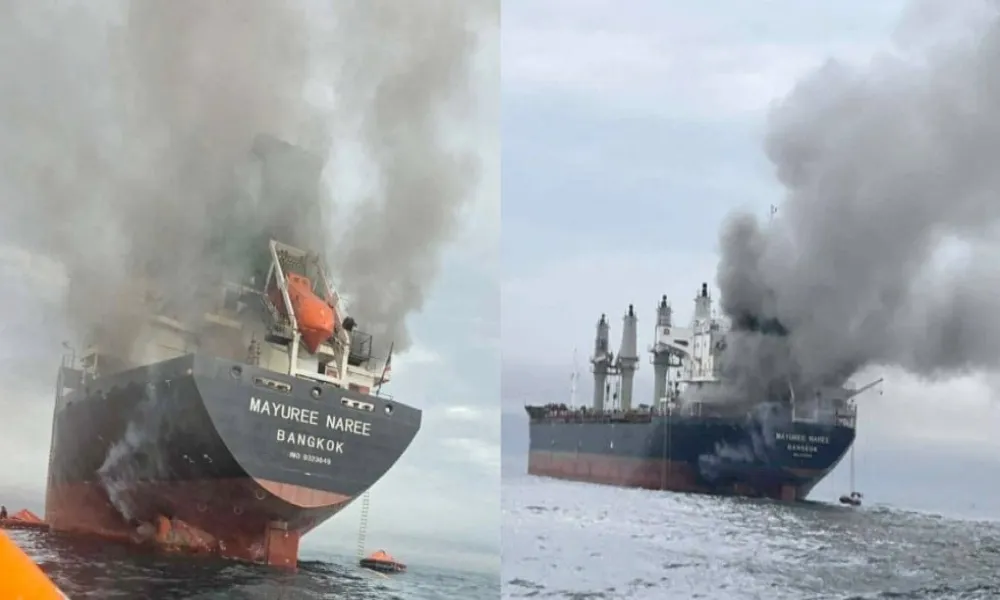
A separate incident involved the Thai-flagged bulk carrier Mayuree Naree, which was struck by two projectiles near the Strait of Hormuz. The attack damaged the ship’s engine room and caused a fire. The vessel’s operator, Precious Shipping, said three crew members remain missing and may be trapped in the engine room. The remaining 20 crew members were evacuated safely and later brought to Oman.
Saudi Arabia intercepts drones
Saudi Arabia said it intercepted several drones heading toward key energy infrastructure, including the Shaybah oil field, one of the kingdom’s major producing sites capable of producing around one million barrels of crude oil per day. Saudi authorities also said a drone heading toward Riyadh’s diplomatic quarter was shot down during the night. The repeated interceptions underline growing concerns that energy infrastructure across the Gulf could become targets as the conflict escalates.
Missile strike reported in Iraq
In Iraq, a missile struck an Italian military base in Erbil, in the Kurdistan region, overnight. Italy’s defence ministry said no Italian personnel were injured in the incident, and all soldiers stationed at the base were safe. Italian Defence Minister Guido Crosetto was reported to have remained in contact with military commanders following the attack.
The Iranian regime is losing air capability day by day. U.S. forces aren’t just defending against Iranian threats, we are methodically dismantling them. pic.twitter.com/CrJj2nFtHB
— U.S. Central Command (@CENTCOM) March 12, 2026
Diplomatic fallout grows
The conflict is also beginning to affect diplomatic operations. Switzerland announced that it has temporarily closed its embassy in Tehran due to security concerns. Swiss diplomats and staff left the country by land and are currently safe outside Iran.
The move is significant because Switzerland has long represented US interests in Iran and has served as a key diplomatic channel between Washington and Tehran. Swiss authorities said they will continue efforts to maintain communication channels between the two countries when possible.
Energy markets react
The security tensions are increasingly affecting global energy markets. Oil prices surged above $100 per barrel earlier this week as traders reacted to threats against shipping routes and energy infrastructure in the Gulf.
The International Energy Agency is reportedly considering an unprecedented release of strategic oil reserves in an effort to stabilise prices and reduce pressure on global markets.
Shipping routes under pressure
The Strait of Hormuz, through which roughly one fifth of the world’s oil supply passes, has become a central concern for governments and energy companies.
Several recent attacks on commercial vessels have already disrupted maritime operations and forced increased security measures in the region.
Sources: AP News, Reuters, CNN