
The North Atlantic Council met on Tuesday at the request of Estonia, under Article 4 of the Washington Treaty, to consult and strongly condemn Russia’s dangerous violation of Estonian airspace on September 19.
According to the Council briefing, three armed Russian MiG-31 aircraft violated Estonian airspace for over ten minutes, leading NATO to scramble allied aircraft to intercept and escort them from Estonian airspace.
NATO said after the meeting that Russia’s incursion into Estonian airspace was “part of a wider pattern of increasingly irresponsible Russian behaviour”.
The North Atlantic Council has met twice in the last two weeks under Article 4, after large-scale violations of Polish airspace by Russian drones. While other allies – including Finland, Latvia, Lithuania, Norway, and Romania – have also recently recorded airspace violations by Russia, said NATO.
“Russia bears full responsibility for these actions, which are escalatory, risk miscalculation and endanger lives. They must stop,” said NATO.
On next steps, no specific new measures were announced by the Alliance, which noted however that all tools remain on the table.
“NATO’s response to Russia's reckless actions will continue to be robust. On 12 September, we launched ‘Eastern Sentry’ to bolster NATO’s posture along the entire Eastern flank. We will reinforce our capabilities and strengthen our deterrence and defence posture, including through effective air defence,” said the NATO statement.
“Russia should be in no doubt: NATO and Allies will employ, in accordance with international law, all necessary military and non-military tools to defend ourselves and deter all threats from all directions. We will continue to respond in the manner, timing, and domain of our choosing. Our commitment to Article 5 is ironclad.”
On a final note, the Alliance said it would not be deterred from their enduring commitments to support Ukraine by Russia’s “irresponsible acts”.
Brussels’ next step: a 'drone wall'
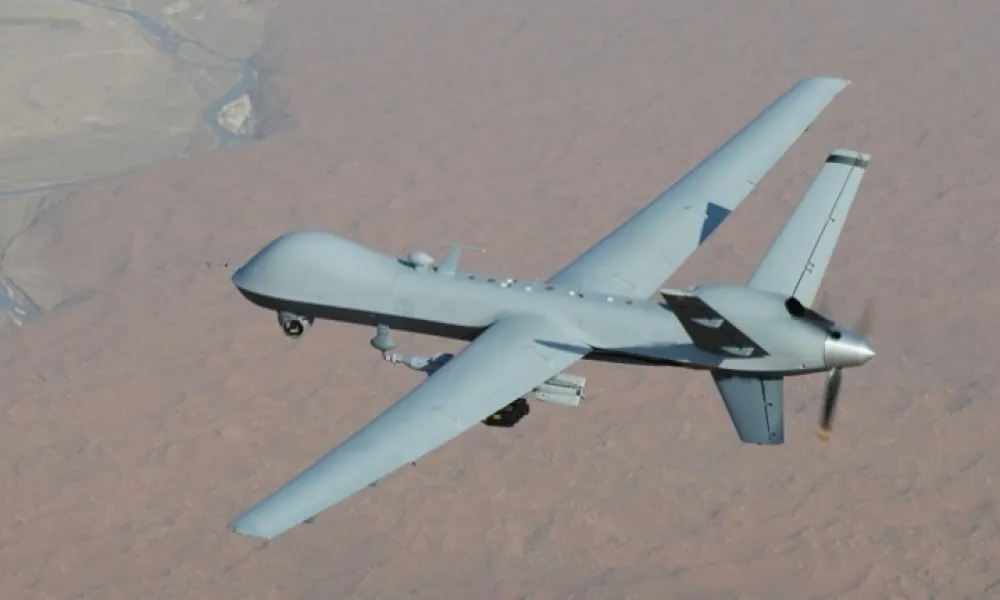
In parallel, the European Commission gathered eastern-border member states for preparatory talks on a coordinated counter-drone effort. Denmark joined the discussion in its role as Council presidency. The EU’s proposed 'drone wall,' first championed by Commission President Ursula von der Leyen in her State of the Union address, aims to link eastern member states’ detection and interception systems to counter hostile drones.
Commission spokesperson Anitta Hipper said recent airspace violations point to a pattern of Russia “testing European borders,” though investigations into Copenhagen are ongoing. NATO Secretary-General Mark Rutte likewise cautioned it’s too early to assign blame but vowed the alliance will defend every inch of its territory. Beyond the immediate alerts, the push for a drone wall reflects Europe’s broader rethink of defence triggered by Russia’s full-scale invasion of Ukraine and signals that, amid shifting U.S. guarantees, the EU is preparing to shoulder more of its own security.
Moscow’s response
The Kremlin has denied involvement in this week’s airport disruptions in Denmark and Norway, calling accusations baseless. At the same time, Russian officials used the moment to push broader security narratives, warning of risks if strategic arms control lapses. The mix of denial and deflection is familiar, and lands against allied claims that recent incidents fit a pattern of probing behaviour.
Copenhagen and Oslo shut their airports for several hours after multiple drone sightings, diverting flights and delaying thousands of passengers before reopening. Investigators in both countries say flight patterns, timing and drone size point to a capable actor, but they have not publicly identified who was responsible. Attribution work is ongoing, and authorities caution against premature conclusions.