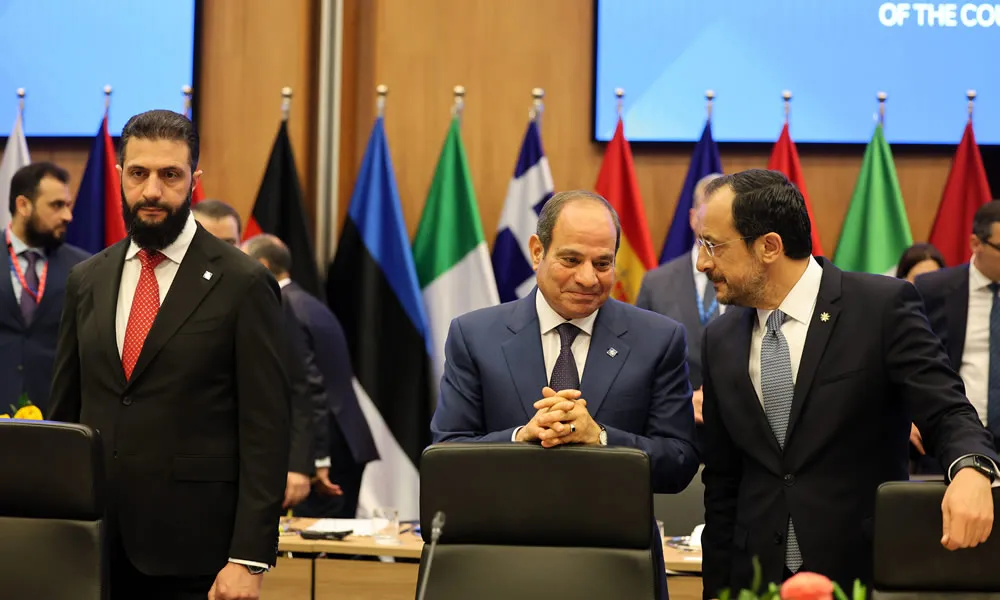
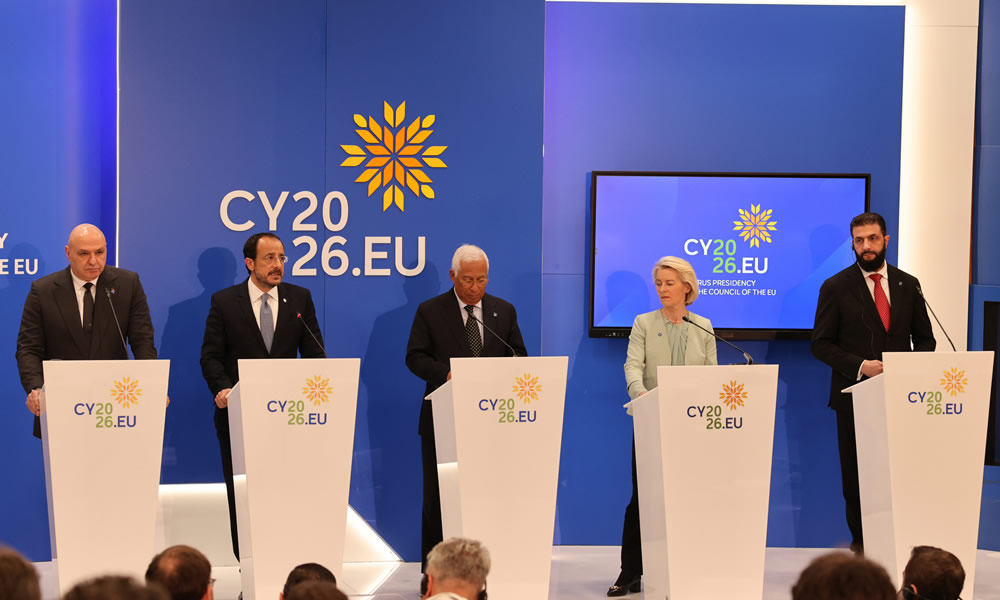
European leaders held expanded working sessions with heads of state and government from the wider Middle East and Gulf region on the sidelines of the Informal European Council in Nicosia.
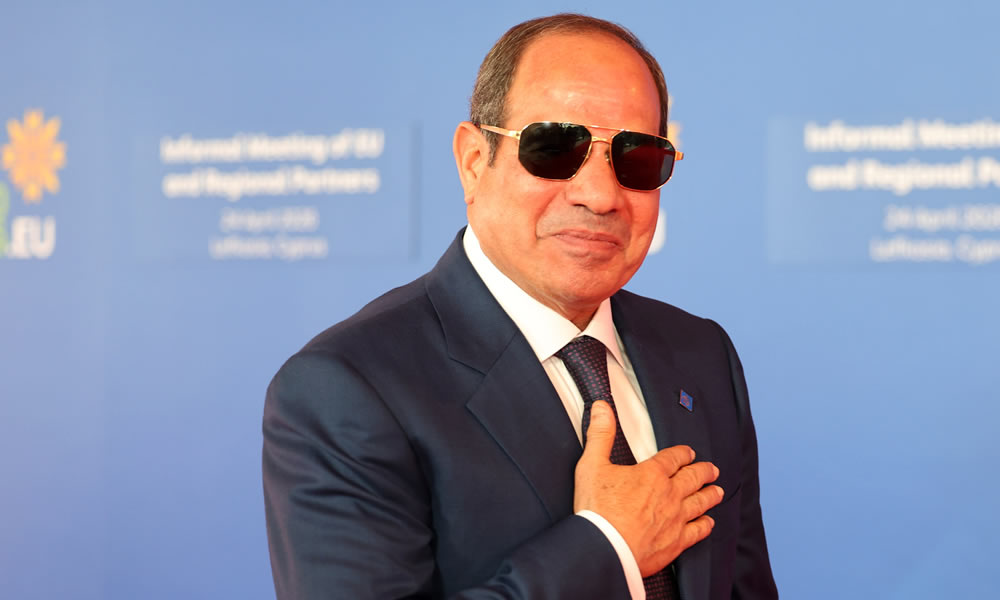
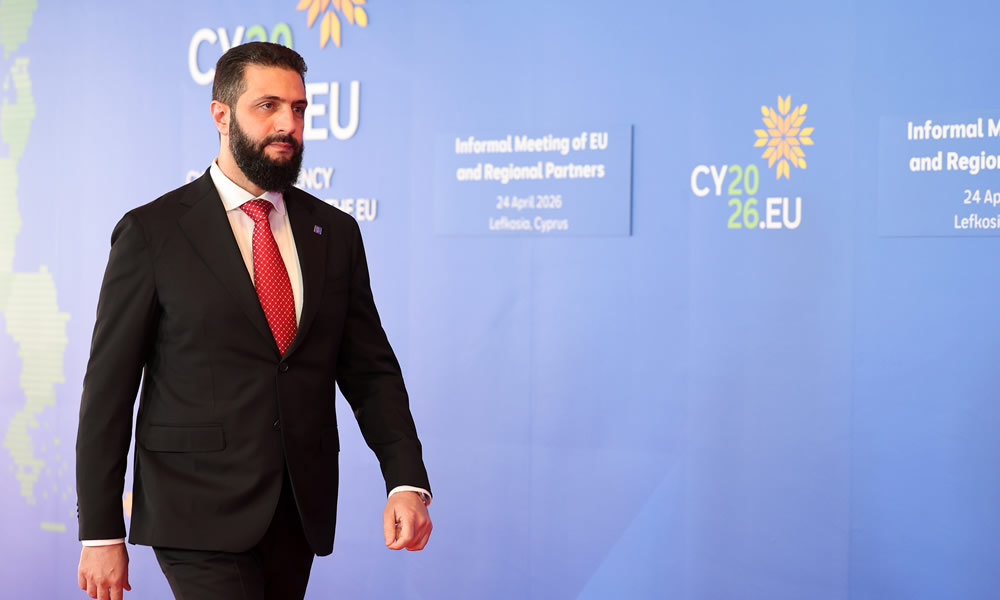
In a post on X, the Presidency of the Republic of Cyprus said that the sessions took place "with the European Union present and active for close cooperation with its partners in the region, and with Cyprus acting as a bridge of cooperation."
EU leaders meeting with key regional partners: Egypt 🇪🇬, Lebanon 🇱🇧, Syria 🇸🇾, Jordan 🇯🇴 and the Gulf Cooperation Council
— Cyprus Presidency of the Council of the EU 2026 (@CY2026EU) April 24, 2026
On the agenda:
📌 the situation in the Middle East, shared challenges and emerging opportunities for cooperation.#CY2026EU pic.twitter.com/A74xrQtY8t
Cyprus will continue to act as a bridge
President Christodoulides struck a tone of cautious optimism at the close of the regional working lunch, saying leaders had identified specific areas where cooperation could help address the multiple challenges the region faces. He stressed that the security and stability of the Middle East was inseparable from that of Europe.
"It is absolutely clear to all of us here that the security and stability of this region is interlinked with that of Europe's," he said.
Christodoulides highlighted the Mediterranean Pact presented by the European Commission as the most serious effort in two decades to reset the EU's engagement with its southern neighbourhood, describing it as operational rather than declaratory in nature. He closed with a commitment that Cyprus, as the EU member state at the crossroads of three continents, would continue to play a bridging role between the Union and the region.
Full respect towards International Law
Antonio Costa thanked Christodoulides for hosting the meeting at what he called a crucial moment, warning that with every day that passes without a solution, the situation in the Middle East is only getting worse. He welcomed the prolongation of the ceasefire with Iran as a positive step but was clear that diplomacy must continue toward a lasting solution.
"Diplomacy is the only sustainable way," he said. Costa addressed Lebanon directly, describing Hezbollah as an existential threat to the country and praising President Aoun for what he called a truly historic decision to ban the group's military activities.
He also welcomed the steps taken by Syria under President al-Sharaa, reaffirmed strategic partnerships with Egypt and Jordan, and said the EU looked forward to deepening ties with Gulf states ahead of the EU-GCC Summit later this year.
We need a permanent path to peace
Ursula von der Leyen delivered the sharpest security message of the press conference, saying the events of recent weeks had exposed a hard truth:
"Our security is not just related, it is intrinsically linked." She welcomed the ceasefire extensions but was unambiguous that a temporary pause was not enough. "A temporary pause is not enough. We need a permanent path to peace," she said.
Von der Leyen called for any peace agreement to address Iran's nuclear and ballistic missile programme, describing the danger a nuclear Iran would pose as real and demonstrated by recent events. She announced that six EU humanitarian airbridge flights had delivered over 250 tonnes of aid to Lebanon as part of a €100 million assistance package, praised Egypt and Jordan for their diplomatic efforts, and proposed expanding the scope of Operation Aspides from protection to a broader joint maritime coordination role. She also called for structural cooperation on scaling up defence production against the shared threat of drone and missile proliferation, and flagged the advancement of the IMEC connectivity corridor as a priority.
The stability of Lebanon is part of the stability of Europe
Lebanese President Joseph Aoun expressed gratitude to Cyprus for hosting the meeting and to EU leaders for their support, describing the summit as an important encounter at a critical moment. He spoke of Lebanon's reality with evident weight, noting that the war had struck a country that had not yet recovered from previous conflicts.
Aoun underlined that Lebanon's instability did not stop at its borders but rippled across the region and beyond, affecting energy security and freedom of navigation. He called for the relationship with Europe to move beyond crisis management toward recovery, emphasising the need for deeper cooperation not only on security but on investment and economic connectivity.
"We confirm the importance of moving from crisis management to recovery through the consolidation of our partnership," he said.
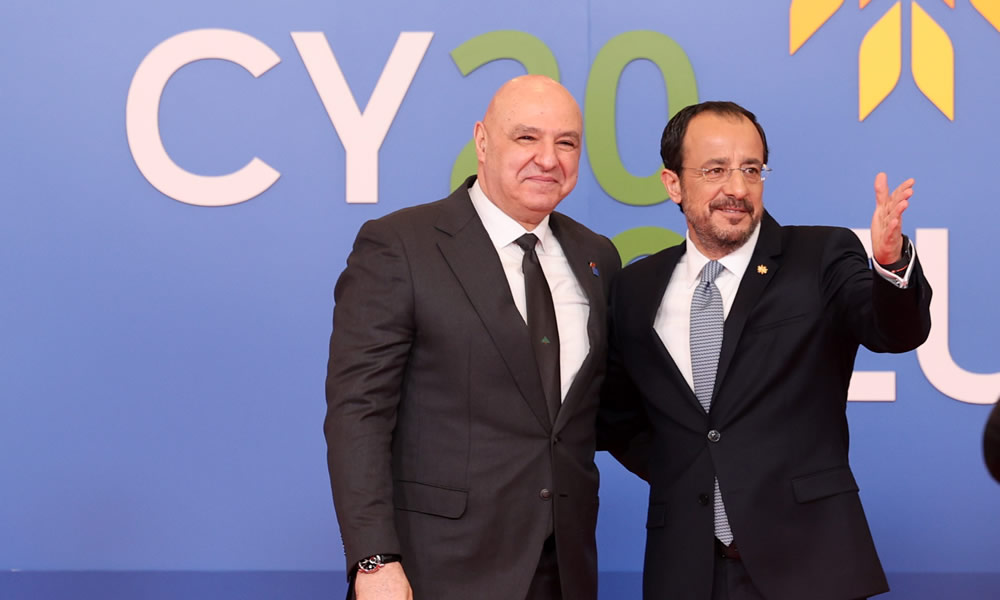
We know that Europe needs Syria as much as Syria needs Europe
Syrian President Ahmad al-Sharaa described the meeting as a moment of political maturity consecrating a new geopolitical reality, and framed EU-Syria cooperation as both inevitable and strategic.
"We know that Europe needs Syria as much as Syria needs Europe," he said, pointing to the importance of Syria's stability for supply chain security and the broader regional order.
He called on the international community to assume its responsibilities in the face of what he described as ongoing Israeli aggressions on Syrian territory, and linked Syria's recovery directly to regional stability and the deepening of its partnership with Europe. Al-Sharaa's remarks reflected a leader seeking to reframe Syria's relationship with the West on new terms, positioning his country as an indispensable partner rather than a pariah state.