
Both burial and cremation of the dead appear among human customs across the world from the earliest times. As Cyprus prepares for the operation of its first crematorium, the practice, often perceived as a modern innovation, in fact carries a history stretching back some five thousand years, one deeply entwined with the ancient Greek world.
An ancient practice across continents
Scholars agree that cremation began around 3000 BC, at the start of the Stone Age, in Europe and the Middle East. The custom travelled with nomadic peoples, for whom it was also a practical habit: by cremating their dead and carrying the ashes with them, they always kept their ancestors close. Cremation finds have been identified in Russia, the British Isles, Spain, Portugal, Hungary, Northern Europe and Ireland.
Cremation and world religions
Buddhism, Hinduism and Taoism accept cremation of the dead as a basic element of their ritual. Buddhism, one of the oldest religions, encompasses a broad range of beliefs, philosophical principles, customs and moral codes attributed to the Buddha, and is followed today by an estimated half a billion people. Hinduism is the world's third largest religion by number of faithful, after Christianity and Islam, with approximately one billion adherents, more than 90 per cent of whom live in India. Taoism, regarded both as a religion and a philosophical system, concerns itself not with God as a Supreme Being but with the principles governing His presence in manifestation, with a practical philosophy based on the suppression of human desire in order to secure inner calm.
Cremation in ancient Greece
From 1200 BC until the first century AD, cremation of the dead became a very common phenomenon in Greece. Numerous cinerary urns and larnakes have been found in the Kerameikos cemetery and in burial grounds across almost all the known cities of the ancient Greek world.
Homer describes a multitude of cremations, including those of Patroclus, Achilles and Hector, and presents Nestorurging the Achaeans to cremate their dead. The lawgiver Solon was cremated and his ashes scattered in accordance with his own wishes. Among the finds in the royal tombs of Vergina, the ashes of Philip II of Macedon, father of Alexander the Great, were discovered together with his bones in a golden cinerary larnax adorned with the eight-rayed star, the symbol of the Macedonian dynasty.
The Roman period
The Romans adopted cremation from the Greeks. Beautifully decorated cinerary urns from this period have been recovered and were kept in purpose-built structures known as columbaria.
Christianity and the shift to burial
In the third century AD, with the rapid spread of Christianity and the strong influence of its teachings on the resurrection of the dead and the coming judgement, funerary customs began to change and whole-body burial came to dominate. When Constantine the Great decreed Christianity the official religion of the empire, cremation began to disappear, replaced almost entirely by the Jewish custom of burial, which the Jews practised in accordance with the laws of Moses and the guidance of the sages. The burial of Jesus was carried out according to this Jewish custom, as the Evangelist John records (John 19:40).
It is worth noting that the view that the dead must be buried is not a matter of dogma but the result of long-standing practice. It is, in other words, a custom. Indeed, in exceptional and urgent circumstances, such as wars and plagues, mass burial and cremation of the dead were carried out to prevent deadly epidemics and the contamination of the living.
The modern revival
The modern history of cremation has its roots in the 19th century, when the Italian professor Brunetti perfected a cremation furnace which he presented at the Vienna World Exhibition of 1873. Many scientists began to view cremation as a sanitary alternative to burial, while others considered it significantly more economical.
In 1874, the municipal council of Milan approved the practice, and in the same year Sir Henry Thompson, surgeon to Queen Victoria, founded the Cremation Society of Great Britain. The first crematorium in England was completed in 1879 in Woking, Surrey, but remained unused for five years until the English courts legalised cremation. In December 1878, the first crematorium opened in the town of Gotha, Germany. In the United States, the movement first appeared in 1876, with the first crematorium built in Washington, followed by the New York Cremation Society in 1881 and later the Cremation Association of America. By 1913, the United States had 52 crematoria and approximately 10,000 recorded cremations. By 2002, there were 1,835 crematoria carrying out 679,890 cremations, representing 27.78 per cent of annual deaths.
The International Cremation Federation
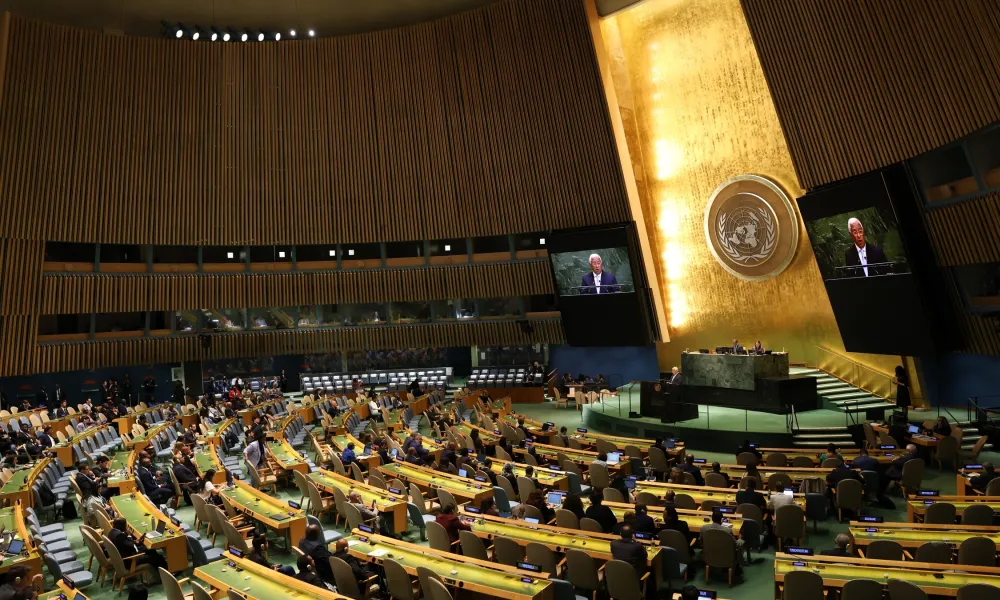
In 1937, the International Cremation Federation (ICF) was founded in London, a non-profit organisation promoting cremation worldwide to the highest standards. In 1966, the Federation was recognised by and admitted to the Economic and Social Council of the United Nations, and maintains accredited representatives at UN headquarters in New York and at the UN offices in Vienna and Geneva. The Federation played a significant role in lifting the prohibition on cremation for Roman Catholics, with the Roman Catholic Church permitting the practice from 1966. Its code of ethics requires, among other principles, that every cremation be conducted with dignity and respect, that cremations be carried out individually so that ashes are never mixed, and that each person's right to decide the disposition of their own ashes be safeguarded.
Where Cyprus stands today
Cremation was legalised in Cyprus through a law passed in April 2016, the Cremation of Human Remains Law of 2016 (53(I)/2016), although technical delays meant it did not come into force until 2019. Cyprus, together with Malta, has remained one of the only EU member states without a crematorium, and residents wishing to be cremated have until now had to make arrangements abroad, at additional cost and complication for their families.
That is now set to change. Planning approval has been granted for the country's first crematorium, to be built by Golden Leaves Cyprus Crematorium Limited in Agia Varvara, in the Paphos district, with construction scheduled to begin in September 2026 and completion expected in 2027. The facility is planned to include ceremony halls and landscaped memorial areas, and will operate low-emission cremation systems in line with European environmental regulations.
Under the current legal framework, anyone wishing to be cremated in Cyprus must complete an official consent form, available in Greek and English, and deliver it to the district office; cremation cannot proceed without this written consent. The form includes a declaration that the person is of sound mind and voluntarily requests cremation, along with their wishes for the handling of the ashes, although scattering ashes at sea is prohibited by law.