
Cyprus is not short on good ideas. It is occasionally short on the courage to try them out loud. Elsewhere, governments, municipalities, employers, schools and institutions have already run the experiment: they tried the bold policy, braced for backlash, and mostly got a shrug and a thank-you instead. In this series, Politis to the Point brings those tested practices to Cypriot decision-makers with a simple, friendly nudge: the hard part, the actual risk-taking, has already been done by someone else. All that's left is the paperwork.
A tourist collapses on a Larnaca promenade at 11pm. A hiker suffers cardiac arrest on a Troodos trail. A grandmother in a Nicosia apartment block goes into arrest while her neighbours are two floors away. In each of these scenarios, the difference between survival and tragedy is measured in minutes, and in whether the person nearby knows what to do and has something to do it with. Several countries have already built entire systems around exactly that gap. Cyprus, a country whose economy runs on tourism and whose population skews older every year, has not, quite.
Where Cyprus stands today
Cyprus does have a legal framework: the Automated External Defibrillators (Installation and Use) Law of 2008 [Law 110(I)/2008] requires AEDs in airports, ports, organised sports facilities, lifeguard towers, public swimming pools, banks, hotels, central bus stations, aircraft and ships, as well as in any public service, organisation or private business through which more than 500 people pass daily. The obligation to install devices only came fully into force from 30 June 2010, meaning Cyprus has now had more than 15 years to build a proper public-access network and largely has not. Most of these devices sit inside premises that close at night or require staff access. Genuinely outdoor, street-level defibrillators remain rare, a handful are known to exist in central public spaces such as Eleftheria Square in Nicosia, but nothing resembling a real, citywide outdoor network. There is no mandatory first aid training built into obtaining a driving licence, no requirement for schools to certify students, and no obligation on apartment buildings, Cyprus's dominant housing form, to have a defibrillator in a shared space at all.
What Germany, Austria and Switzerland do
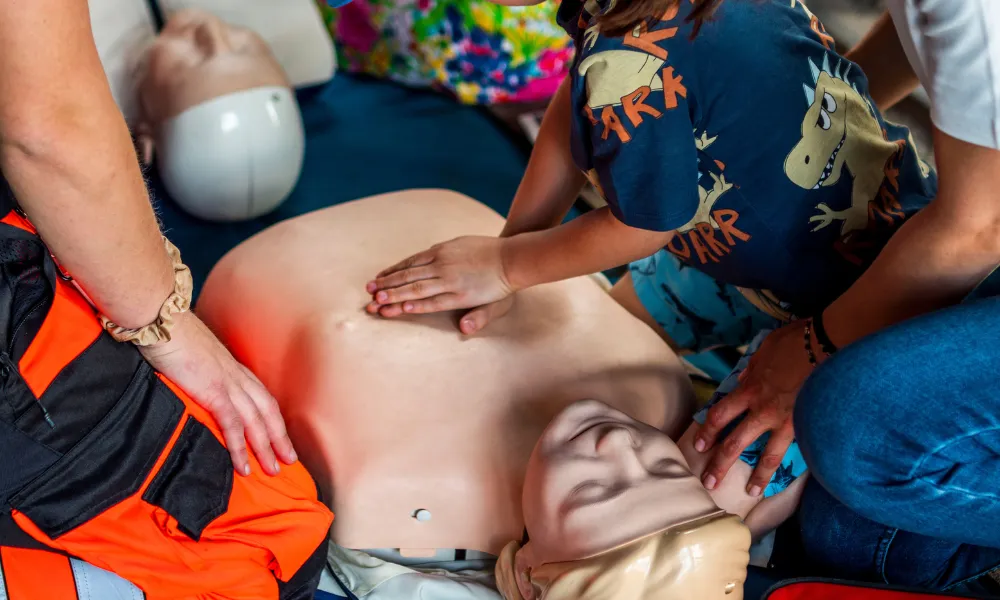
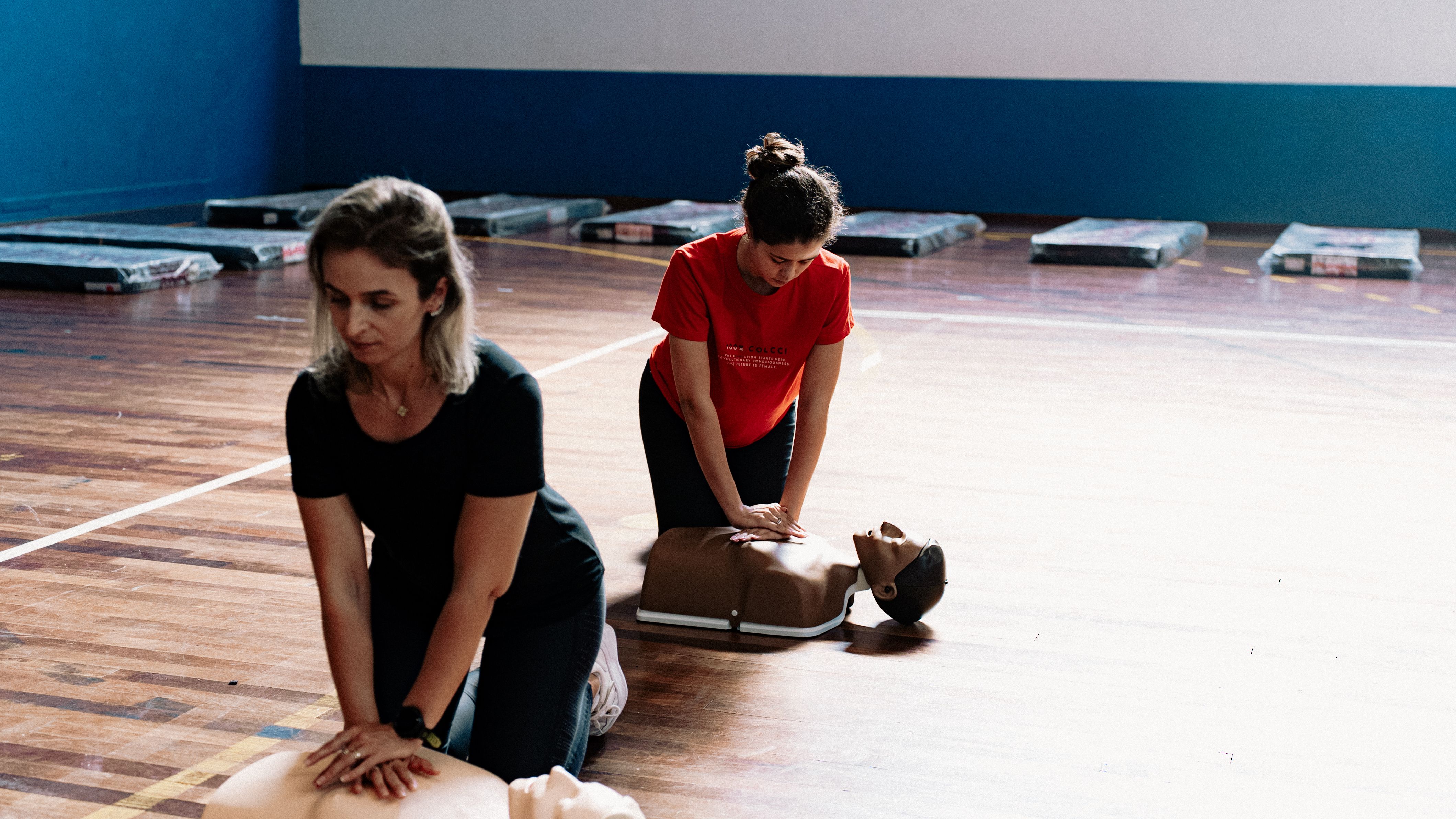
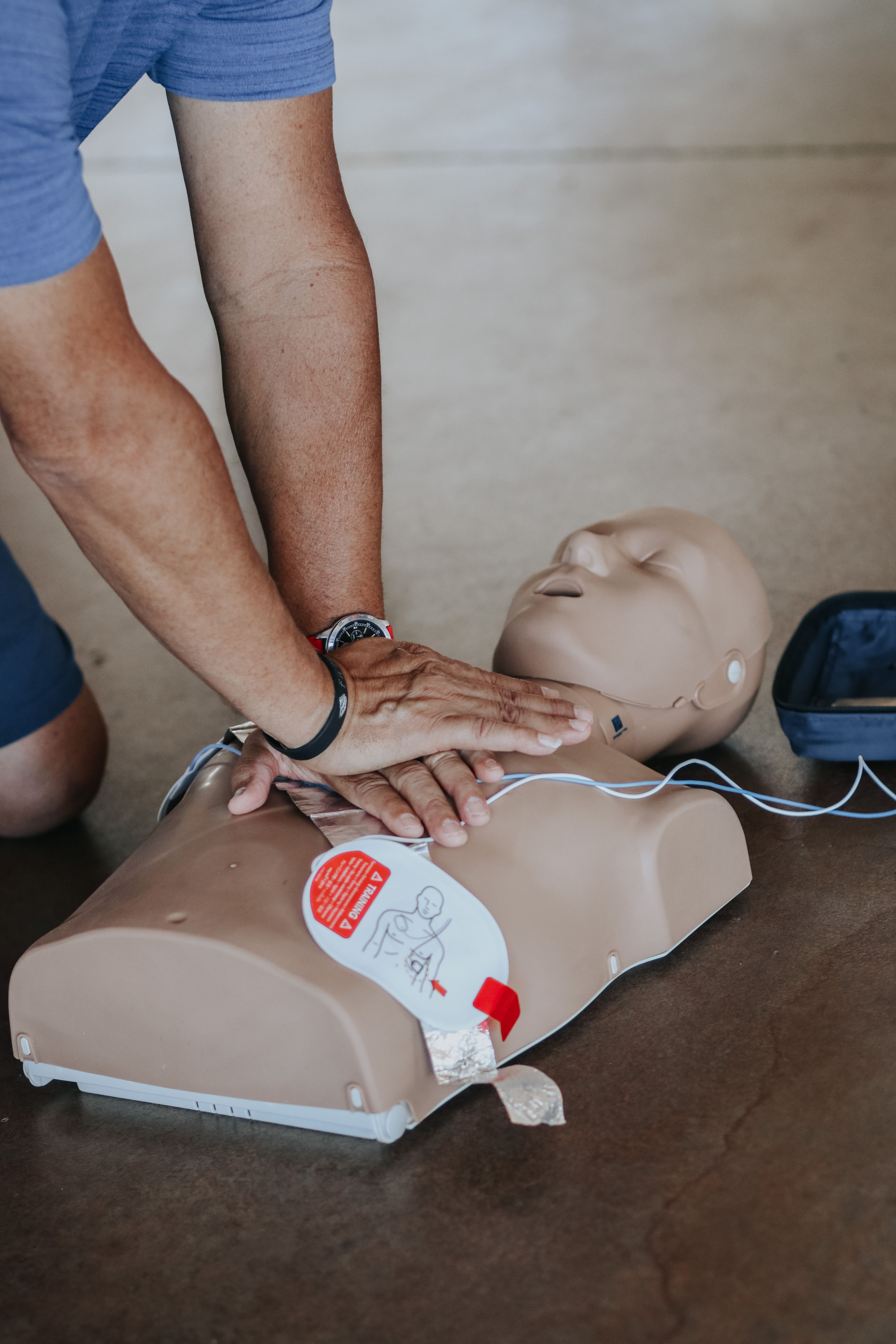
In Germany, first aid training is not optional, it is baked into the process of becoming a driver. Every applicant must complete a certified course (Erste-Hilfe-Kurs), typically nine 45-minute units covering CPR, bleeding control, shock recognition and recovery positioning, before a licence can be issued. The certificate never expires. Austria requires a six-hour emergency life-saving course for most licence categories, and a full 16-hour first aid course for bus and coach drivers. Switzerland goes further still, requiring 10 hours of certified training before a learner can even sit the theory test. According to the Red Cross, similar mandatory requirements exist in Belgium, Croatia, the Czech Republic, Denmark, France, Finland, Italy, Portugal, Serbia and Slovenia.
What England and the United States do in schools
England made first aid and CPR training compulsory in the national curriculum from 2020: primary pupils learn basic first aid, secondary pupils learn CPR and how to treat common injuries, before they ever leave school. In the United States, high school CPR training is required for graduation in 38 states. Countries where CPR is taught as a matter of course in schools see bystanders performing CPR in 60 to 70% of cardiac arrest cases, roughly double the rate elsewhere, with survival rates that follow accordingly.
What Cyprus could build on in its own National Guard
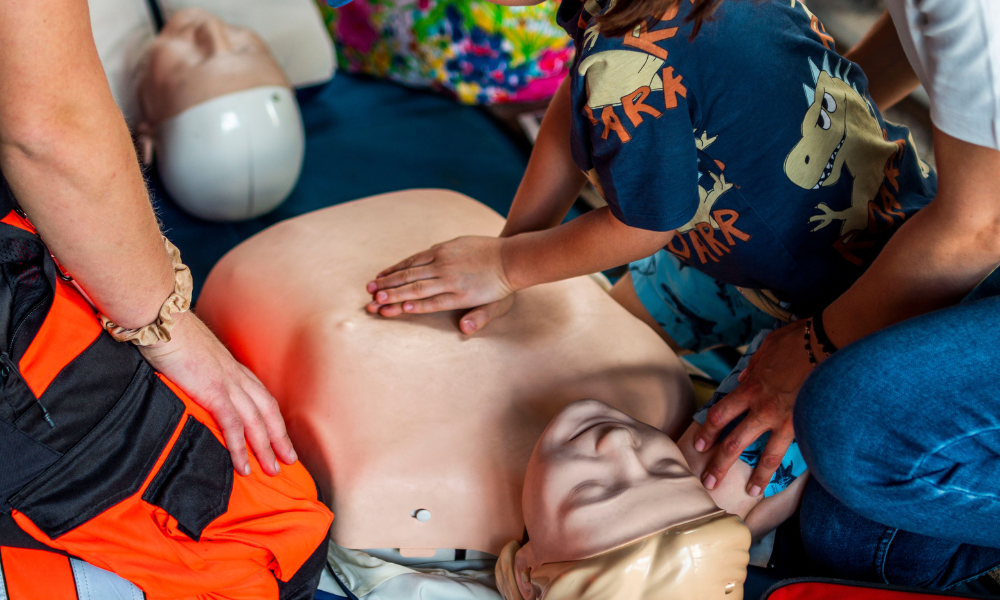
Cyprus already runs a mandatory national service system for male citizens under the National Guard Law of 2011 [19(I)/2011]. Under a recently restructured 10-week basic training programme, Cyprus already has, without needing to invent anything, one of the country's largest built-in first aid training pipelines: thousands of young men pass through it every year. The missing step is simple. Turn that training into a recognised, certified qualification every conscript leaves service with, not just a lesson they sat through, so the skill stays usable for the rest of their lives, in a workplace, on a football pitch, or on a mountain trail, decades after their service ends. This applies to male citizens only, since national service itself is a men-only obligation in Cyprus, but it is still a ready-made starting point rather than a policy waiting to be built from scratch.
What Denmark does with the defibrillators themselves
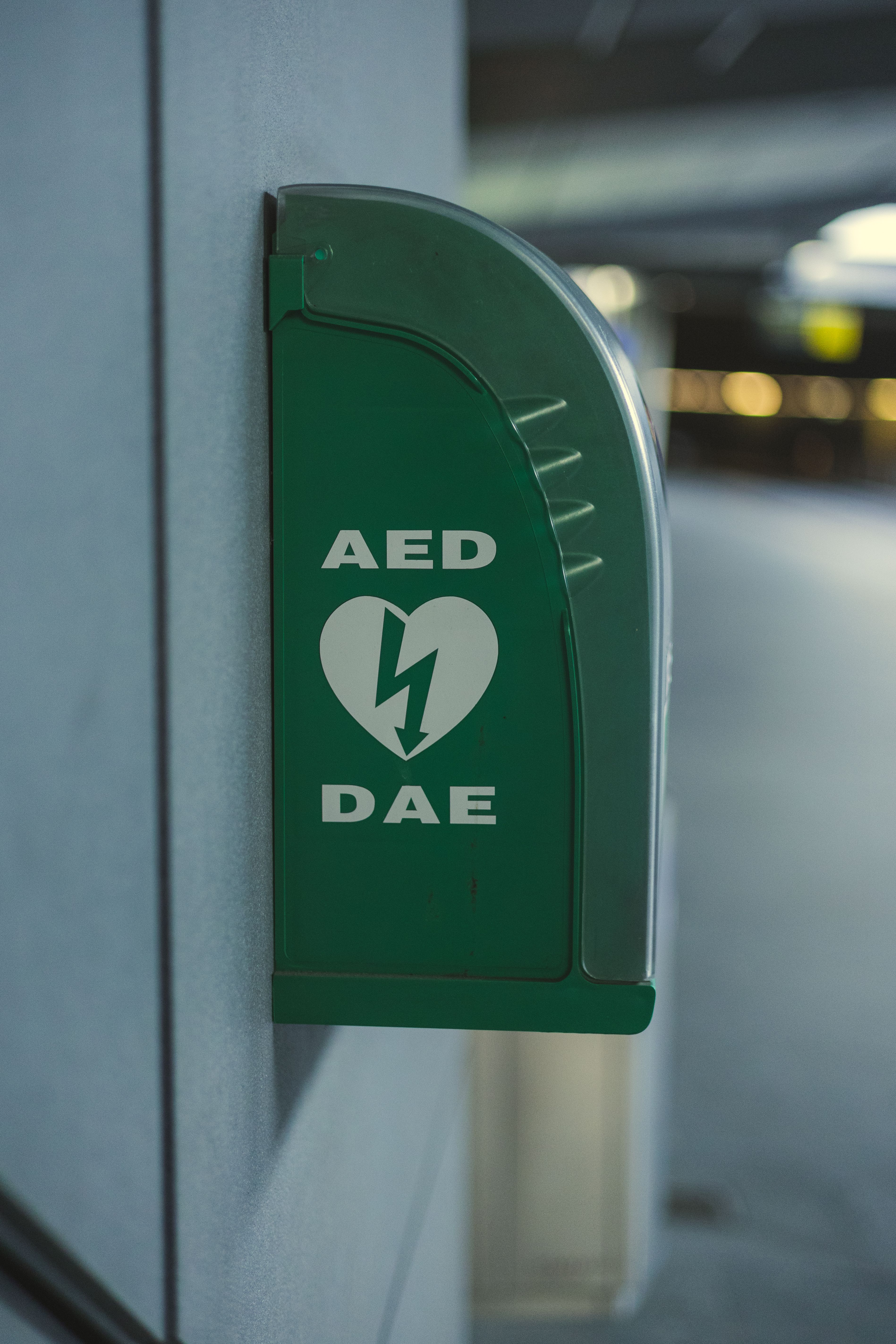
Danish health authorities actively recommend that outdoor AED cabinets remain unlocked, reasoning that any delay, a code, a phone call, a wait for staff, costs precious seconds when brain damage begins within four minutes of cardiac arrest and survival chances collapse after ten. Denmark has built a national network of weatherproof, heated outdoor cabinets, visible and reachable from the street 24 hours a day, so a defibrillator inside a closed building is never the only option.
Where Cyprus could start tomorrow: move the bank's AED outside
This is the clearest, lowest-cost fix available. Cyprus's own AED law already requires banks to have a defibrillator on-site, they are not missing the device, only using it badly. Right now, that AED typically sits inside the branch, behind locked doors, useless the moment the bank closes for the day. The fix does not require new legislation, new budget lines, or new devices. It requires moving the existing, already-mandated defibrillator a few metres, from the lobby wall to a weatherproof cabinet mounted on the building's exterior, visible from the street and accessible 24 hours a day, exactly as Denmark already does as standard practice. Cyprus's banks are present in every town centre, well-funded, and already legally compliant on paper. Relocating the device outside the door would make them compliant with the law's actual purpose, not just its letter, and it would be one of the cheapest, most visible good-practice moves any Cypriot institution could make.
Why this matters more in Cyprus than most places
Cyprus is not an average case. It hosts millions of tourists a year, many of them older travellers on a hot island with a strained emergency response network. It has one of the highest shares of elderly residents in the EU, rising steadily. And its dominant urban housing form, the block of flats with a shared lobby or courtyard, is precisely the kind of common space that other countries have identified as a natural place to put a defibrillator that residents are trained to use on each other.
The idea is proven. The only thing left to decide is who picks it up first.
Have a good practice worth bringing home? If your country, company or institution does something Cyprus should be trying, we want to hear about it. Send your ideas to peggy.s@politis.com.cy the next installment of Proven Elsewhere could be inspired by you.