
Cyprus marks the 66th anniversary of its independence this 16 August, the day in 1960 when the island became a sovereign republic after 82 years of British rule. The anniversary is usually marked quietly; Cyprus celebrates its official Independence Day on 1 October instead, a distinction rooted in a decision taken three years after independence itself.
The agreements behind independence
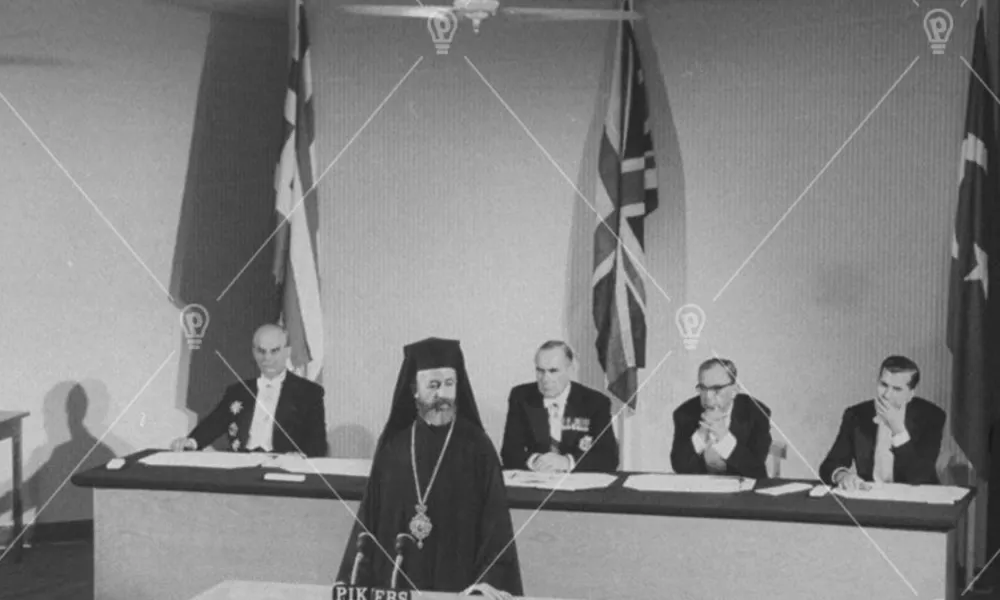
Independence rested on the Zurich and London Agreements, negotiated in two stages: a Zurich agreement between Greece and Turkey on 11 February 1959, followed by a broader agreement in London on 19 February 1959 that added Britain and the two Cypriot community leaders, Archbishop Makarios III for the Greek Cypriots and Dr Fazıl Küçük for the Turkish Cypriots. These agreements formed the basis of Cyprus's first constitution and were accompanied by two further treaties, the Treaty of Guarantee and the Treaty of Alliance, which fixed the number of Greek and Turkish troops permitted on the island and named Britain, Greece and Turkey as guarantor powers.
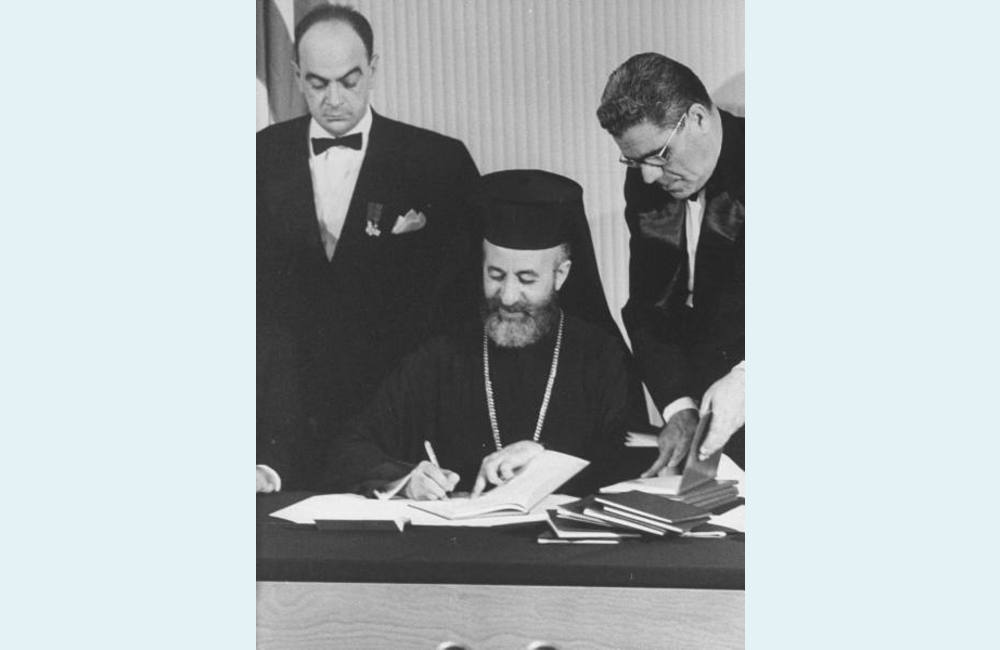
The ceremony
The formal transfer of power took place at midnight between 15 and 16 August 1960, at an official ceremony in the House of Representatives in Nicosia. The outgoing British governor, Sir Hugh Foot, read the declaration proclaiming Cyprus an independent republic before signing the founding documents alongside Makarios and Küçük. The British flag was lowered from Government House, now the Presidential Palace, the previous evening, and the flag of the Republic of Cyprus was raised after the House's first sitting.
A constitution built on compromise
The 1960 constitution reflected the bicommunal character of the settlement: legislation required separate majorities from Greek Cypriot and Turkish Cypriot representatives, and government posts, including the vice-presidency, were allocated along communal lines. The UN's own mediator on Cyprus, Dr Galo Plaza, later described the resulting structure as "a constitutional oddity," noting that difficulties in implementing it emerged almost immediately after independence.
Within three years, the arrangement had broken down. When fiscal legislation under Article 78 of the constitution lapsed in 1963, disputes over its renewal triggered a wider constitutional crisis, culminating in the intercommunal violence of December 1963, an outcome not foreshadowed in the optimism of the 1960 ceremony itself.
International recognition
Cyprus's application for UN membership was recommended unanimously by the Security Council on 24 August 1960under Resolution 155, and the General Assembly formally admitted the country as a member state on 20 September 1960, one of 14 states admitted that day as UN membership nearly doubled.
President Makarios received congratulatory messages on independence from a range of world leaders, including UN Secretary-General Dag Hammarskjöld, Queen Elizabeth II, US President Dwight Eisenhower, and President Gamal Abdel Nasser of the United Arab Republic, along with numerous other leaders across Europe, Africa and Asia.
Why October 1, not August 16
Cyprus's national Independence Day is marked on 1 October, not the anniversary of the founding itself. This was decided on 11 July 1963, when the Council of Ministers designated 1 October as a public holiday to mark the anniversary, separating the symbolic national celebration from the actual constitutional date. The decision came only months before the constitutional order it was meant to celebrate would begin to unravel.
Source: Permanent Mission of the Republic of Cyprus to the UN, UN Security Council and General Assembly records, Wikipedia/London and Zürich Agreements