By Yusuf Kanlı
A level of diplomatic activity unseen for years is unfolding around the Cyprus issue, with growing indications that the United Nations is attempting to construct a new initiative on fundamentally different assumptions from those that guided previous negotiation efforts.
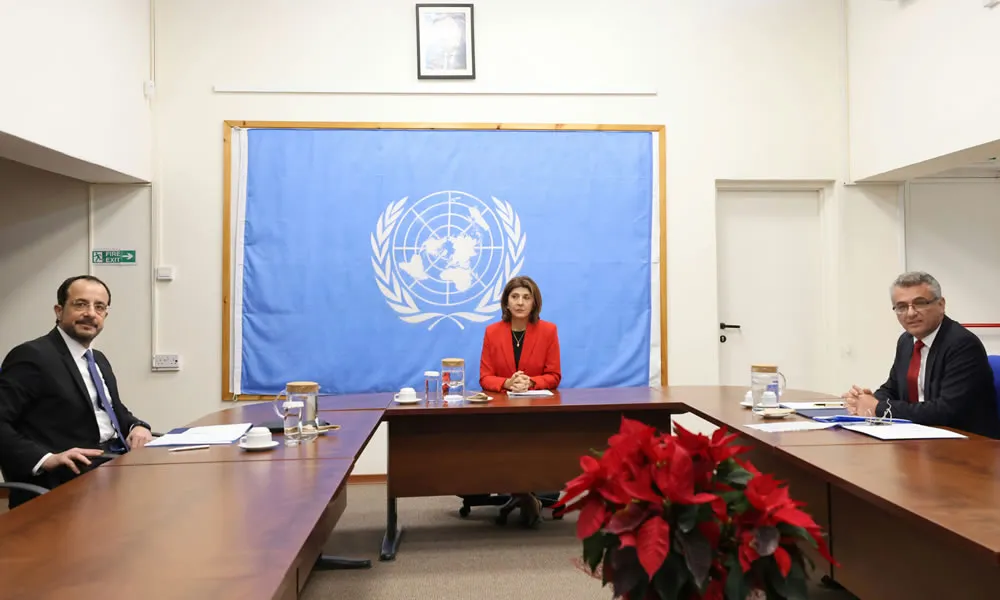
The “strategy document” expected to emerge from United Nations Secretary-General António Guterres’ Personal Envoy María Ángela Holguín’s intensive consultations in Nicosia, Ankara, Athens, Brussels and New York is expected to form the basis of an enlarged 5+1 meeting tentatively planned for late July or early August in Geneva.
According to diplomatic sources, the objective is not to revive yet another cycle of negotiations destined to repeat the frustrations of the past. Rather, it is to build a new political framework that addresses the concerns of all parties while creating a credible pathway toward a settlement.
In this context, the approach championed by Turkish Cypriot leader Tufan Erhürman, particularly the methodology he presented to the United Nations shortly after taking office, appears to be gaining increasing traction within diplomatic circles.
Erhürman’s four principles move to centre stage
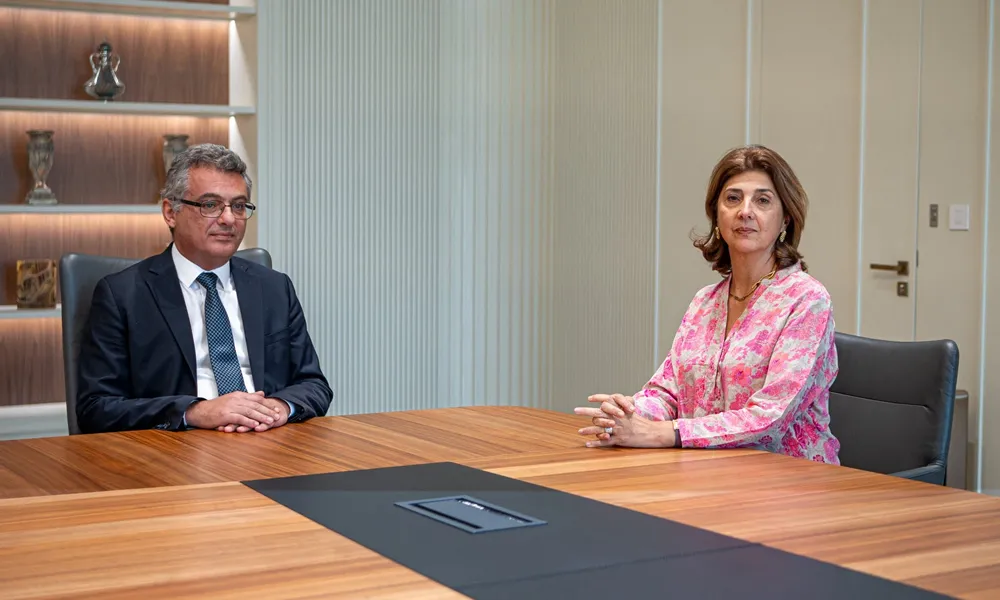
Speaking to ANKA following his meeting with Holguín, Erhürman made it clear that the Turkish Cypriot side would not participate in any process that fails to incorporate the four-point methodology it has consistently advocated.
Yet his remarks were not merely a catalogue of red lines. They also reflected a growing perception that the United Nations is listening more carefully to Turkish Cypriot concerns and attempting to integrate them into the emerging framework.
“We can see that our expectations are being accommodated and internalised,” Erhürman said, adding that he viewed the efforts of both Holguín and Secretary-General Guterres in a positive light.
The methodology promoted by Erhürman rests on four core principles: Political equality must be recognised from the outset; negotiations must operate within a clearly defined timeframe; previous convergences achieved during earlier rounds of talks must be preserved; and, perhaps most importantly, failure should not condemn the Turkish Cypriot side to a return to the existing status quo.
It is this final element that increasingly appears to be shaping the new UN thinking. For many Turkish Cypriots, one of the most persistent frustrations of previous peace efforts has been that every unsuccessful negotiation process effectively reset the political clock, leaving the island exactly where it
had started and providing no tangible benefit to the side that had demonstrated willingness to compromise.
The disappointment following the 2004 Annan Plan referendum and the collapse of the Crans-Montana negotiations in 2017 reinforced this perception.
For that reason, diplomats increasingly speak of a new philosophy underpinning the current initiative: rather than postponing discussions about what happens in the event of failure until the end of the process, the new approach seeks to address that question from the very beginning through a series of incremental and mutually beneficial steps.
A meaningful 5+1, not another symbolic gathering
Erhürman was equally clear that the Turkish Cypriot side has never objected to the enlarged 5+1 format itself.
What matters, he argued, is whether such a meeting serves a meaningful political purpose.
Referring to previous gatherings that focused largely on confidence-building measures, he remarked: “Let us not go there merely to discuss cemetery restoration.”
His point was straightforward: a meeting involving the two communities, the three guarantor powers and the UN Secretary-General should address substantive political issues rather than limiting itself to technical matters.
The real question, he suggested, is not whether a 5+1 meeting takes place, but whether the groundwork is sufficiently prepared to allow it to generate momentum rather than simply produce another inconclusive outcome.
This assessment aligns closely with indications from diplomatic sources that the United Nations is now concentrating less on confidence-building measures and more on broader political parameters that could sustain a renewed process.
The European Union: Not at the table, yet central to the process
Another notable feature of the emerging initiative is the increasingly visible role of the European Union.
Erhürman reiterated that both Türkiye and the Turkish Cypriot side remain opposed to the EU becoming a formal participant at the negotiating table.
“The Greek Cypriot side is already a member of the European Union. Under such circumstances, the EU cannot realistically be regarded as a neutral actor at the table,” he argued.
At the same time, he emphasised that Brussels could play a significant supporting role outside the formal negotiation framework.
Measures such as the long-discussed Direct Trade Regulation fall squarely within EU competence and could contribute to building confidence and creating incentives for progress.
Erhürman also argued that the European Union bears a degree of historical responsibility for the current state of affairs, noting that decisions taken during Cyprus’ accession process helped shape today’s realities. For that reason, he said, the EU has a responsibility to contribute constructively to efforts aimed at achieving a settlement.
Diplomatic sources broadly share this assessment.
Rather than joining the negotiating table, they argue, the EU could help create a political environment conducive to compromise through progress on issues such as the modernisation of the EU-Türkiye Customs Union, the resumption of high-level political dialogue, enhanced energy cooperation and broader improvements in EU-Türkiye relations.
Indeed, European Council President António Costa, European Commission President Ursula von der Leyen and EU foreign policy chief Kaja Kallas are all reported to be seeking meetings with President Recep Tayyip Erdoğan during next month’s NATO Summit in Ankara.
A changing regional landscape
Erhürman does not expect the NATO Summit itself to focus formally on Cyprus.
Nevertheless, he believes the island’s strategic importance virtually guarantees that Cyprus will feature prominently in discussions among leaders.
The Eastern Mediterranean’s growing significance in energy security, maritime jurisdiction disputes, trade routes and regional stability has elevated Cyprus far beyond the confines of a traditional intercommunal dispute.
Diplomatic circles similarly point to the Israel-Iran confrontation, Europe’s search for new energy security arrangements, the increasing strategic value of the Eastern Mediterranean and signs of a gradual thaw in EU-Türkiye relations as factors that have injected new urgency into the Cyprus file.
Holguín’s diplomatic marathon
Against this backdrop, Holguín’s diplomatic itinerary in the coming weeks assumes particular importance.
She is expected to meet both Erhürman and Greek Cypriot leader Nikos Christodoulides again on Saturday before departing the island on Sunday.
Her next stops will be Ankara, where she is scheduled to meet Foreign Minister Hakan Fidan on June 15, and Athens, where she will hold talks with Greek Foreign Minister Giorgos Gerapetritis on June 16.
Following consultations in Brussels with senior European Union officials, Holguín is expected to brief Secretary-General Guterres in New York. Diplomatic sources do not rule out a further visit to Cyprus should additional consultations prove necessary.
The strategy paper expected to emerge from these contacts is widely seen as the backbone of a renewed diplomatic effort and potentially of a settlement framework that UN officials hope can advance significantly before the end of the year.
According to diplomatic sources, the enlarged 5+1 meeting envisaged for late July or early August is not intended as a grand finale. Rather, it is expected to serve as the launching point for a fast-paced and politically substantive new phase.
The real significance of the strategy paper, therefore, may lie not only in whether it generates a new negotiating process, but in whether it succeeds in embedding a principle long advocated by the Turkish Cypriot side: that even in the absence of a final settlement, progress achieved during negotiations should be irreversible and the island should never again be allowed to drift back to the status quo that has defined Cyprus for generations.