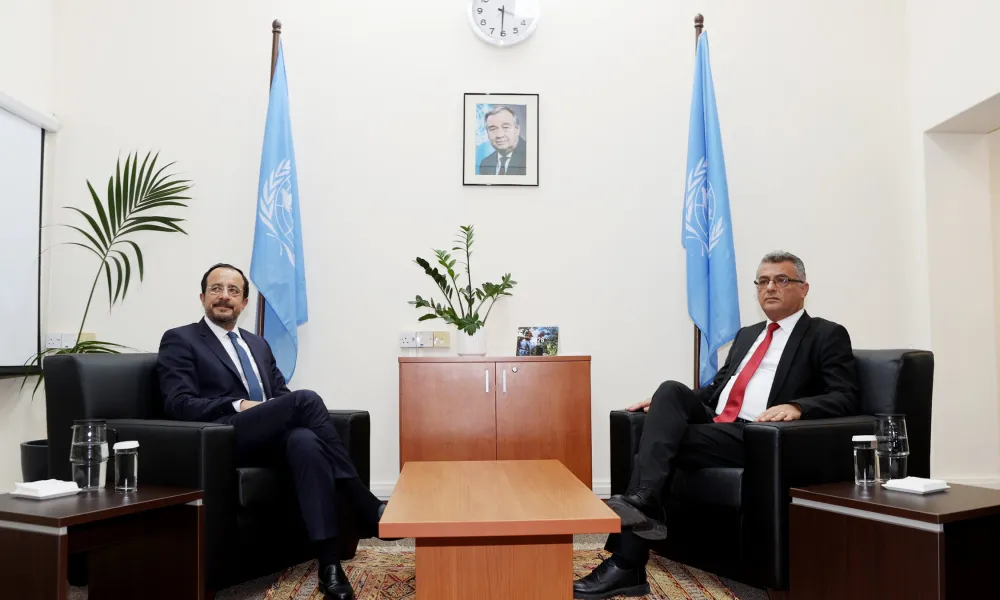

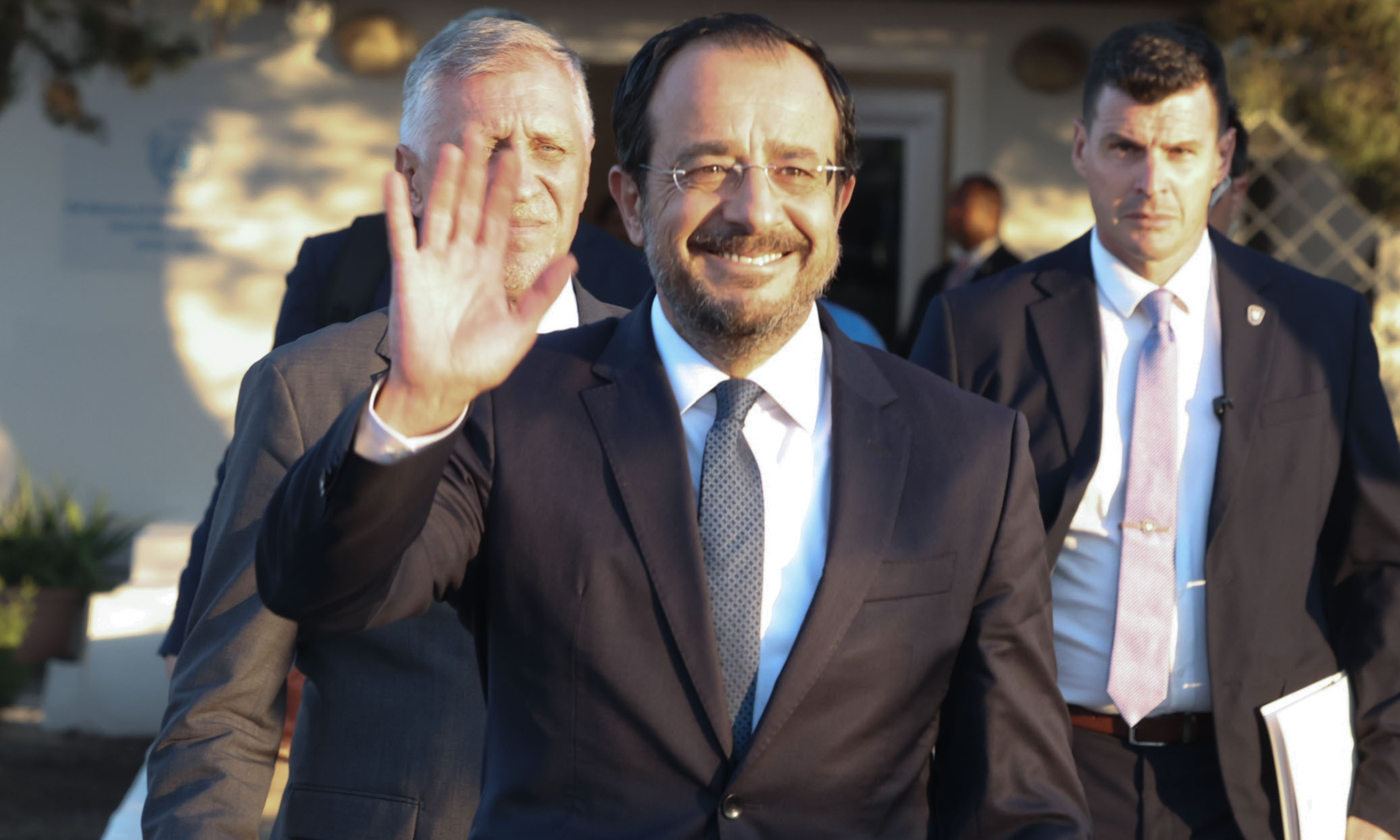
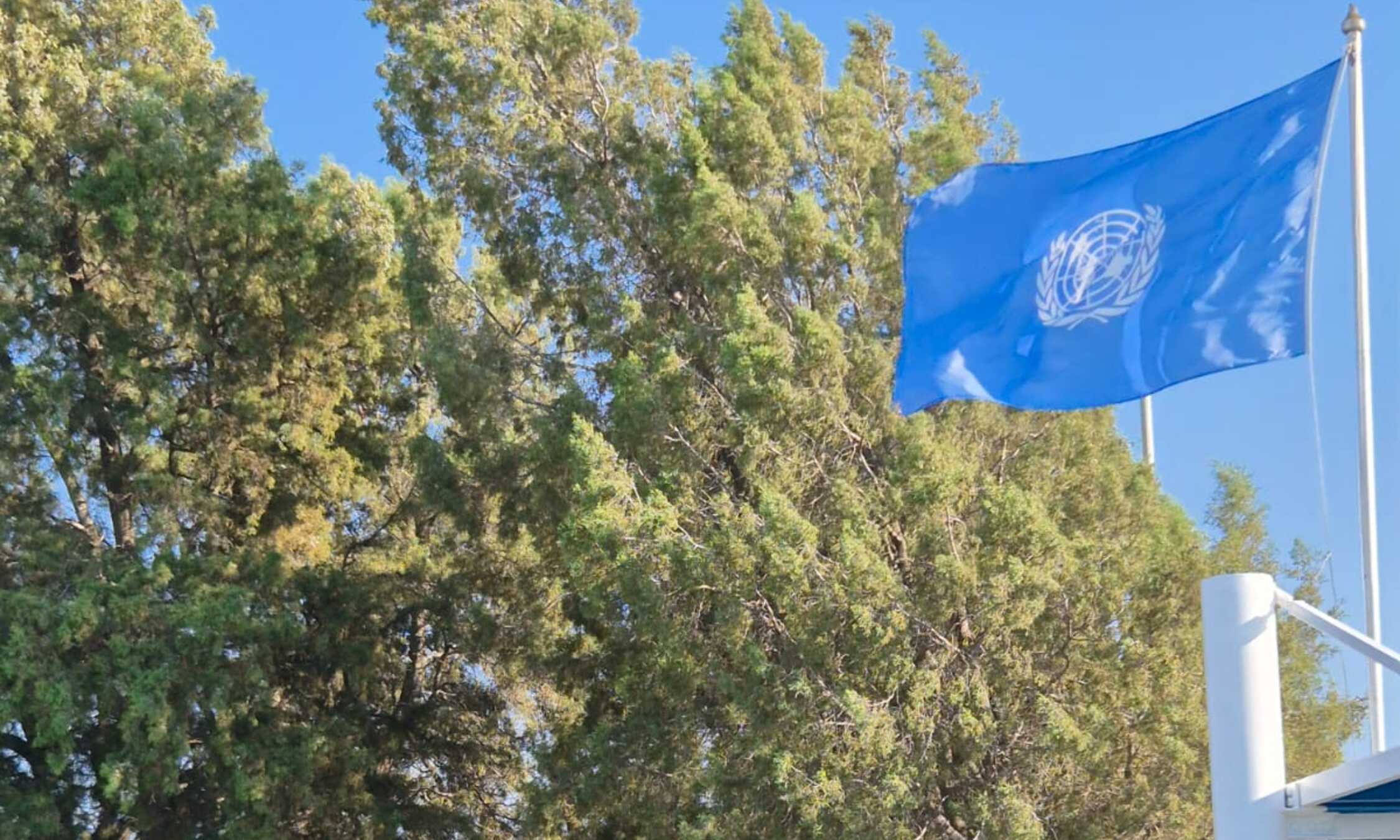
The two leaders met for nearly three hours on Wednesday – mostly on their own – at the UN Good Offices in the Nicosia buffer zone, agreeing to meet at least weekly in the coming period.
A brief UN statement said the two had a “constructive” meeting, reviewing progress on the way forward, as defined by UN Secretary-General António Guterres during his visit to Cyprus last month.
The UN chief had made it clear in his farewell press conference in Nicosia that the leaders must make adequate progress on confidence-building measures (CBMs), methodology and substance if he is to convene a new 5+1 meeting.
Wednesday's meeting was the first since Guterres’ visit. Despite its length and President Nikos Christodoulides’ “positive” assessment, Politis understands that the two sides maintained their positions on the different matters at hand. This might change, of course, as the meetings intensify in the weeks ahead.
However, discussions produced only two agreements on record – to meet more frequently and to announce today, Thursday, the members of the Steering Committee of the Civil Society Consultative Body – a CBM already agreed on by the leaders.
According to Christodoulides, the two leaders will meet separately with Guterres on the sidelines of the UN General Assembly near the end of next month to brief him on any progress made since his departure from the island.
In practice, that gives the leaders at least three more meetings to move forward on the three areas singled out for progress by the UN chief.
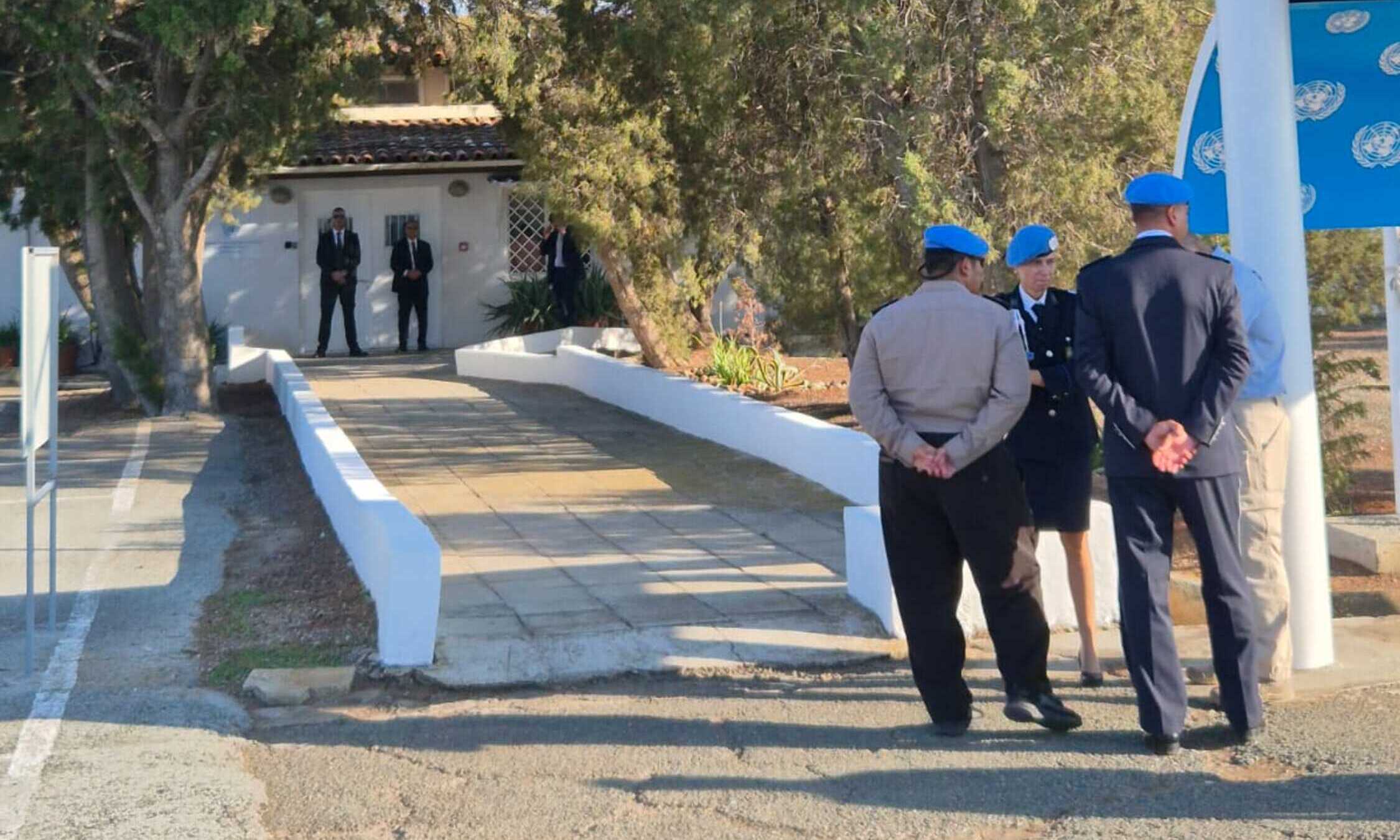
The president noted that UN Personal Envoy María Ángela Holguín will return to Cyprus in the first week of September and likely attend the leaders’ meetings when on island.
Notwithstanding the absence of tangible progress, Christodoulides cut a positive figure. Sources told Politis that the president thought the meeting went better than expected and expressed a preference for future meetings to be held in a ‘tete-a-tete’ format.
On leaving the UN Good Offices, he told reporters: “Preparations have begun, based on what the Secretary-General said. We are on the right track.”
Returning to the Presidential Palace, Christodoulides said the two leaders had a “good discussion” and that he considered the meeting a “positive sign”.
Convergences
He noted that the leaders discussed CBMs, methodology and issues of substance. “And by substantive issues I mean convergences, which are particularly important,” said Christodoulides.
“We insist on preserving the negotiating acquis up until the early hours of 7 July, when the negotiations at Crans-Montana were interrupted,” he said.
According to Politis sources, the UN will complete its record of past convergences in early September – possibly coinciding with the arrival of Holguín – though a firm understanding on how to proceed with the dossier has yet to be reached.
It remains to be seen whether the ‘negotiating acquis’ being compiled includes, in addition to convergences reached, the positions of all sides, such as those submitted in writing or stated orally in the final days at Crans-Montana. An issue that will prove a determining factor when assessing how close the sides are to the finish line if and when negotiations finally resume.
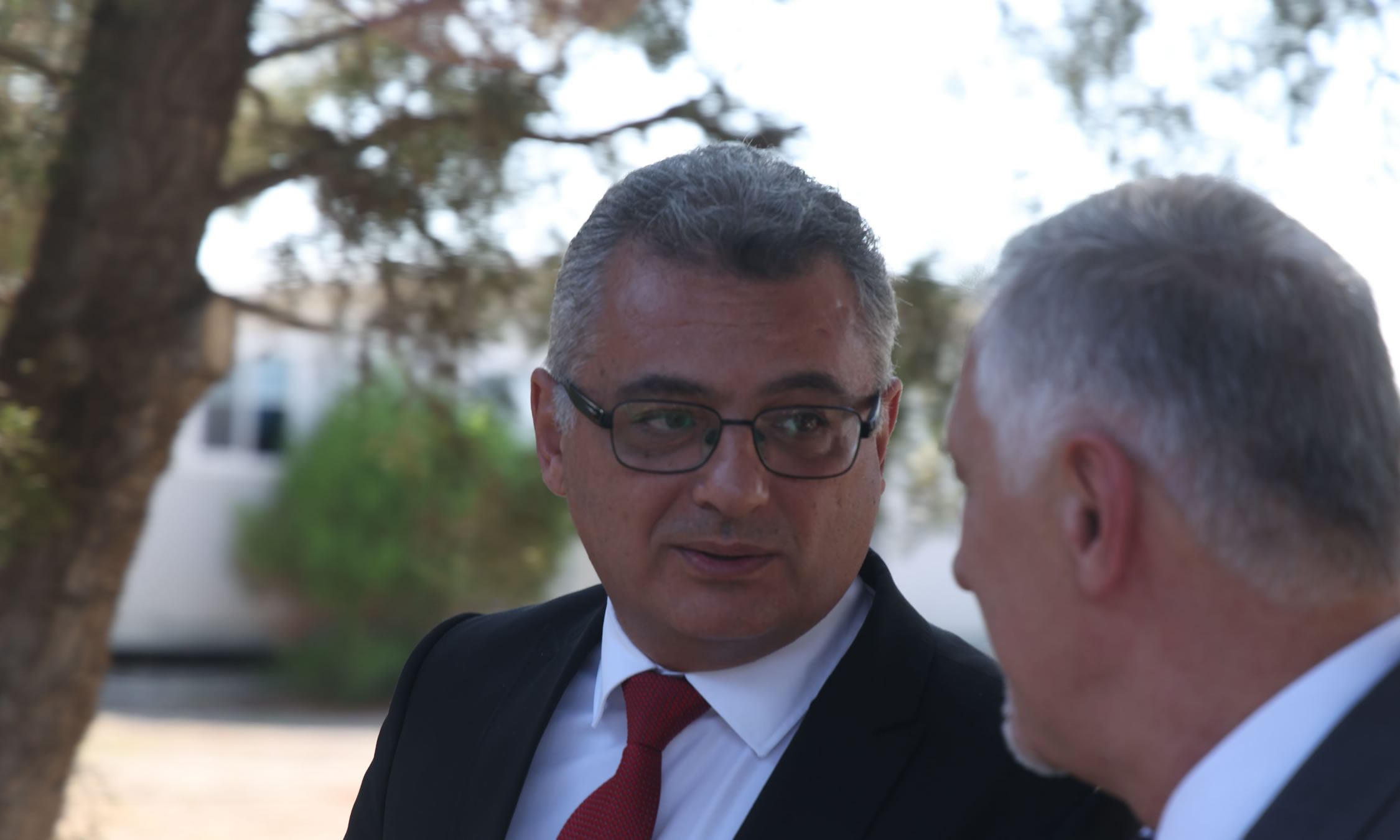
The Turkish Cypriot view on convergences differs somewhat in that they see no need for a compiled document to be shared with each side, preferring instead a commitment “in principle” on past convergences. The implication being that this leaves the door open for potential changes the two sides might agree on or the introduction of ‘new ideas’ that can bridge the gap between them.
Methodology
In his post-meeting assessment, Christodoulides told reporters that the two men discussed methodology. He assessed Turkish Cypriot leader Tufan Erhürman’s well-known four points, noting that the Greek Cypriot side accepts Erhürman’s point on past convergences, adding that this includes all the negotiating acquis up to the very last hour at Crans-Montana.
Given that the Greek Cypriot side submitted a position paper accepting a rotating presidency at Crans-Montana, technically, this should also satisfy the Turkish Cypriot leader’s first point on methodology to accept political equality from the outset – though this was not mentioned by the president in his comments.
On Erhürman’s third methodology point on a limited timeframe, Christodoulides said this depends on whether "we start from where we left off and walk the final mile” or from the beginning.
Regarding the final point on ensuring there is no return to the status quo should the talks fail, the president said this “concerns predetermined outcomes, which cannot be accepted” as it becomes a “disincentive” to achieving a solution.
Christodoulides said he submitted his own proposals on how to make negotiations more productive through cross-negotiation, by bundling relevant thematics in pairs rather than trying to address issues separately.
This proposal mirrors a practice adopted in the past by previous leaders during formal negotiations.
“We cannot discuss issues in isolation,” he said, giving as example the interconnected nature of territory and property and the possibility of discussing governance with security and guarantees, which are of “crucial importance”.
CBMs
Regarding CBMs, according to Greek Cypriot sources, the UNSG asked the two sides before leaving Cyprus to focus specifically on crossing points and demining. To date, they have not achieved progress on either.
The Greek Cypriot viewpoint, reiterated by Christodoulides after the meeting, is that they are ready to open crossing points at Mia Milia and Athienou-Pyroi-Aglandjia simultaneously, adopting the UN chief’s compromise proposal on the route for the latter.
The president argued that the sides had originally agreed in the 5+1 meeting in Geneva in March 2025 to open four crossing points, the other two being Kokkina and Louroujina-Lymbia.
The Turkish Cypriot argument is that Kokkina was not included in the initial package.
Christodoulides told reporters that he reiterated his CBM proposals relating to enclaved persons, missing persons, the Maronite and Armenian communities, and road signs in the north to include the original toponyms of geographic locations.
He argued that CBMs should bring the sides closer to a solution on the basis of the agreed framework and “should not in any way normalise the current unacceptable state of affairs”.
Prevailing atmosphere
Prior to the leaders’ meeting, the president was asked to comment on heightened tensions due to Turkish Cypriot grievances over Greek Cypriot efforts to cancel music festivals and football camps in the north.
He replied that this was an entirely different matter from the effort to commence talks and achieve a settlement “so that none of the issues that arise as a result of illegal actions will exist”.
According to Turkish Cypriot sources, the meeting was “marred by the recent negative developments in relation to trust building efforts”. They noted that if such developments continue, this will “inevitably” negatively impact future meetings.
Speaking after the meeting, Christodoulides confirmed that Erhürman had raised the issue with him. “And I responded that all these are very natural developments resulting from the illegal state of affairs.”
To avoid such developments, the leaders need to work harder and faster to achieve a solution on the agreed framework, he added.