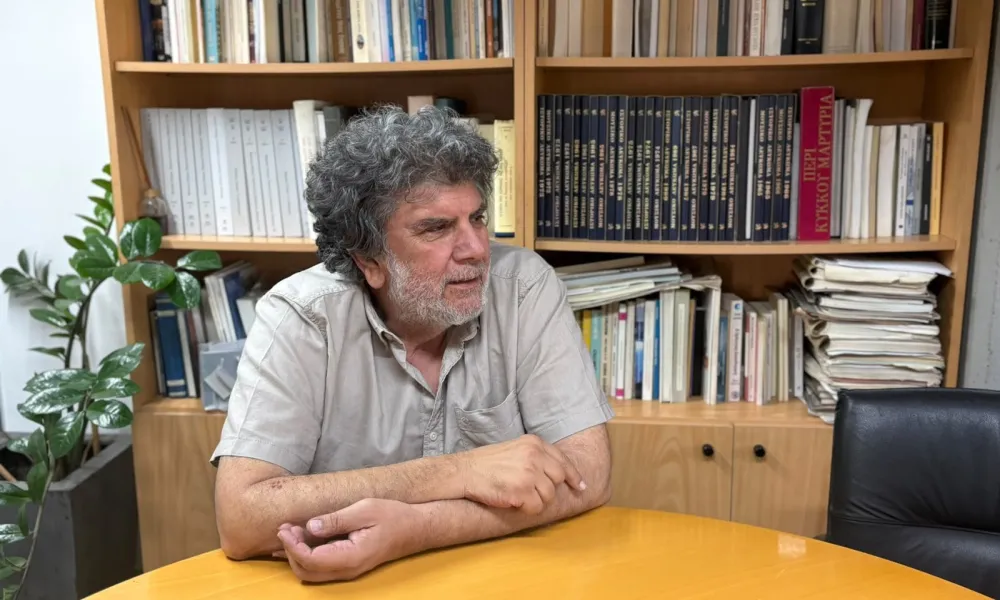

Speaking on Politis Radio 107.6 and 97.6 during the programme Morning Briefing with Katerina Eliadi, Dionysis Dionysiou expressed disappointment with the outcome of Monday's trilateral meeting and questioned whether current efforts can lead to a substantive resumption of negotiations.
"From Crans-Montana to discussing crossings"
Dionysiou described both leaders as "falling short of the moment", arguing that the Cyprus issue has regressed significantly from where negotiations stood a few years ago.
He noted that most core aspects of the Cyprus problem had already been discussed and that the sides had come close to an agreement based on the Guterres Framework.
"A few years ago, we were discussing a settlement and were one mile away, as the Secretary-General used to say, from solving the Cyprus problem."
By contrast, he said, Monday's meeting focused largely on crossing points.
"We were discussing four crossing points, but in the end we ended up with two."
"I don't expect much"
Asked what developments he expects in the coming period, Dionysiou expressed scepticism.
"Personally, I don't expect much. What is happening is an effort to keep a process alive."
He said agreements on crossing points may provide a limited boost to UN efforts but do not create the conditions needed for a substantive return to negotiations.
"Let's talk about water, electricity and natural gas"
Dionysiou argued that new approaches are needed to create meaningful common interests between Greek Cypriots and Turkish Cypriots.
Rather than focusing exclusively on crossing points, he suggested exploring cooperation on water management, electricity and natural gas.
"If we are not able to discuss three or four simple things and create a better climate, how can we move on to the deeper issues?"
He said such initiatives could function as genuine confidence-building measures while also addressing everyday concerns.
He also referred to possible cooperation in trade, markets and ports, arguing that a different way of thinking is required.
Holguín is "annoying because she is trying"
Dionysiou defended María Ángela Holguín, the UN Secretary-General's Personal Envoy, against criticism directed at her.
According to him, Holguín could have limited herself to routine visits but has instead sought substantive engagement.
"This woman is trying."
He said her diplomatic experience and willingness to challenge established thinking explain why some find her interventions uncomfortable.
"She is annoying because some people need to think in a completely different way and make certain moves."
"Everyone is comfortable and afraid of the next step"
Dionysiou argued that the Cyprus issue remains frozen not only because of disagreements at the negotiating table but also because of political and economic interests that have developed around the status quo.
"Unfortunately, everyone is comfortable. Everyone is comfortable, everyone is afraid. Nobody wants to take the next step."
He said the prolonged absence of a settlement has led the two communities to pursue different priorities, weakening the common interests that could support an agreement.
According to Dionysiou, Turkish Cypriots are becoming increasingly oriented towards Turkey, while the Greek Cypriot side is deepening regional partnerships from which Ankara feels excluded, describing such developments as "walls of exclusion".
He also criticised Turkish policy, saying Ankara's confrontational approach increases insecurity and makes cooperation more difficult.
"Great leaders take leaps"
Turning to President Christodoulides, Dionysiou argued that the Greek Cypriot side should show greater initiative, particularly as the term of António Guterres approaches its end.
He said a meaningful move now could create negotiating momentum that would be passed on to the next UN Secretary-General.
However, he suggested that political calculations and fears of domestic criticism are preventing bold decisions.
"That is the problem. The President will sit there worrying about who will attack him and who will not."
Dionysiou concluded by arguing that political leaders must be willing to rise above short-term political considerations.
"Great leaders are not those who get lost in the expediencies of the day and in their own ambitions. Great leaders are those who can take leaps."
He stressed, however, that responsibility does not lie solely with the Greek Cypriot side, noting that Turkey's stance and the ongoing lack of trust remain major obstacles to a Cyprus settlement.