“Journalism is not about having one person say ‘it’s raining’ and another say ‘it isn’t’. It’s about opening the window.”
“Cyprus is changing. What happened in the past could not happen today.”
“You lose friends, but as long as you have a dog to attend your funeral, that’s enough.”
“Digitalisation has increased corporate corruption, especially corruption linked to EU financial interests.”
“Of course there is corruption, but its scale is also related to how effectively oversight mechanisms, including the media, do their job.”
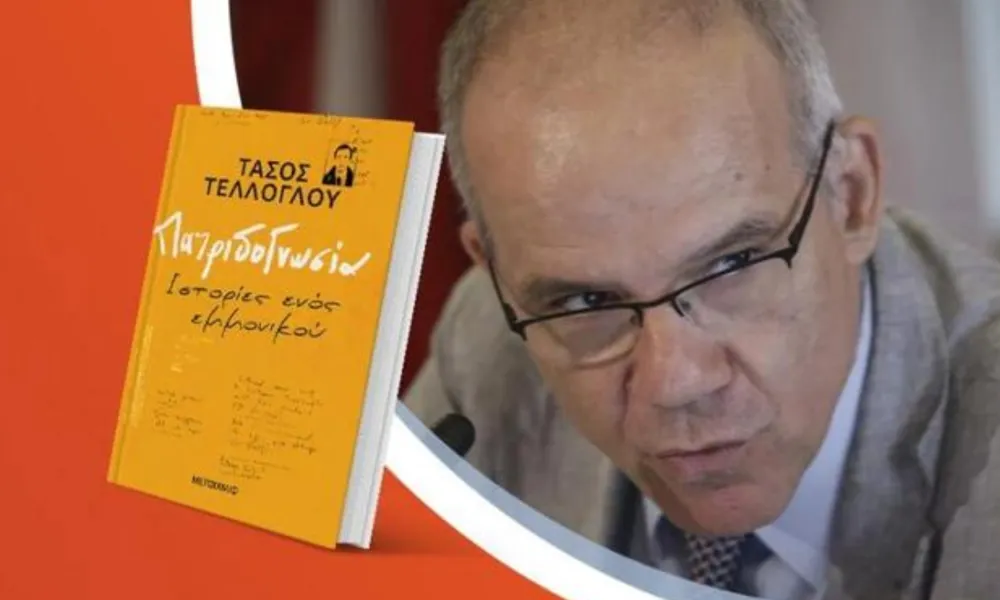
Investigative journalist Tasos Telloglou has been at the forefront of some of the biggest stories to have shaped modern Greece over the past four decades. In his new book, Patridognosia (Knowing the Homeland): Stories of an Obsessive, he draws on his experiences, sources and personal journeys to tell stories that shed light on corruption, accountability, institutions and the contradictions of Greek society.
Speaking to Politis on the occasion of the book's publication, Telloglou discusses the persistence required in investigative journalism, the challenges of protecting sources, corruption and the role of the media today. He also reflects on Cyprus, which frequently appears in his investigations, as well as the personal experiences connected to some of the most significant stories of his career.
'Patridognosia'
Why Patridognosia?
The people who "showed me their fields", my sources, also helped me learn about my country. The book is a tribute to these people: business executives, entrepreneurs, teachers, civil servants, farmers, seafarers, lawyers, police officers and judges who helped me understand the environment in which I live.
Is Greece really as corrupt as the book suggests? At times it resembles a Latin American banana republic...
The book spans four decades of history. Of course there is corruption, but its scale is also related to how effectively oversight mechanisms, including the mass media, do their job. The fact, for example, that the press is owned by people active in shipping probably helps combat corruption on land.
Why the subtitle Stories of an Obsessive? What are you obsessed with?
Obsessed with stories that do not appear easy to unravel. Obsessed with keeping a story alive when others think it has died, and then watching them come running behind it shouting "scandal, scandal" when it comes back to life.
Accountability
Has the role of the journalist changed compared with 10 or 20 years ago?
No. A journalist must demand accountability from those who exercise power, whether political, economic or institutional.
Should a good journalist simply present all sides?
Journalism is not about having one person say "it's raining" and another disagree by saying "it isn't raining". Journalism is about opening the window to see what the weather is actually doing. Of course, even then it may not yet be clear exactly when it will rain.
What is the biggest challenge facing investigative journalists in Greece today?
We lack databases and subscriptions to foreign databases. Public bodies often fail to respond within 60 days to requests for information. State archives are not routinely declassified after a certain period. We also lack budgets for major cross-border investigations.
Corruption
After forty years of investigations, do you believe corruption in Greece has decreased? Has it changed form? What fuels it?
The type of corruption linked to "speed money", where a legitimate request is accelerated through an illegal payment, has declined. However, because of digitalisation, corporate corruption has increased, especially corruption connected to EU financial interests (OPEKEPE – Payment and Control Agency for Guidance and Guarantee Community Aid).
What is the common denominator linking almost all major scandals?
A lack of accountability. And our inability to enforce it.
Are institutions today more resilient or more vulnerable to corruption and vested interests?
More resilient, because they were tested during the crisis and endured.
How difficult is it to protect your sources when economic and political interests are so powerful?
It is a matter of determination and will. And, of course, the protective measures we take regarding communications.
What tangible impact do journalistic revelations actually have? And are investigative journalists in Greece adequately paid for such demanding and risky work?
The pay is not good. The culture is slowly changing. And because corruption is never going to disappear as a form of behaviour, those who pay and those who receive bribes simply become more inventive.
Omertà
What is it like investigating a story in Cyprus? Is it different from Greece?
Cypriots often respond with a greater degree of naivety, which frequently reveals unexpected information. On the other hand, living together in a smaller society requires a form of omertà.
How often did Cyprus appear in your investigations, even when the story originated in Greece?
Very often, because Cypriot companies, accounting firms, service providers, lawyers and others were regularly involved.
To what extent has Cyprus functioned as a bridge for both legitimate and opaque economic activities in the region?
Cyprus is changing as well. Today, what happened with Milosevic's money could not happen again because the framework has changed. Nor could there be the same degree of permissiveness regarding the Marfin Laiki cases.
Does Cypriot society view corruption differently from Greek society?
No.
Spyware
What was the most difficult investigation you carried out in Cyprus?
The use of surveillance software, because it was connected to national issues but ultimately ended up being used for monitoring individuals considered troublesome by those in power in Greece.
Why did Dilian expand his activities into Greece?
Because he was encouraged to do so and because it gave him a second foothold within the European Union.
Was he acting as a private individual, or did he have connections to his former "service"?
I don't know. I have heard both versions. I have no evidence supporting either one.
Could the so-called Milosevic money that passed through Cyprus be viewed as a patriotic act?
No. It was not a patriotic act because it legitimised invasion and occupation. At the time, however, some people regarded it that way because Greece and Cyprus were aligned with the Serbs. We sided with what we perceived as the "good invaders" because we believed they served our geopolitical interests. Ten years later, we supported their opponents because the geopolitical balance had changed.
In which bribery cases did you encounter Cyprus or Cypriots?
Tsochatzopoulos (defence procurement), Ellaktor and Siemens.
There is no end
What have you learned from investigative journalism?
That there is no such thing as the end of a story.
Which major revelation do you feel passed almost unnoticed by Greek society?
The fact that one of the richest men in the world, the former Emir of Qatar, failed to invest in Greece.
Was there ever a story you decided not to publish?
My editors decided not to publish the story about the manipulation of Greek public opinion with regard to the supposed order by the occupation authorities on Konstantinos Mitsotakis, which was actually a product of Stasi disinformation. It was published later thanks to Kostas Vaxevanis.
What did you leave out of the book, even though you wanted to include it?
I left out some stories because they were too complex, such as those involving the people who paid a Pentagon official in connection with defence procurement programmes, or because I did not have enough material to properly portray the characters involved, as was the case with the use of illegal spyware. I hope to do so soon.
The price
What is the greatest price paid by a journalist who insists on investigating?
You lose friends, but that is not a problem as long as you have a dog to attend your funeral.
Is there room for all opinions in democracies and in the media?
If information comes from a fascist or Nazi organisation, it should be verified. Technically it is still a source. Opinions are something else entirely. Generally speaking, I do not think we need to publish every opinion unless it contributes something new to the public debate.
Are the major stories you investigated connected to your own personal history?
The chapter titled Genealogy, the first chapter of the book, is connected to the story of my paternal grandfather in Thessaloniki and OPLA (Organisation for the Protection of the People's Struggle). The chapter about the operation at Paros airport concerns some of the myths surrounding the resistance and the immense power of forgiveness. My mother's village, Marpissa on Paros, would not exist today were it not for a brave German officer who refused to carry out an order for reprisals.
Excerpts from the book
Counting cash after midnight
[...] Employees of Laiki Bank kept their mouths shut about the money that arrived in suitcases on Yugoslav aircraft landing at Larnaca Airport after midnight, always under escort. So I turned to the bank workers' union, desperately looking for someone willing to go on camera and describe what happened on the nights when Serbian government aircraft arrived at Larnaca Airport.
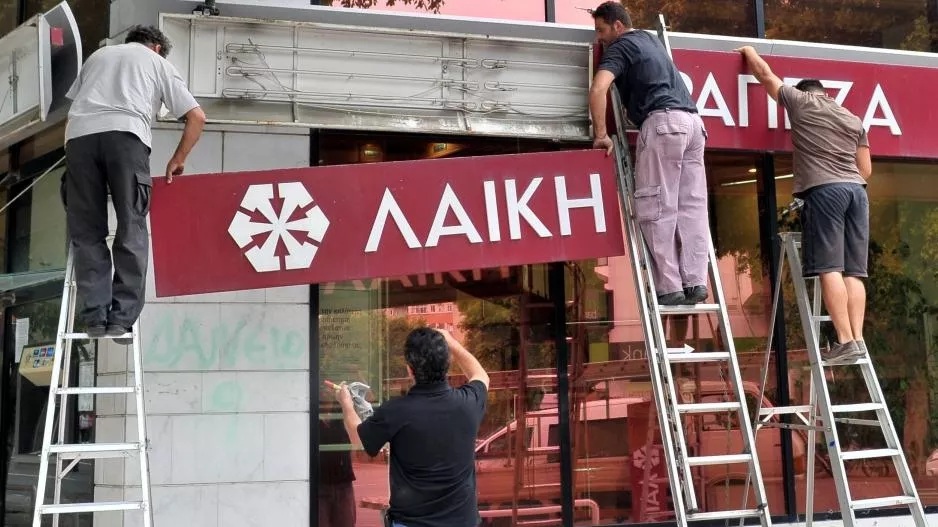
"The president of the bank employees' union, Loizos Hadjicostis, admitted on camera that they had decided not to work night shifts at the airport counting the money because they were not being paid overtime. The issue was resolved after intervention by the Yugoslav ambassador. Management agreed to pay overtime and the employees agreed to count the Serbian regime's money after midnight."
"The Serbs are a friendly people"
[...] To break the ice, we initially discussed other Cypriot matters that interested us, such as the painter Diamantis. He had been his teacher in technical drawing at school. Papadopoulos wanted the Telloglion Foundation, with which I had family ties, to return ‘The World of Cyprus’, which my father's uncle, Nestor (Nestorakis) Telloglou, had purchased. Nestor had supported Diamantis financially for a long period and bought his works because he recognised the immeasurable importance of his art to Cypriot identity. It took Tassos Papadopoulos longer to appreciate that. His teacher had given him a series of pencil sketches, and he told me that he instructed his mother to throw them away during a house move.
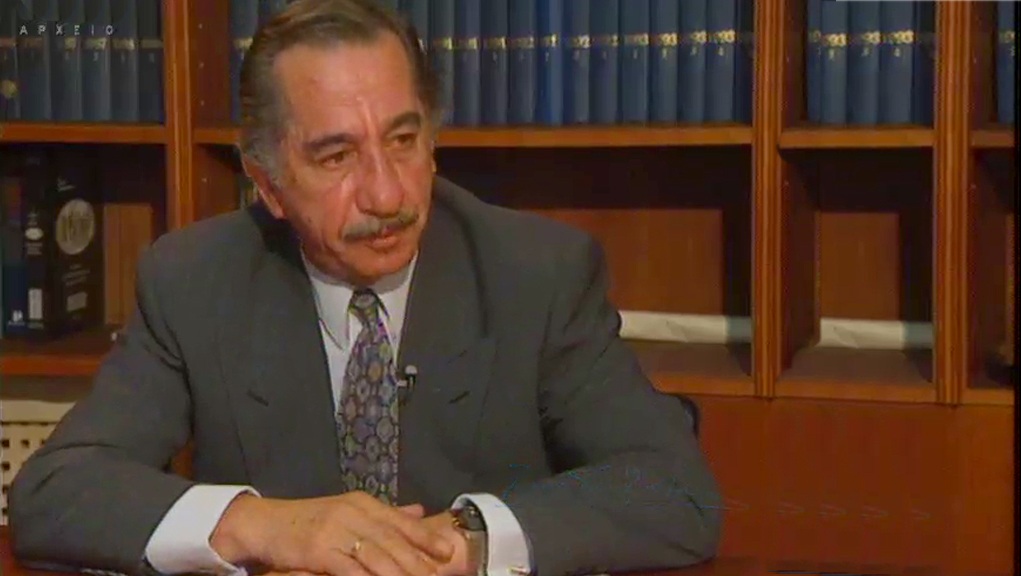
"Papadopoulos told me during our conversation, which was broadcast on television, that he was unaware of the details of how his office had handled a particular transaction involving Vucic and the Serbian state, a deal from which his law office earned a small amount of money."
"When I asked how a country that constantly invokes international law could violate the UN sanctions regime against Serbia, his answer was disarming: 'The Serbs are a friendly people.'"
Mansoura, the coup and the Polytechnic
The success of that assignment led to the next one. I had to persuade his father, coup participant Nikolaos Dertilis, to sign an application for early release on medical grounds after spending three decades in prison.
"That proved much more difficult. I went to Korydallos Prison on Green Monday and entered without any problems. I went to the women's wing, where Nikos Dertilis was waiting for me in a relatively large cell. He wanted to talk. Before me, although I learned this much later, prominent officials of Greece's Third Republic had already tried the same thing. Thanasis Kanellopoulos. Vangelis Yiannopoulos. But Dertilis, who had been convicted twice, once for planning and carrying out the coup and once for the killing of Myrogiannis during the Polytechnic uprising, had refused to submit an application because doing so would mean 'recognising the regime'. He told me he would do such a thing only 'if snow turned black'. Outside the prison there was a small group of admirers who kept him going and convinced him that he was doing something important, living apart from his children and grandchildren."
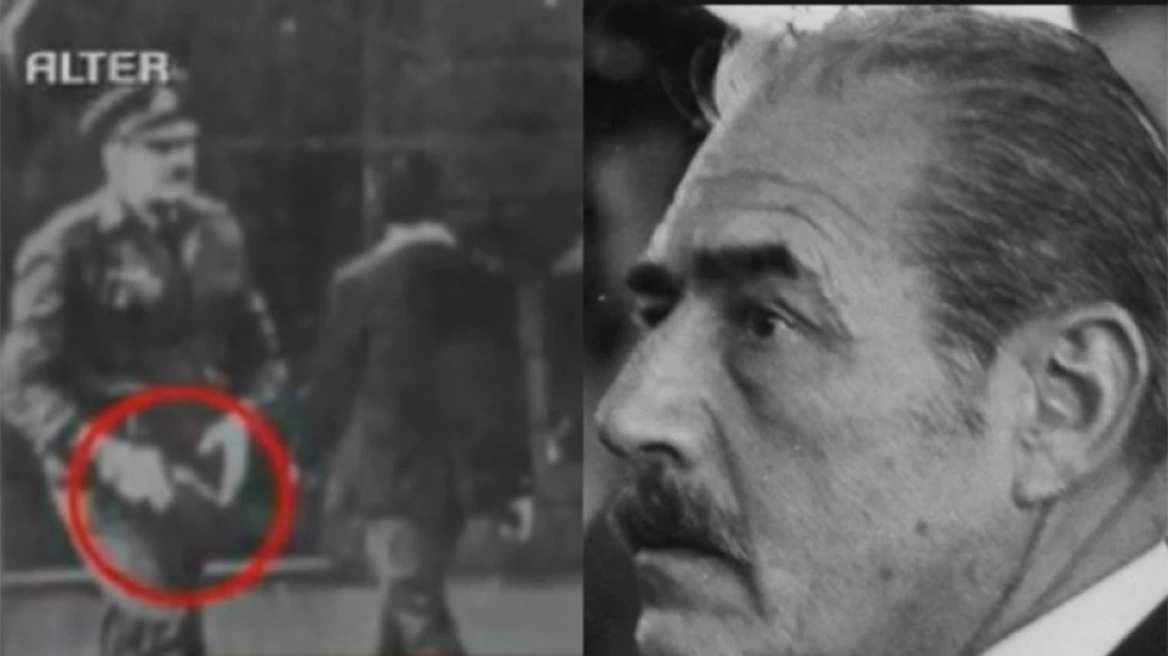
"Then he launched into a tirade. Behind him hung a map of Bosnia. Using pins, he had marked Serbian military successes on it. He knew all this from Vasilis, who clearly could not manage him and perhaps simply described things that made his father proud of military exploits. He then began describing his mission to Cyprus in 1963-64. Like Vasilis in Georgia, he travelled under an assumed identity, officially listed as an employee of the Ministry of Agriculture according to his travel documents. He was then sent to the Turkish Cypriot villages of Mansoura. Once they had been captured, he said he ordered his men to show no mercy to 'prisoners, women and children'. Almost with satisfaction, he told me they were killing pregnant women. Grivas came on the radio ordering him to stop, and he shot the radio set so he would not have to listen to Grivas."
Akis and Dinos
[...] Akis was arrested at the same time as several people suspected of helping him build a network of companies used for acquiring property and laundering money. For us, it was the end of the story (we rarely followed a case once it reached the courts). At that point, justice had taken over. But in this case things were different. Three months after Akis' arrest, his cousin Nikos Zigras appeared before the prosecutor. Claustrophobic and unwilling to remain in prison, he reached an agreement through his lawyer Stelios Garipis to assist investigating magistrate Mallis in exchange for a commitment that his detention would not be prolonged."
[...] I attended the trial of former Republic of Cyprus minister Dinos Michaelides. Cyprus had amended its constitution so that he could be extradited and tried in Athens, something unprecedented by Cypriot standards. According to Zigras' testimony, he had received a suitcase containing one million dollars from the veteran Cypriot politician at the Hilton Hotel on behalf of the former minister."
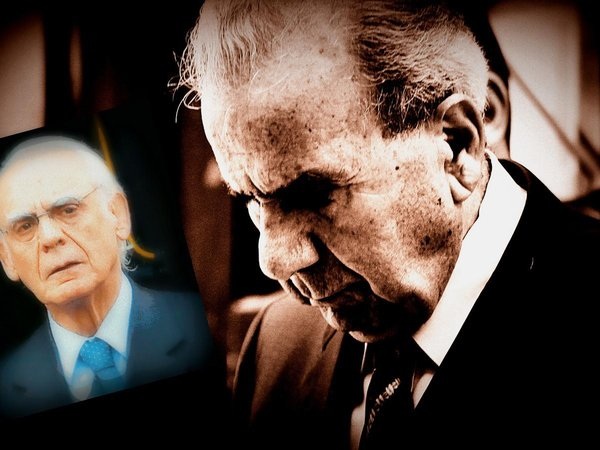
"There was not a single other journalist in the appeals’ courtroom. The defendants were Michaelides and his son Michalis, who was staying in a hotel in Palaio Faliro not far from my house. During a recess, I approached Michaelides. I knew he had a reputation as a very tough man and that he was under pressure because of Zigras' testimony. I told him I wanted to speak about EOKA's punishment missions against people who collaborated with the British, some of whom Michaelides had personally executed. He liked the subject and we immersed ourselves in the forgotten details of Cypriot history. I despised him for the suitcases, but I understood that he was something larger than those suitcases."
"Then Zigras took the stand. 'You don't have the guts to admit that you brought a suitcase to the Hilton in Geneva...' he said, addressing Michaelides, who remained calm in the dock."
Cocaine and diplomacy
[...] During the coronavirus pandemic, sales of smuggled cigarettes skyrocketed. From a warehouse in Liosia used for packaging and loading, which police had under surveillance, investigators eventually traced the operation to a factory in Aspropyrgos. After that, everything was easy.
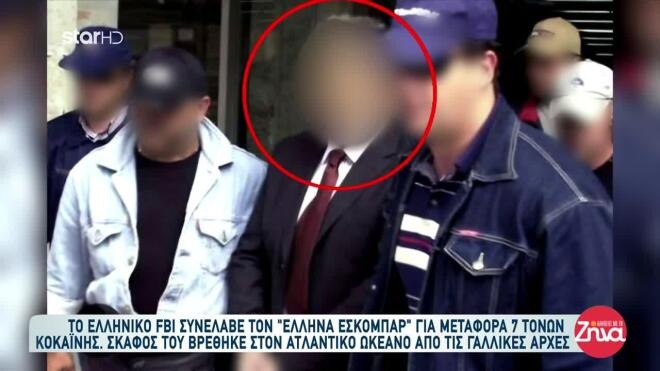
"The police operation was led by a young officer from Maroussi serving with the local police directorate so that he would have no links to the officers who traditionally dealt with major cigarette smuggling networks. Those people had become too close to the individuals they were pursuing. Once the cigarettes, millions of packets, had been seized and moved by his team to a police facility above the Olympic Shooting Centre in Mesogeia, I went to meet him. He looked more like a gardener or a labourer. He carried boxes of seized cigarettes for counting while talking at the same time. He even had ten minutes available for an impromptu interview. He wasn't putting on an act. He was simply doing his job without paying much attention to the impact."
"I remember thinking that Maria was much the same as I drove through the bends towards her village. During the trial of ‘Africa One’, the largest cocaine shipment linked to a Greek-connected trafficker, she was the key witness, hardly an easy task. The businessman who had transported the cocaine enjoyed the protection of the Greek state because, in the late 1980s, he helped build relations with certain Latin American governments. When he was arrested in 2002, he still retained some connections within the state apparatus."