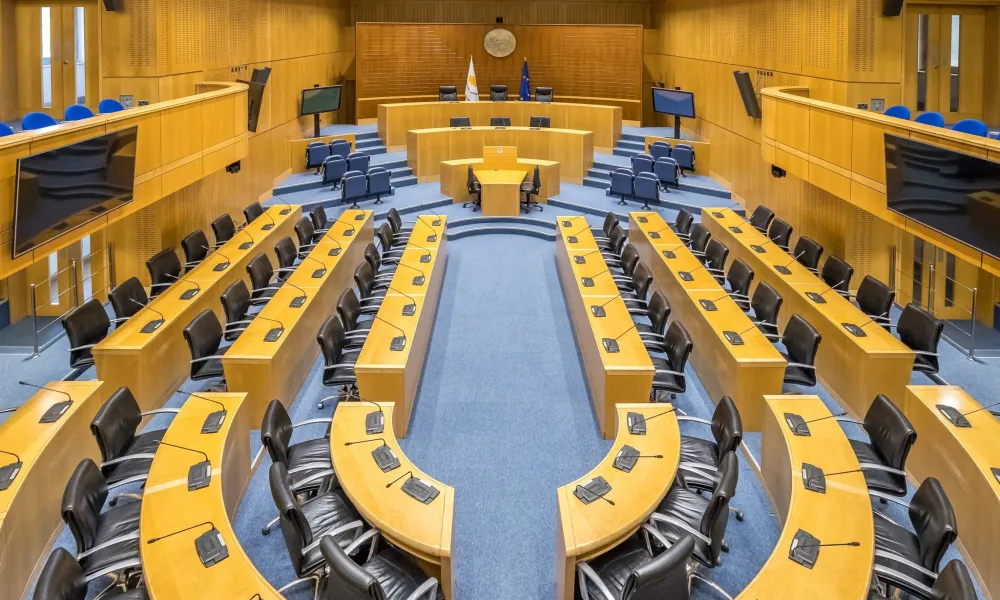

Allegations that relatives are exploiting the allowances of persons with disabilities, complaints about excessive charges by professional carers and competing claims over who should receive the 10% increase in the home care allowance dominated Tuesday's session of the House Labour Committee.
The discussion on the implementation of the new disability legislation turned into a head-on clash between the Pancyprian Association of Home Carers and disability organisations. The session saw constant interruptions, barbs from both sides and repeated interventions by the committee chair to calm tensions.
At the centre of the dispute were the institutional recognition of informal care and the inadequacy of allowances to cover the real needs of persons with disabilities.
Fears of dismissals
In a memorandum setting out 13 demands, the carers' association expresses fears that recognising informal carers will lead to dismissals of professional carers and, by extension, to cases of neglect of persons with disabilities.
The association alleges that relatives who until recently said they had no time to care for their family members now appear willing to do so, with no change to their work schedules.
"Several of the people we care for have expressed to us [...] their concern that their relatives will dismiss us so that they themselves can receive the allowance, leaving these people without care," the memorandum states.
The association further alleges that allowances are being used for relatives' personal needs. It also points to cases where relatives are declared as informal carers while in practice relying on foreign domestic workers registered with other employers. It goes as far as describing this as defrauding the state.
Demands for contracts and inspections
The professionals are calling for mandatory contracts for informal carers as well. In their view, informal carers should live with the person with a disability, should not work outside the home and should be subject to unannounced inspections.
The association's president, Eirini Laonari, stressed that professional carers pay social insurance contributions, have obligations and attend 100-hour training programmes.
They are also seeking:
- financial checks on relatives who manage allowances, with mandatory submission of expense receipts
- a 24-hour emergency telephone line
Arrears and the "pocket money" reference
The carers' demand that the 10% increase in the home care allowance be paid to them rather than to persons with disabilities drew strong reactions.
They are making the same claim for the arrears dating back to 1 January 2026. They argue that the money should go to the professional who provided the services, not to the beneficiary as a cash benefit, and describe the latter in their memorandum as "pocket money".
The association is also calling for the allowance to be adjusted in line with the cost-of-living allowance (COLA), arguing that it has not been increased for more than a decade. It also wants a person with knowledge of home care to sit on the Medical Board, so that each beneficiary's needs are recorded accurately.
Dispute over hourly charges
The president of the Cyprus Confederation of Organisations of the Disabled (KYSOA), Themis Anthopoulou, reacted strongly. Referring to an earlier memorandum from the association, she said some of its wording had crossed the line into ableism.
She said hourly charges by carers reach €30 to €35, while the overwhelming majority of persons with disabilities receive care allowances of no more than €440 a month. She also noted that families of persons with severe disabilities struggle to find professionals willing to take on their care.
Tensions peaked when Anthopoulou recalled an earlier conversation with Laonari. According to Anthopoulou, Laonari had told her that carers visit homes and find mothers sitting on the sofa.
"Yes, she needs to sit on the sofa too. She needs to," the KYSOA president said, adding that a mother has the right even to watch television.
Laonari clarified that she was not referring to parents in general but to specific cases. She said she had repeatedly raised these with social workers without the problems being resolved.
Responding to the comments on charges, she said the association's members charge between €15 and €20 an hour. She described charges above €20 as excessive and called on the Deputy Ministry of Social Welfare to carry out checks, including revoking licences.
Disability organisations on the right to manage allowances
The president of the Pancyprian Association of Parents of Persons with Intellectual Disability, Stavros Vrontis, also responded to the professional carers. He described their comments about parents as offensive.
He said families need professional carers, but that does not justify such criticism of the parents of persons with disabilities.
The president of the Cyprus Paraplegics Organisation (OPAK), Dimitris Lamprianidis, stressed that welfare benefits are a right of persons with disabilities.
"We will decide how we allocate our allowances and where we buy services from," he said, defending the right of persons with disabilities to choose the services they need.
Earlier in the session, Lamprianidis had pointed to the inadequacy of allowances. He noted that some people with severe mobility disabilities receive €1,210 a month for care and need two or even three carers, when the cost of employing a single carer exceeds €1,500.
Costs not factored into planning
For the Deputy Ministry of Social Welfare, director-general Giannis Nikolaidis said that the recognition of informal care had led several existing beneficiaries who had not previously used this right to come forward.
He said this expenditure had not been factored into the original planning. However, the deputy ministry could not refuse to grant a benefit to which these individuals were already entitled. He acknowledged that additional funding is required for the legislation to be fully implemented.
Shortage of carers
The chair of the House Labour Committee, Giorgos Koukoumas, asked for strong remarks made during the session to be withdrawn. He stressed that Cyprus has only a quarter of the carers it should have based on the European ratio.
He expressed support for the profession. However, he said that instead of families, disability organisations and carers clashing with one another, they should be demanding adequate coverage of care needs from the state.