
From the dirt road of Kennedy Avenue to high-rise hotels, from the first Scandinavian tourists to charter flights, and from family beaches to nightlife and ABBA. The Famagusta of the 1960s and 1970s was racing towards the future at a speed few could have imagined at the time. By the summer of 1974, everything suggested that its great era was only just beginning.
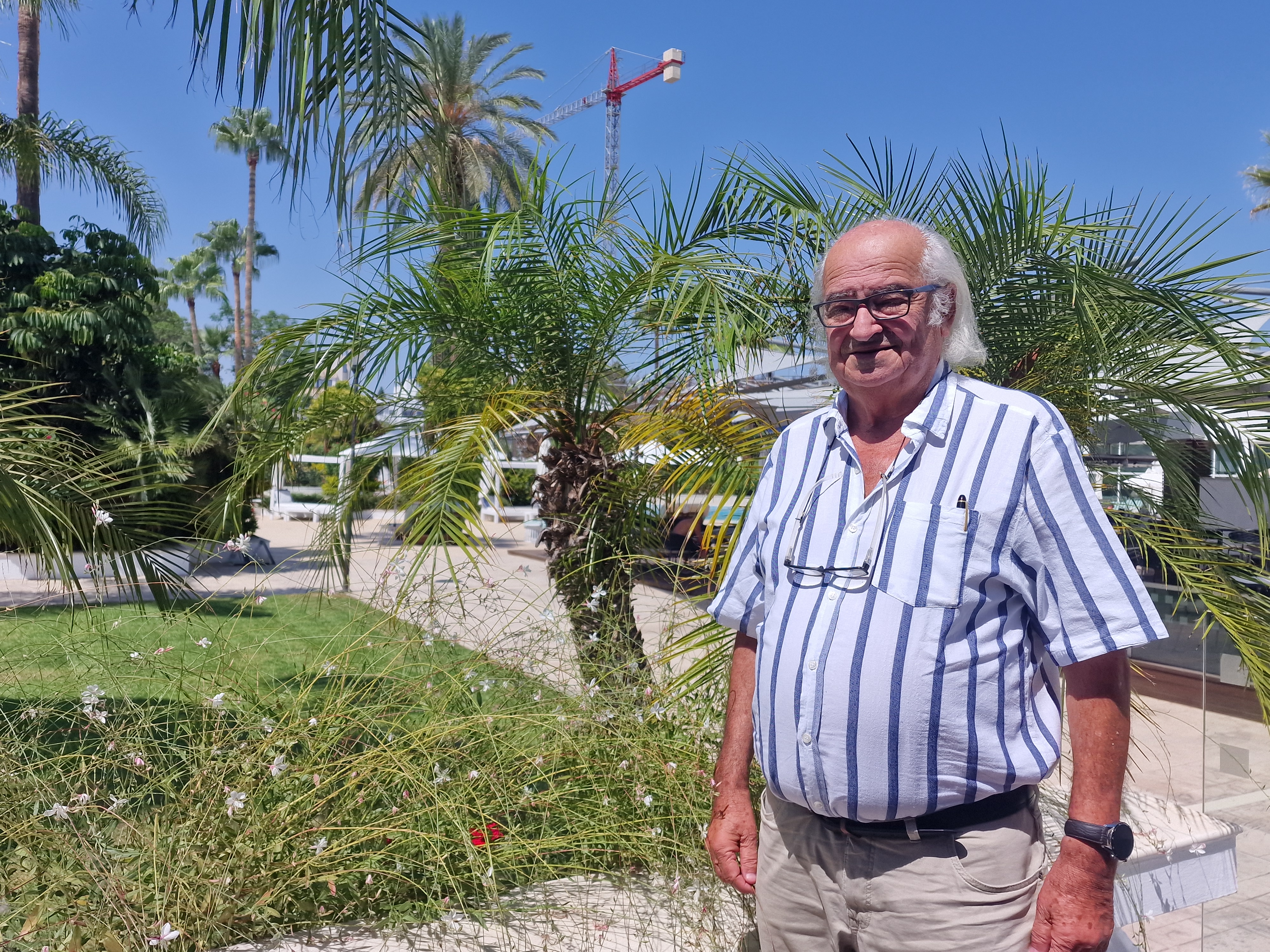
“At the beginning and in the middle of the 19th century, Famagusta was a small town, very small. It was not even a town,” George Michaelides, author of the book Destination Famagusta: A Journey Through the Famagusta of Tourism, Creation and Progress, tells Politis.
Anyone familiar only with the Famagusta of the early 1970s would find that description hard to believe. Within just a few decades, the small town around the harbour had been transformed into one of Cyprus’ most important tourist destinations. Hotels rose along the coastline, organised groups arrived from Scandinavia and Germany, charter flights multiplied, and an entire town learned to live with tourism without yet becoming exclusively a tourist resort.
It did not even have electricity
The man recounting this story today did not learn it solely from archives. He lived it.
Born in 1948, he grew up alongside Famagusta’s transformation. His father was a doctor who had studied in Berlin, and family history continually intersects in his memories with the story of the city itself.
One such story takes us back to 1934. His father had returned from Germany with radiology equipment. There was, however, a difficulty that seems unimaginable today. The machines could only be used at night because the town had no electricity during the day.
At one point, the dog of the British administrator of Famagusta was injured. As there were no veterinarians at the time, the animal was taken to the doctor for an X-ray. According to the account related by Michaelides, the administrator was outraged when the examination could not be carried out immediately, and the incident contributed to the town soon having electricity during daylight hours as well.
A small story, almost anecdotal. Yet it reveals the distance Famagusta would travel in just 40 years.
The harbour
The first major push did not come from hotels, but from the sea.
The harbour gained increasing importance during the British period, investments were made in its infrastructure and exports, particularly citrus fruit, contributed to economic growth. At the same time, Famagusta was opening up to the Eastern Mediterranean: Egypt, Lebanon and Syria.
Michaelides notes that in 1932 the first seaplane landed in Famagusta harbour, an image that seems almost prophetic for a city that would, a few decades later, tie its development to the mass movement of people.
Organised tourism
The major transformation came after independence.
In the early 1960s, the first organised tourist flows appeared. After the British came the Scandinavians. Michaelides places the beginning of organised tourism in Cyprus around 1963-64 and recalls the first tour operators from Scandinavia and Britain.
From that point, Famagusta began to accelerate.
“1965-1966,” he replies when asked when the major hotel boom began.
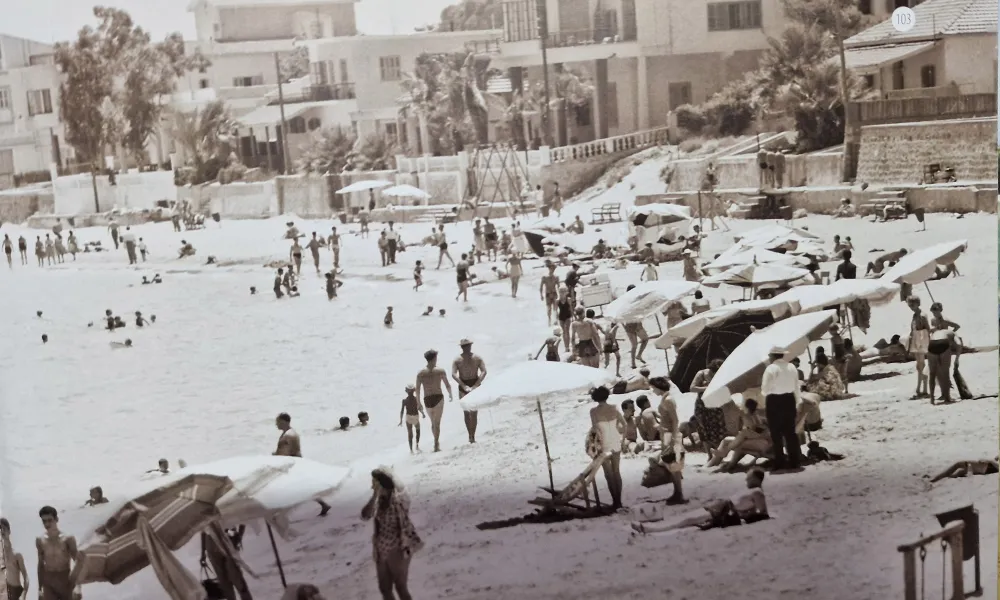
The Golden Marianna, the Royal and many other hotels started reshaping the seafront. The photographs and data he assembled in his book allow readers to follow this transformation almost step by step: the beach, the first buildings, the multiplying hotels and a new city gradually rising beside the sea.
Yet infrastructure did not always keep pace with development.
“Kennedy Avenue was a dirt road,” he says, and around that dirt road an international tourist destination was already being built.
Perhaps this is the defining image of Famagusta in that era: a city where the hotel could come before the road.
Visitors were not confined to a tourist ghetto
The development was not only about buildings.
Charter flights changed how visitors arrived. Scandinavians travelled mainly by air, while similar flights operated from Germany. Holiday packages could combine one week in Famagusta with another in Kyrenia.
For Famagusta, the great advantage was the sea.
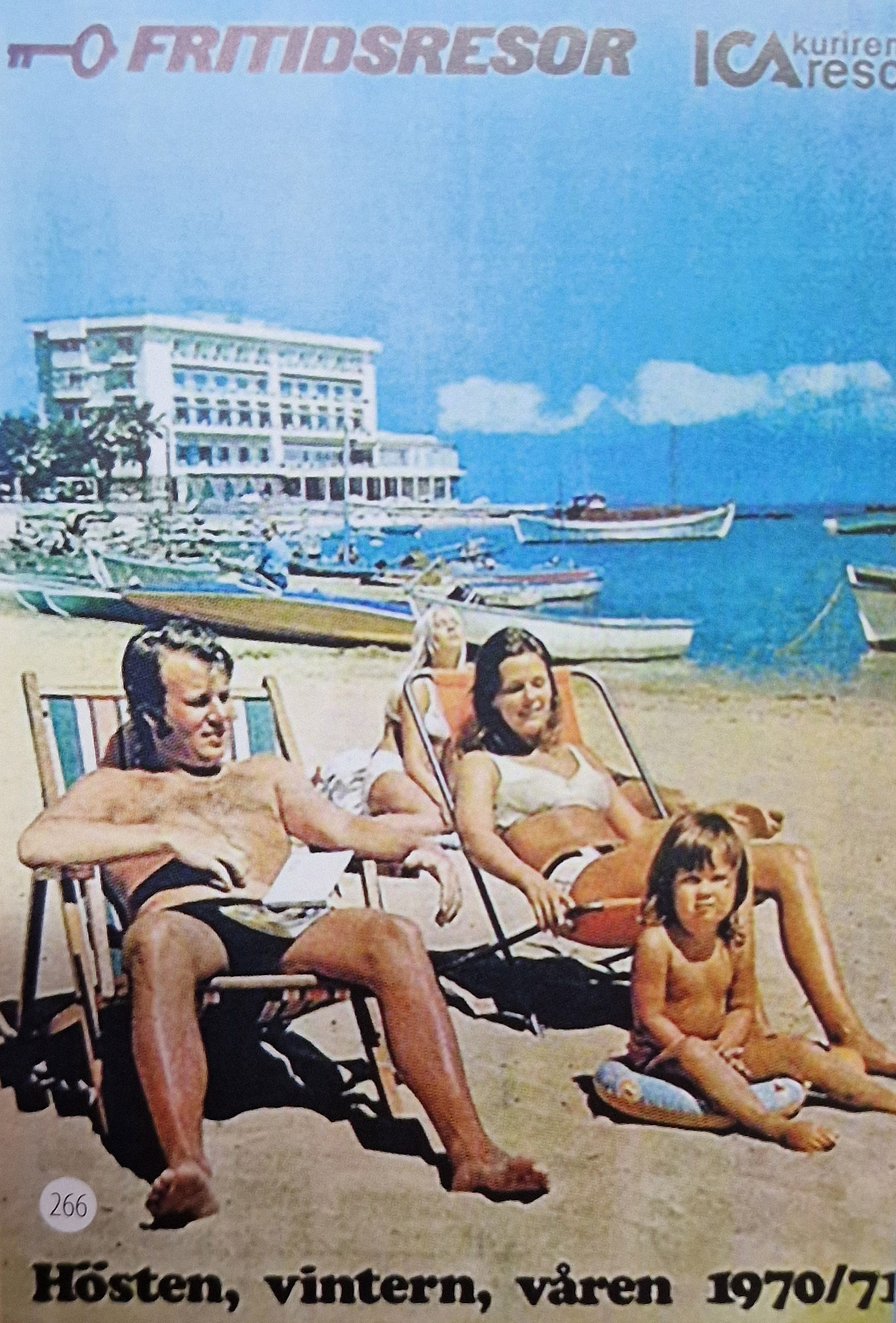
“For children it was paradise,” he says.
Warm waters and a shallow sea made it ideal for families. But the city’s tourism product extended well beyond the beach.
There were taverns, restaurants, entertainment venues and discos that had not been created exclusively for foreign visitors. They were spaces belonging to the city itself, where visitors and residents mingled.
“They were not entering a tourist ghetto,” he notes.
The observation gains particular significance when connected to today’s debate over all-inclusive tourism. His criticism is that when visitors remain confined to their hotels, economic benefits do not spread through the city and, more importantly, tourists never truly get to know the place they have visited.
In Famagusta, he says, the opposite happened.
There were even apartment complexes where visitors received vouchers allowing them to have breakfast or other meals at restaurants in the city. Tourists left their accommodation and became part of the city’s daily life.
Winter tourism
Famagusta also did not shut down when summer ended.
Restaurants and entertainment venues operated year-round because they primarily served local residents. According to Michaelides, this led travel agents to realise that Famagusta could also develop into a winter destination.
He recalls a case in which an entire hotel was rented for winter holidays by a British airline for its employees.
Folklore
At the same time, ideas emerged that today might be described as “experiences”.
In Lefkoniko, businessman Panicos Hadjikakou, as Michaelides recalls, created a “farmhouse” attraction where tourists were taken to watch a traditional wedding and sample Cypriot cuisine.
Tourism was becoming part of daily life, and daily life was becoming part of the tourism product.
ABBA: Four Swedes in Famagusta
Then there is that story.
April 1970. ABBA did not yet have the name by which they would later become known around the world. International fame was still several years away.
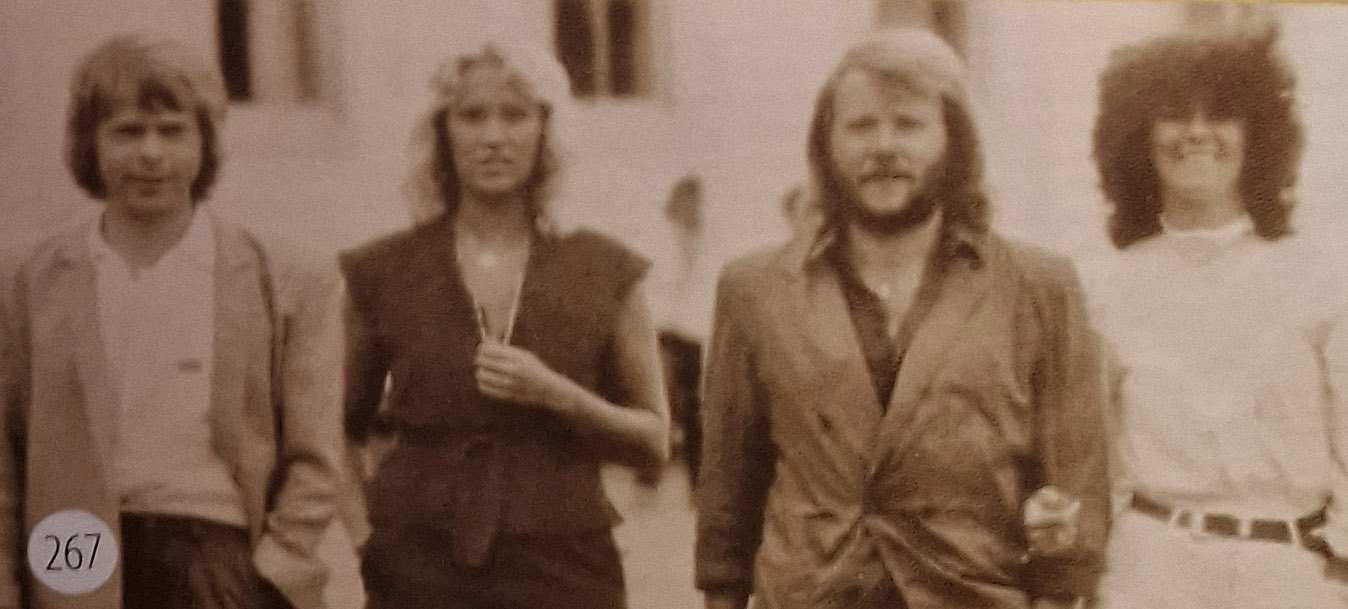
Yet, according to the author’s account and the material collected in his book, the future members of the group were in Famagusta.
A travel agent invited them for a holiday and for a performance before Swedish United Nations soldiers at the Twiga Hotel Apartments.
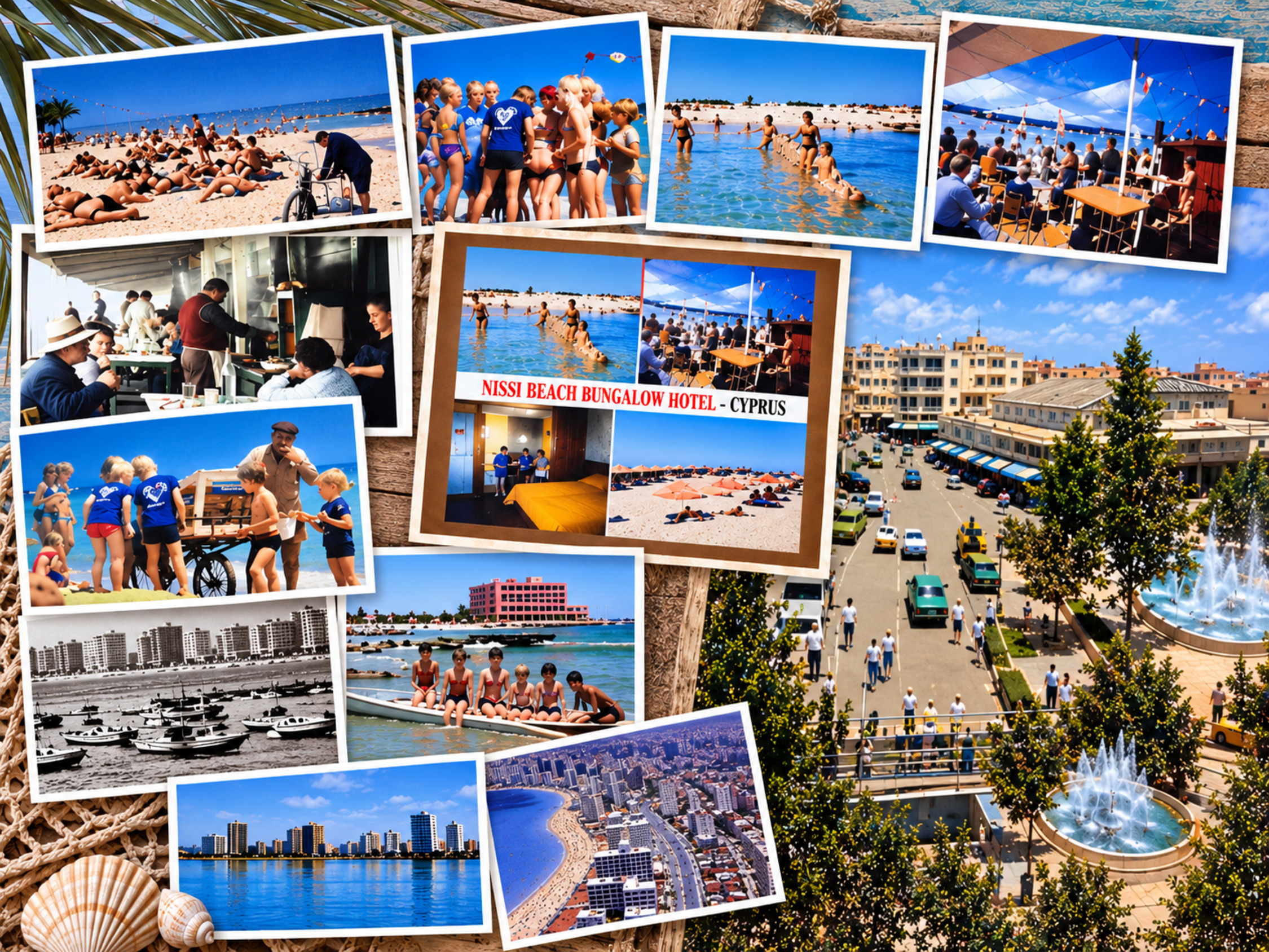
Michaelides recalls being there himself.
“The ABBA came in April 1970... I went.”
A few days later, he says, they performed again at the birthday celebration of the same travel agent who had invited them, at the Perroquet nightclub.
Photographs taken of them on the beach were later used to promote the following tourist season.
The book also preserves material documenting this visit.
By then, Famagusta had firmly entered the European tourism map.
Tourism boom
Shortly before 1974, the figures reflected the scale of the tourism boom.
In 1973, Famagusta had 33 hotels with 4,859 beds, accounting for 45% of Cyprus’ total hotel capacity, while the city attracted 53.5% of all foreign visitor overnight stays on the island.
By 1974, capacity had increased further.
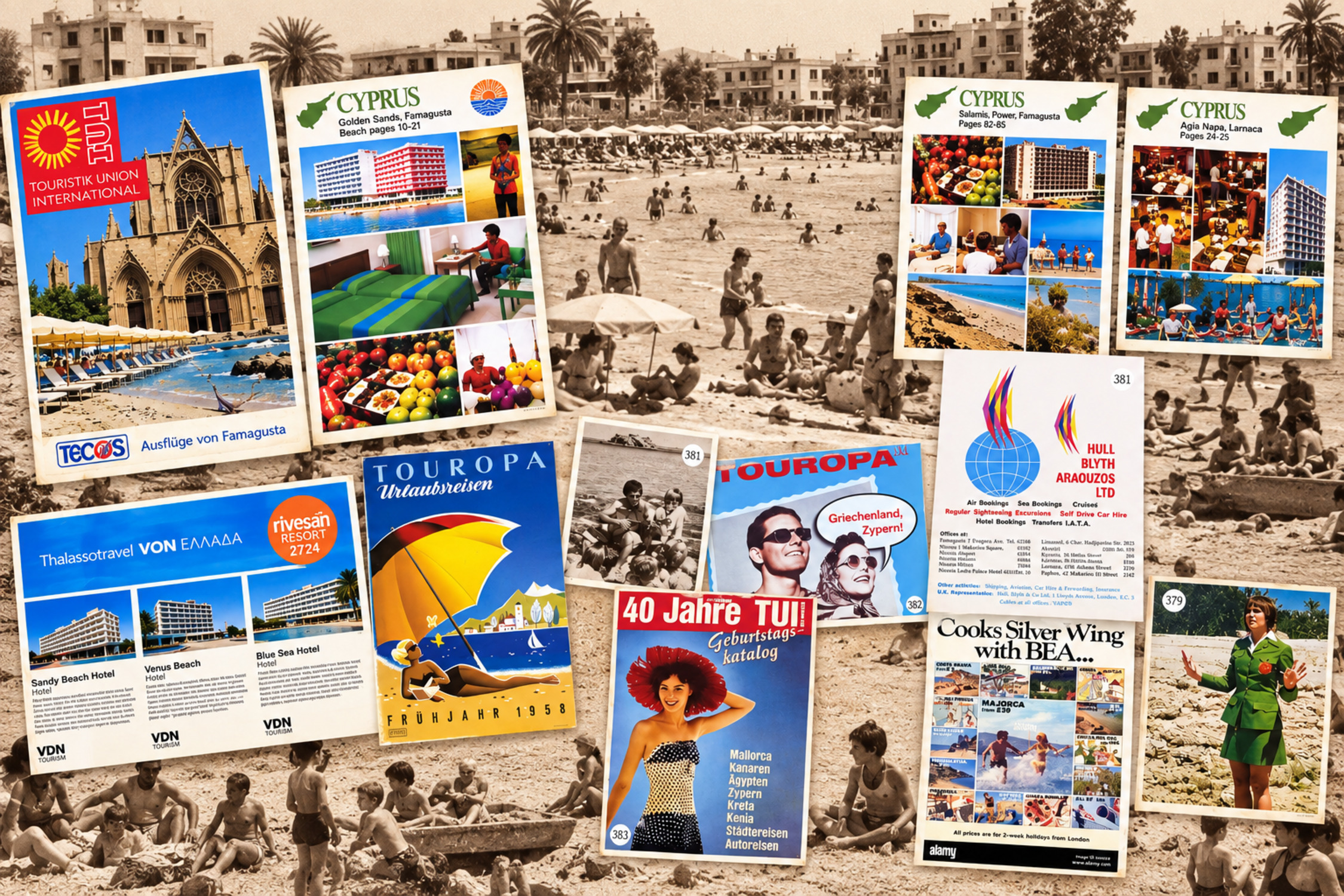
There were 39 star-rated hotels with 6,164 beds, another seven-plus non-rated hotels with 148 beds, guesthouses with 90 beds and 33 tourist apartment complexes offering a further 2,722 beds.
In total, Famagusta had more than 9,100 tourist beds, while development continued and new hotels remained under construction.
The comparison with other cities perhaps illustrates more clearly than anything else the speed of Famagusta’s tourist development.
- In 1960 it had only three tourist hotels, but within 14 years the number had surged to almost 40.
- In 1974, Kyrenia had 24 hotels, Nicosia 19, Limassol 10, Paphos three and Larnaca just two.
Famagusta alone therefore had more hotels than Limassol, Larnaca, Paphos and Nicosia combined.
As for tourist numbers, available figures show 264,000 arrivals across Cyprus in 1973. For Famagusta, overnight stays provide the most reliable measure, with the city accounting for more than half the total, reflecting its dominant position in Cypriot tourism on the eve of 1974.
The season that never came
In the summer of 1974, the city did not appear to be at the end of an era.
It appeared to be at the beginning of its best one.
That changes entirely the way Michaelides speaks about those months today.
“We were heading for an incredible winter season in 1974-75.”
Investments continued. New hotels had just opened and others were preparing to begin operations.
He cites the Golden Sands hotel, which, according to his recollection, managed to operate for only two months.
Some others never even welcomed their first guests.
Then came 1974.
The Varosha tourist district was evacuated by its Greek Cypriot residents and passed under the control of Turkish forces.
Back to square one
George Michaelides completed a specialisation in tourism management in England in June 1974, following economics studies in Germany.
After the war, his parents settled in Limassol.
In 1976, at the age of 28, he returned to Cyprus and began working for the Cyprus Tourism Organisation, which had been established in 1971.
The irony is difficult to ignore.
He had trained for a sector that, in his homeland, largely had to be rebuilt from scratch.
“Everything had been lost,” he says, describing the initial situation.
Above all, foreign markets had to be convinced to return.
“We had to invite journalists and travel agents to come here, to see that Cyprus existed, that you could take holidays here.”
Resources were limited.
As he recalls, the effort relied heavily on personal contact. Journalists and travel agents visited Cyprus, accompanied by tourism officials so they could see conditions for themselves.
“It took me a week to get home,” he says.
Gradually, tourist traffic returned. New hotels were built and a new tourism geography began to emerge in the government-controlled areas.
But Michaelides does not romanticise what followed.
Having spent decades in tourism, he believes Cyprus eventually allowed quantity to outweigh quality.
He speaks of cheap tourist apartments, environmental pressures and the loss of aesthetic character and identity.
It is his personal assessment, and one he directly links to what he believes old Famagusta had achieved.
That is why, when he talks about that city, he is not only talking about its hotels.
He talks about his doctor father, who was called whenever a German tourist fell ill because he was the one person in the city who spoke German.
His name, he recalls, even appeared in tourist brochures.
“If you need a doctor, look for Christakis Michaelides, who studied in Berlin.”
He talks about children playing in the shallow sea. About the Scandinavians. About the restaurants and discos. About a dirt road that, within a few years, became the showpiece of a tourism boom.
And he talks about a city that, in 1974, did not believe it had reached its peak.
It believed it was only just beginning.
Perhaps that explains his desire, half a century later, to gather hundreds of photographs and return to its story.
Because through those images, he is not simply reconstructing a place that changed.
He is reconstructing a future that the people of Famagusta once took for granted they would live, and which remained forever in the summer of 1974.