Artificial intelligence has rapidly become part of daily life. From AI-generated search results to chatbots that write emails, summarise articles and answer questions instantly, the technology is now deeply embedded in how people work, study and communicate.
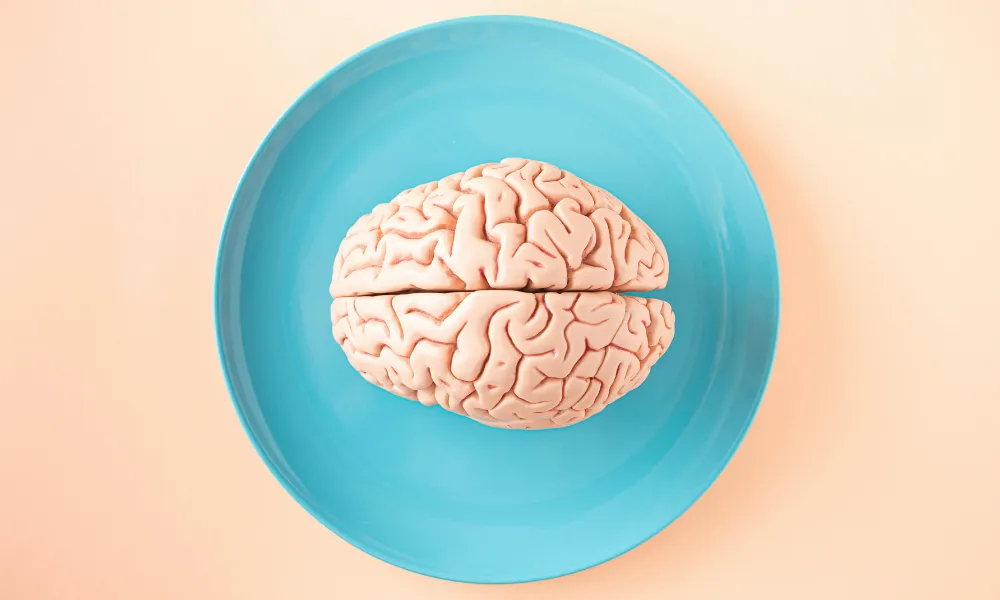
But alongside the convenience, researchers are beginning to ask a more uncomfortable question: What happens to the human brain when thinking itself is increasingly outsourced to machines?
A growing number of recent studies suggest excessive dependence on AI tools could affect attention span, creativity, memory and analytical thinking. Experts stress that the science is still new, but many argue that the risks are real enough to justify caution.
The fear of “cognitive surrender”
Researchers are particularly concerned about what some describe as “cognitive surrender” — the tendency for people to trust AI-generated answers over their own judgement, even when the information is wrong.
One recent study found that heavier AI users performed worse on standard critical thinking tests, apparently because they had become accustomed to outsourcing mental processes to digital systems.
According to researchers, the danger increases when users know little about a topic themselves. Without enough background knowledge, people may struggle to recognise when AI responses are inaccurate, misleading or incomplete.
Hank Lee, a PhD candidate at Carnegie Mellon University who co-authored research on the issue, warned that users are most vulnerable when they lack expertise in the subject they are asking about.
Experts say the solution is not to avoid AI entirely, but to approach it differently. Instead of asking chatbots to provide ready-made opinions, users should first attempt to form their own understanding and then use AI to test or challenge it.
From GPS to ChatGPT
Scientists often compare concerns around AI to earlier technological shifts.
Studies have already shown that heavy reliance on GPS navigation weakens people’s ability to build mental maps and remember routes. Similar concerns emerged with search engines, after researchers observed that people were less likely to remember information they could easily look up online.
Experts argue that AI may amplify this phenomenon because it can replace not only memory tasks but also parts of reasoning, writing and idea generation.
Adam Green, professor of neuroscience at Georgetown University and director of the Laboratory for Relational Cognition, said the problem lies in replacing mental effort itself.
He compared the process to exercising with a robot lifting the weights on someone’s behalf: the task gets completed, but the brain does not benefit from the work involved.
Creativity under pressure
Researchers are also examining whether AI may reduce originality and creative thinking.
Some studies suggest people using AI for brainstorming or creative tasks often produce ideas that are more predictable and less unique compared to those developed independently.
According to experts, creativity develops through struggle, experimentation and unexpected connections between memories, experiences and ideas. If AI performs that work automatically, people may gradually lose part of that creative exercise.
Scientists recommend delaying the use of AI during creative work. Writing initial thoughts independently, even imperfectly, may help preserve the cognitive processes linked to originality and deeper thinking.
AI can then be used later to refine, organise or challenge ideas rather than generate them from the start.
Attention span and mental effort
Another growing concern is attention.
Researchers say modern technology already encourages shorter focus spans through constant notifications, quick summaries and instant answers. AI may intensify this by removing the need to sit with difficult problems or long-form material.
Some experts now argue that “friction” — the mental discomfort involved in concentration and problem-solving — is essential for healthy cognition.
Activities such as reading long articles, solving problems without shortcuts or taking notes manually may strengthen memory and improve learning because they require active engagement from the brain.
Barbara Oakley, an engineering professor who studies learning processes, noted that information absorbed too passively is less likely to move into long-term memory.
Is AI making people less intelligent?
Not all researchers agree that AI will necessarily weaken human intelligence.
Jared Benge, a clinical neuropsychologist at the University of Texas at Austin, points out that humans have adapted to technological change repeatedly throughout history.
A large meta-analysis co-authored by Benge reviewed 57 studies involving more than 400,000 adults and found no evidence that technology use causes “digital dementia” or widespread cognitive decline.
Instead, some forms of technology use appeared to reduce the risk of cognitive impairment.
Benge argues that AI itself is not inherently harmful. The impact depends largely on how people use it.
If AI reduces repetitive tasks and frees mental space for more meaningful thinking, creativity or learning, the technology could become beneficial rather than damaging.
A future shaped by human thinking
Despite the concerns, experts do not believe AI will replace uniquely human thought.
Researchers stress that human intelligence remains fundamentally different from machine-generated prediction systems. Human ideas are shaped by emotion, personal experience, intuition and unpredictable associations that AI cannot fully replicate.
Some scientists even predict that original human thinking may become more valuable in the future as AI-generated content becomes increasingly common.
The challenge, they argue, is learning how to use AI without allowing it to replace the mental effort that supports memory, creativity and critical reasoning.
For now, experts suggest a simple principle: use AI as a tool, not as a substitute for thinking.
Source: BBC