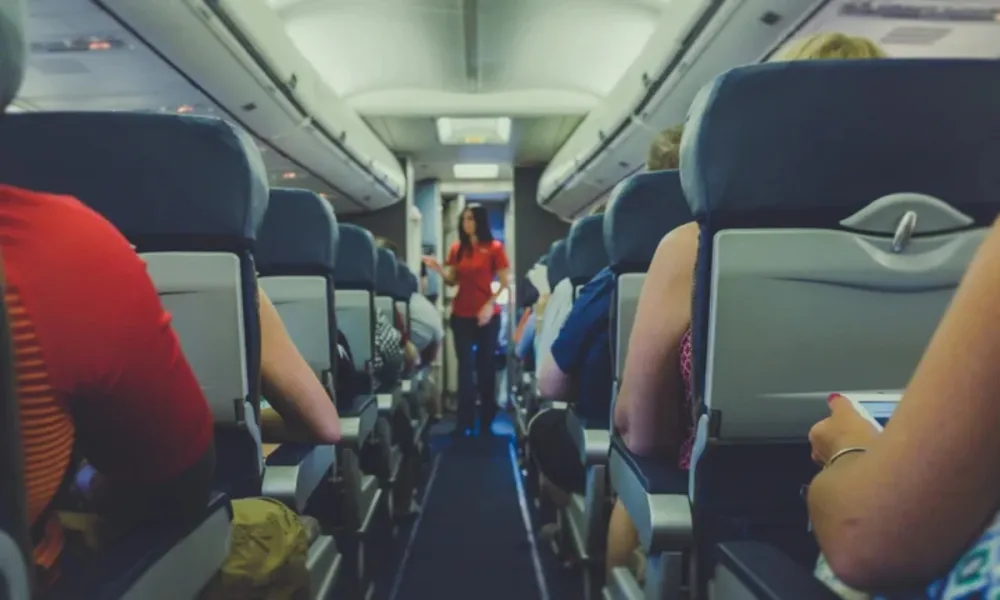

Airlines are issuing more frequent and more insistent warnings about the dangers of bringing battery-powered devices, and specifically lithium-ion batteries, onto flights. These include warnings against retrieving devices that slip into aircraft seats and pleas not to pack lithium-ion devices in checked luggage.
A leading risk for the industry
According to Jonathan Nicholson of the UK's Civil Aviation Authority (CAA), lithium-ion batteries have been "if not number one, within the top three risks" for the airline industry for several years. A recent US study found the industry was affected by around two lithium-ion battery-related incidents a week worldwide, he said. These range from passengers realising too late that they left a device in checked baggage, to devices smoking or catching fire in airport baggage halls or on flights.
The consequences can be far more severe. In January 2025, an Air Busan plane was destroyed on the tarmac at Gimhae Airport in South Korea, with investigators concluding that a power bank left in an overhead luggage compartment was responsible. The incident prompted the International Air Transport Association (IATA) to launch a global campaign encouraging passengers to "Travel Smart with Lithium Batteries."
Why the risk is growing
Nicholson said there is nothing about flying itself that makes lithium-ion technology more dangerous. Rather, he explained, "it's a lot harder to deal with at 32,000 feet in an aircraft cabin." He attributed the rise in incidents to "more people, more flights, more devices."
The US Federal Aviation Administration (FAA) says battery safety is a priority, noting that its data "continues to show an increase in confirmed incidents," with 51 verified incidents recorded for the year to 15 July.
Pierre Kubiak, a principal engineer specialising in battery technology at the UK's National Physical Laboratory, said that while mobile phones, power banks, tablets and laptops are the most obvious devices passengers bring on board, smart watches, smart glasses and vapes are becoming increasingly common. "The lithium by itself doesn't burn, it's more all the organic material and plastic," he said. "The point is that it gets very, very hot, very fast. More than 700 to 1,000 degrees, super fast."
Design flaws and quality control
Concerns over lithium-ion batteries first entered public awareness following a series of phone-related fires roughly a decade ago. Kubiak said these were largely due to flawed designs, which manufacturers have since addressed, noting that South Korea is a leader in this area. However, he said it remains difficult to control the proliferation of cheaply produced battery packs, vapes and other powered devices from East Asia with questionable quality controls. "Price is everything," he said, adding that passengers often contribute to the problem by using unsuitable charging cables and failing to properly care for their devices.
How airlines respond to incidents
With no economical alternative to lithium-ion technology currently available, airlines rely on reiterating warnings and training staff to respond quickly when incidents occur. Nicholson said "the most important thing is to bung it in water and cool it down," although some airlines use specialised containment devices. This is also why passengers are told to keep such devices in the cabin, rather than in overhead compartments or in the hold.
Nicholson said passengers generally comply well with the warnings and restrictions, and that the main issue is that many are simply unaware how many of their devices rely on lithium-ion battery technology.
Looking for alternatives
Kubiak said there are currently no economically viable alternatives to lithium-ion technology, as the technology and personal device industries remain heavily invested in it. One alternative, sodium-ion batteries, currently costs around double the price of lithium-ion devices for consumers, he said. "It's not just a technical solution. It's also a societal solution that we have to take." He suggested greater focus should be placed on safeguarding around existing technology, adding: "We don't necessarily want to have battery banks banned from every plane."
Source: