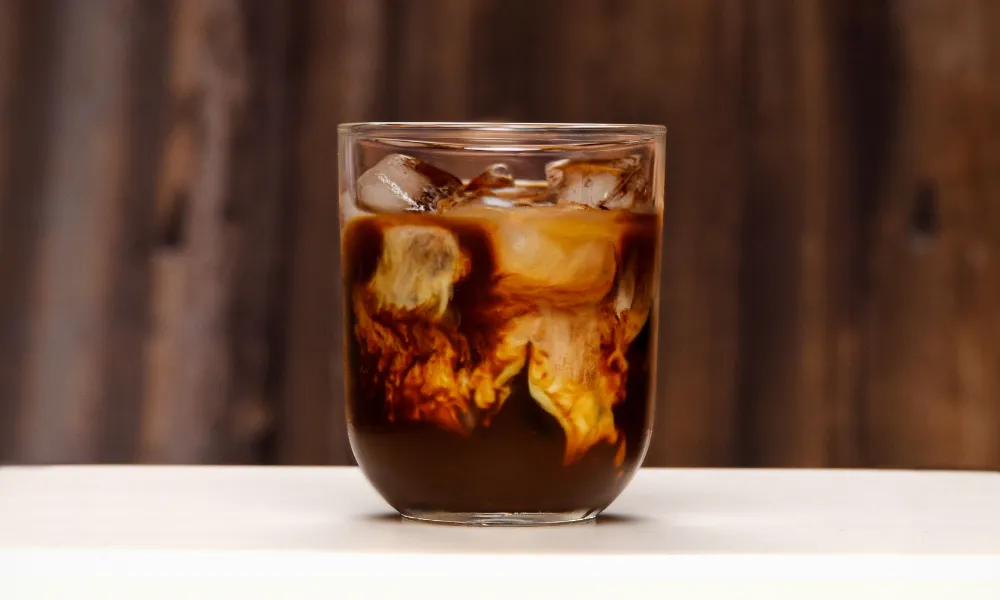

Drop ice into hot coffee and something more than the temperature changes. Aroma becomes more restrained, sweetness fades, acidity turns sharper, and the drink often feels noticeably lighter in the mouth. Coffee doesn't just cool down, it shifts almost instantly into a new chemical balance.
Two things happen at once
As ice melts, it absorbs heat fast, dropping the coffee's temperature within seconds. But melting also adds water, which dilutes the drink, lowering the concentration of the dissolved solids responsible for body, flavour and sweetness. The more the ice melts, the weaker and thinner the coffee becomes.

Why iced coffee smells "flatter"
Aroma comes from volatile compounds that move easily from hot liquid into the air, which is why hot coffee smells stronger. As it cools, those compounds stay trapped in the liquid instead of reaching the nose. The coffee hasn't lost its aromatic character, it's just releasing far less of it.
Sweet, sour and bitter all shift
Cold mutes sweetness, which is why a coffee that tastes balanced hot often needs more sugar once iced. Acidity, meanwhile, can taste sharper even though its actual concentration drops, because the sweetness and body that normally soften it fade faster. Bitterness feels less aggressive when cold, but ice doesn't fix a burnt or over-extracted coffee, it just masks it temporarily.
Caffeine stays the same
One thing ice doesn't touch: caffeine. The total amount in the glass stays constant, only its concentration per sip drops as the ice melts. Finish the drink, and you get the same caffeine hit as the hot version, it just tastes less intense along the way.
Not all coffees react the same
Freddo espresso changes fastest and most dramatically, since it starts highly concentrated and cools rapidly on contact with ice. Cold brew barely changes on ice, since it's already made slowly and cold, dilution is the only real factor. Filter coffee dilutes gradually, a weak filter coffee turns watery fast, while a well-extracted one holds its character. Greek coffeeloses body and roast bitterness with ice, without much change in acidity.
The takeaway
Good iced coffee isn't an accident. A slightly stronger coffee-to-water ratio, larger ice cubes (they melt slower), and clean water all help preserve character as the ice does its work. Treated carelessly, even great coffee turns flat and watery, the difference comes down to a few degrees and a little melted water.