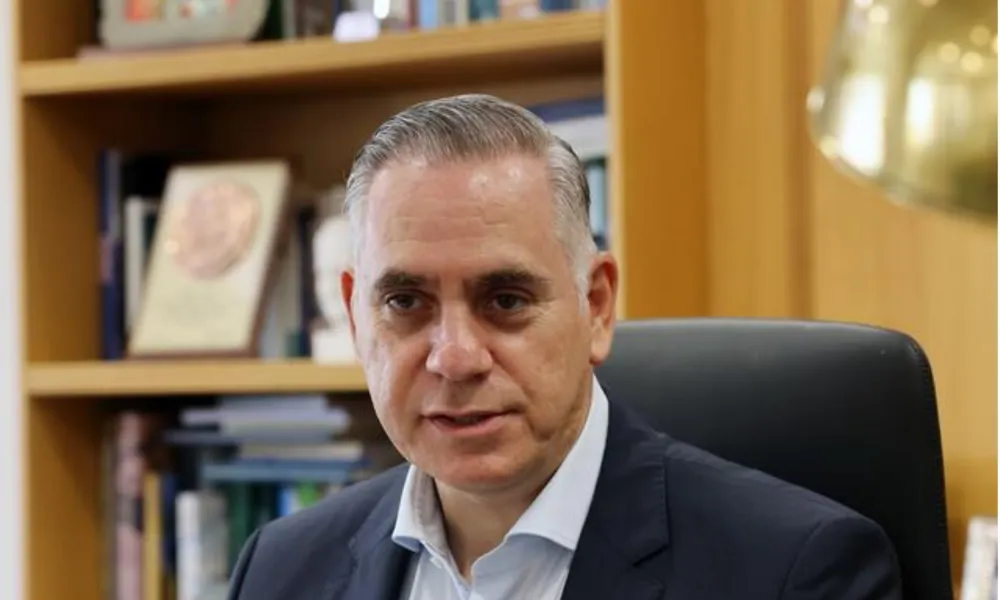

DIKO is beginning cooperation with DIPA with the aim of preparing potential joint policy proposals, according to a post by party president Nicolas Papadopoulos.
Speaking on a Capital programme, Papadopoulos confirmed the agreement, while clarifying that discussions with EDEK and the Greens will continue once their new leaderships have been elected.
Study groups
Previous attempts by DIKO to cooperate with parties in the political centre had been unsuccessful.
Έχουμε συμφωνήσει, με τη Δημοκρατική Παράταξη, να ξεκινήσει μια συνεργασία σε επίπεδο ομάδων μελετών ώστε να ετοιμάσουμε πιθανές κοινές προτάσεις πολιτικής. Σε ό,τι αφορά την ΕΔΕΚ και τους Οικολόγους, θα σεβαστούμε τις εσωκομματικές τους διαδικασίες και θα συνεχίσουμε τη συζήτηση αμέσως μόλις έχουμε τις νέες εκλεγμένες ηγεσίες και των δύο αυτών κομμάτων.
— Νικόλας Παπαδόπουλος (@NicholasPapadop) October 7, 2026
In June 2025, Papadopoulos sent letters to the leaders of EDEK and DIPA seeking a joint approach to the parliamentary elections, with DIPA responding that the conditions for such an arrangement did not exist.
DIKO had put several possible models on the table, ranging from cooperation between the parties and a joint electoral ticket to the creation of a new political formation. None of the proposals was accepted.
The landscape changed after the May elections, when DIPA failed to return to parliament, as did EDEK and the Greens.
Papadopoulos subsequently committed to initiatives aimed at bringing the centrist political space together, arguing that the parties have far more in common than what divides them.
DIPA, for its part, has begun a restructuring process, which was discussed by its Political Bureau in September.
Waiting for EDEK and the Greens
EDEK and the Greens are both going through transitional periods.
At EDEK, 27-year-old Sofia Christodoulou Makri was elected president on 5 September, following the resignation of Nikos Anastasiou.
Her term runs until December, when an electoral congress will be held.
The Greens, currently under interim leadership, will elect a new president at their Extraordinary Pancyprian Electoral Congress on 14 November.
Cyprus issue and GSI
During the same interview, Papadopoulos also addressed the Cyprus issue, saying that “the Turkish side appears negative both on procedural issues and on matters of substance”.
Η ηλεκτρική διασύνδεση μάς προσφέρει ηλεκτρική επάρκεια και ασφάλεια. Μας προσφέρει και γεωπολιτική αναβάθμιση. Η Κύπρος θα είναι ο ενεργειακός κόμβος για το Ισραήλ και την Αίγυπτο, η γεωπολιτική γέφυρα με το ηλεκτρικό δίκτυο της Ευρώπης. Απορεί κανείς, λοιπόν, γιατί η Τουρκία δεν θέλει να γίνει αυτό το έργο; Η Τουρκία έχει κάθε λόγο να μη θέλει τη γεωπολιτική αναβάθμιση της Κύπρου. Το ερώτημα είναι γιατί κάποιοι στην Κύπρο έχουν πρόβλημα με το συγκεκριμένο έργο. Η ηλεκτρική διασύνδεση θα συμβάλει, επίσης, στη μείωση του κόστους του ηλεκτρικού ρεύματος με τη δημιουργία συνθηκών ανταγωνισμού.
— Νικόλας Παπαδόπουλος (@NicholasPapadop) October 6, 2026
He said the objective remains to find ways “to overcome this intransigence and move towards negotiations”.
Turning to the Great Sea Interconnector (GSI), Papadopoulos said the electricity interconnection project would provide Cyprus with greater energy adequacy and security, while also strengthening its geopolitical position.
He argued that the project could turn Cyprus into an energy hub for Israel and Egypt and contribute to lowering electricity costs.
“Turkey has every reason not to want Cyprus to be geopolitically upgraded. The question is why some people in Cyprus have a problem with this particular project,” he said.