
Summer is here, the leave request has been approved, and the only thing standing between you and total relaxation is packing. While most of us spend hours choosing the right outfits and the right sunscreen, there's one small hero we usually forget until we desperately need it: the holiday first aid kit.
For sun and skin
The sun is a friend, but sometimes it overdoes it. For those moments when you dozed off a little too long at midday, you'll want:
- Soothing cream or aloe gel, for the inevitable redness (because let's be honest, we've all forgotten to reapply sunscreen at some point)
- Insect repellent and after-bite stick, since mosquitoes love summer as much as you do. A mild 1% hydrocortisone cream or an ammonia-based gel will help with itching
For the stomach
Trying the local taverna specials and cocktails by the water is a must, but sometimes your stomach has other ideas.
- Anti-diarrhoeal tablets and electrolytes: a change of water and food can bring surprises. Electrolytes will help keep you hydrated if things go sideways
- Motion sickness tablets: if the ferry crossing, or the winding roads up to the villages, tend to leave you dizzy, don't set off without them
For pain and minor mishaps
From a late night out to a stumble on a cobbled street, prevention is everything.
- Painkillers/fever reducers: paracetamol or ibuprofen for the next-day headache or a sudden fever. Pack a thermometer too, just in case
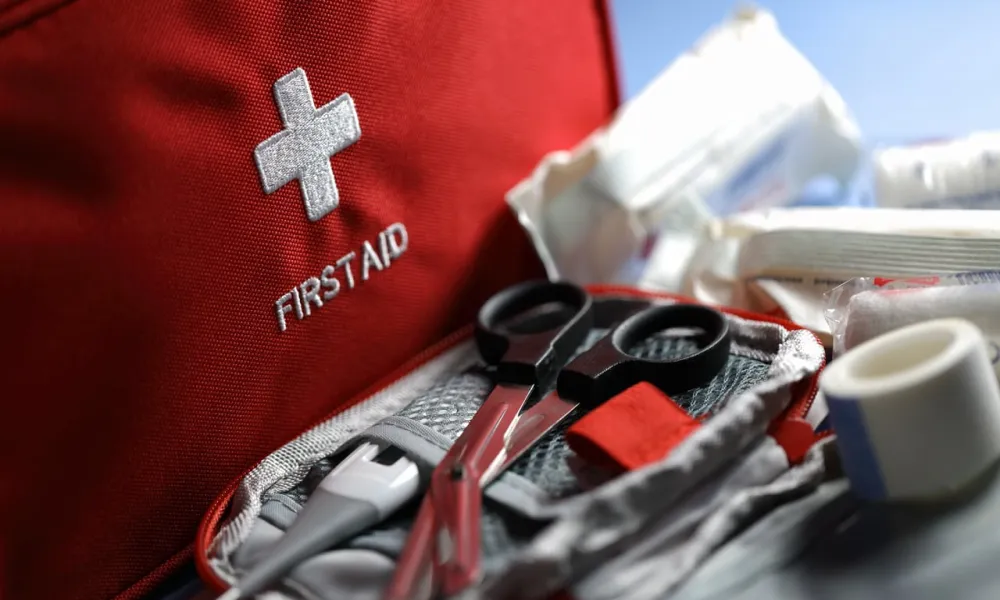
- A minor-injuries kit: a few self-adhesive plasters, sterile gauze, antiseptic spray and tweezers, ideal for sea urchin spines
Last-minute tip: if you're on any ongoing medication, make sure you're carrying enough for the entire trip, plus two to three extra days in case of flight or ferry delays.
Sunstroke: how to tell if it's got you
Sunstroke rarely announces itself, but it does send warning signs worth knowing. If you or someone in your group notices the following after hours in the sun, it's time to pack up the umbrella:
- A pounding headache, often paired with nausea
- Dizziness and weakness, unsteady legs or sudden, unexplained exhaustion
- Hot, dry, flushed skin (sweating stops, meaning the body has run out of fluid to cool itself)
- A racing heart and fast breathing, as the heart works harder to cope with overheating
How to respond
If these symptoms appear, move the person to a shaded, cool spot immediately, ideally somewhere with air conditioning or a fan, and:
- Cool the body down: plenty of cool water, used mainly externally. Wet small towels or cloths and place them on the neck, forehead, armpits and groin, the key points for bringing body temperature down quickly.
- Restore fluids: electrolyte sachets dissolved in cool water, given in small, slow sips, and only if the person is fully conscious. Plain water isn't enough, since important minerals have also been lost.
- Manage pain: paracetamol can help with the headache, but note that sunstroke "fever" won't come down with medication alone unless the body is also cooled externally.
When to call for help: if there is significant confusion, vomiting or loss of consciousness, never give anything by mouth (there's a risk of choking), and call 112 immediately.
Snake bite: what to do
If a walk on a hiking trail or a night of camping brings an unwelcome encounter with a snake, the only genuinely dangerous species in Cyprus is the blunt-nosed viper (known locally as koufi). Forget the Hollywood scenes of sucking out venom, and instead follow three simple steps before heading to hospital:
- Stay completely still: keep the person still and seated or lying down, with the affected limb below heart level. Movement and panic speed up blood circulation and the spread of venom.
- Remove jewellery: take off rings, watches or bracelets from the affected hand or foot immediately, since the swelling that follows can be severe and cut off circulation.
- Clean and loosely bandage: clean the wound with antiseptic and wrap it loosely with an ordinary bandage, loose enough to fit a finger underneath, never a tight tourniquet.
Extra tip: if it's safe to do so, take a quick photo of the snake on your phone to show doctors.
And once you've packed the kit…
If organising isn't your strong suit and you already have a pharmacist you trust, a visit before you travel is worth the peace of mind.
Cyprus emergency and pharmacy numbers
- 112 — general emergency (police, fire, ambulance), free, 24/7
- 199 — alternative general emergency number