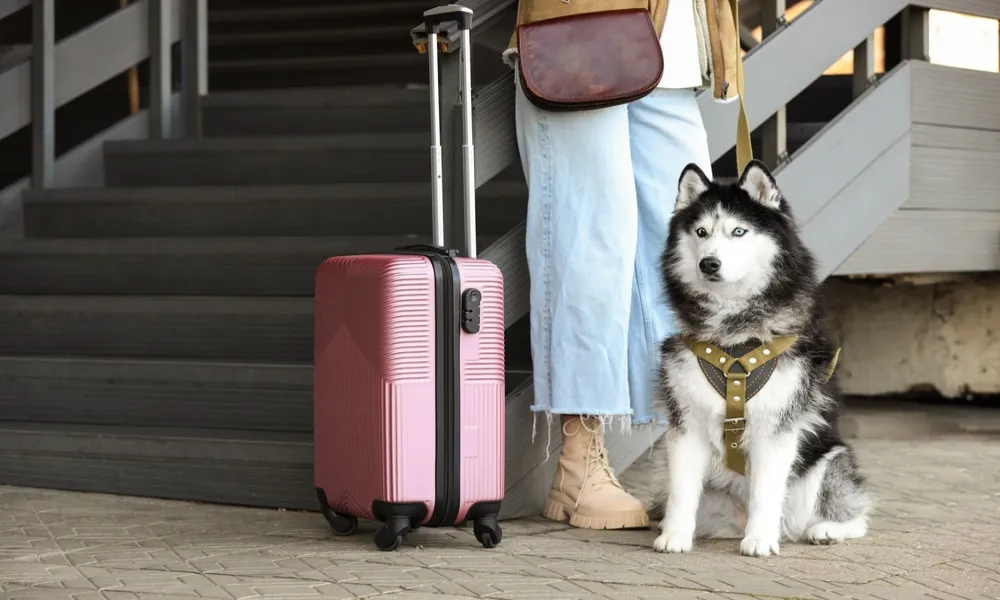

Flying with a dog or cat from Cyprus is not simply a matter of choosing a destination and buying the cheapest ticket. Two airlines serving the same city can have completely different rules. One may accept a small pet beneath the seat, while another will refuse ordinary animals altogether.
Many pet-friendly airlines impose a combined limit of 8kg for the animal and its carrier. The pet must normally remain inside a closed carrier throughout the flight, while the number of animals accepted on each aircraft is limited.
Every airline in this guide is currently listed by Hermes Airports as serving Larnaca and/or Paphos, although some routes operate seasonally.
Cyprus Airways Allows 10kg Including the Carrier
Cyprus Airways accepts dogs and cats in the passenger cabin, provided the animal itself weighs no more than 8kg and the combined weight with its carrier does not exceed 10kg.
The carrier can measure up to 45 by 35 by 20 centimetres and must fit beneath the seat. Reservations should be made at least 24 hours before departure.
Cabin charges currently range from €70 to €100 on direct flights, depending on the destination, while journeys involving a connection cost €150.
Dogs and cats travelling to the United Kingdom must be transported as cargo. Animals cannot travel in either the passenger cabin or aircraft hold on Cyprus Airways flights to Dubai and must instead be transported through the airline’s cargo service.
Snub-nosed breeds may be accepted in the cabin if they meet the weight requirements, but Cyprus Airways does not carry them in the aircraft hold.
Aegean and SKY Express Follow the 8kg Rule
Aegean allows one dog or cat per passenger in the cabin, with a maximum combined weight of 8kg.
The standard carrier limit is 55 by 40 by 23 centimetres. Smaller dimensions of 40 by 25 by 25 centimetres apply on DH8-100 and ATR aircraft.
The cabin fee is €65 for an international journey and €35 for a domestic flight within Greece. Passengers travelling with a pet must sit beside a window and cannot be seated in the first row or beside an emergency exit.
SKY express also accepts dogs and cats weighing up to 8kg, including their carrier. Its maximum carrier size is 55 by 40 by 20 centimetres, with charges of €65 on international flights and €35 on domestic services.
SKY express asks passengers to make the reservation at least 24 hours before departure. The service is available on its Airbus and ATR aircraft, except on flights between Athens and London. Pets are not accepted on any SKY express service to or from the United Kingdom.
Both airlines limit the number of animals accepted on each flight, so availability should be checked before purchasing a ticket.
TUS Airways Charges €105 Per Flight
TUS Airways accepts small dogs and cats in the passenger cabin if their combined weight with the carrier does not exceed 8kg.
The carrier can measure up to 45 by 35 by 23 centimetres. Reservations must be made through the airline’s call centre at least 48 hours before departure, with a charge of €105 per sector payable at the airport.
TUS allows one cabin pet per adult passenger and no more than four pets on each flight. Dogs and cats are not accepted in either the cabin or hold on its Dubai services.
Lufthansa and Austrian Airlines Accept Up to 8kg
Lufthansa accepts small dogs and cats weighing up to 8kg, including their soft carrier.
The carrier can measure up to 55 by 40 by 23 centimetres and must fit beneath the seat. Lufthansa asks passengers to register a cabin pet no later than 72 hours before departure. Prices depend on the route.
Austrian Airlines uses the same 8kg combined limit and maximum carrier dimensions of 55 by 40 by 23 centimetres.
Only dogs and cats are permitted in the Austrian passenger cabin. The airline currently charges €80 on European routes, in addition to a ticket service fee that varies according to the departure location.
Both airlines limit the number of animals carried and recommend arranging the service as early as possible.
LOT, Air Serbia, airBaltic and Eurowings
LOT Polish Airlines accepts dogs, cats and ferrets weighing up to 8kg, including the carrier.
Its carrier limits depend on the aircraft. Containers can measure up to 55 by 40 by 20 centimetres on Boeing aircraft and 45 by 30 by 20 centimetres on Embraer aircraft.
Air Serbia accepts dogs and cats with a maximum combined weight of 8kg. The carrier’s three dimensions can total no more than 94 centimetres, with the airline giving 40 by 30 by 24 centimetres as an example.
Air Serbia currently charges €70 per flight between Serbia and most European destinations. It does not transport pets on flights to or from the United Kingdom, United Arab Emirates or Qatar.
AirBaltic accepts dogs and cats weighing up to 8kg in carriers measuring no more than 55 by 40 by 23 centimetres. The current charge is €70 per carrier in each direction.
Passengers are advised to contact airBaltic before buying their ticket because the number of pets accepted on each flight is limited.
Eurowings accepts small dogs and cats weighing up to 8kg in soft carriers measuring no more than 55 by 40 by 23 centimetres. Prices start from €60, depending on the route.
Eurowings does not accept ordinary pets on flights to or from the United Kingdom, Ireland or Dubai, or on services involving Keflavik and Marsa Alam.
The Airlines That Say No
Several major airlines serving Cyprus do not carry ordinary pets in the passenger cabin.
Ryanair does not carry animals on its flights, except guide or assistance dogs on certain routes.
Wizz Air does not accept ordinary pets, making an exception for recognised assistance dogs subject to its requirements.
EasyJet only accepts recognised and registered guide or assistance dogs.
Jet2 states that it does not carry any other animals onboard. Where permitted, registered assistance dogs can travel subject to advance notification and documentation requirements.
British Airways does not carry ordinary pets in the passenger cabin on any route. Pets instead travel in the aircraft hold, with arrangements managed by one of the airline’s approved partners. Recognised assistance dogs can travel in the cabin free of charge on most British Airways flights.
Emotional-support animals do not automatically qualify as recognised assistance dogs. Several airlines explicitly refuse to carry them under their assistance-animal policies.
Do Not Forget the Paperwork
For non-commercial journeys between EU countries, dogs, cats and ferrets normally require an EU pet passport, a registered microchip and a valid rabies vaccination.
An animal must be at least 12 weeks old before receiving its first rabies vaccination. Owners must then wait at least 21 days before travelling. If a booster is administered before the previous vaccination expires, a new waiting period is not normally required.
Dogs travelling from Cyprus to Finland, Ireland, Malta, Norway or Northern Ireland must also receive treatment against the tapeworm Echinococcus multilocularis between 24 and 120 hours before arrival.
Travellers entering Cyprus or another EU country from outside the EU may require an animal health certificate, additional tests and checks at an authorised point of entry.
Cyprus does not allow animals younger than 105 days to enter the Republic.
It also prohibits the entry of Pit Bull Terriers or American Pit Bulls, Japanese Tosas, Dogo Argentinos and Fila Brasileiros. The restriction covers crosses between these breeds and dogs crossed with a prohibited breed when a registered veterinarian certifies that its dominant characteristics are present.
Confirm the Pet Before Buying the Ticket
Pet owners should contact the airline before completing their booking, even when its website states that animals are accepted. Cabin places can sell out, restrictions may vary by aircraft and the operating airline’s rules apply on codeshare services.
Owners should weigh the animal inside its carrier, check the precise dimensions and confirm the veterinary requirements for every country on the itinerary.
Airline approval only covers the flight. It does not replace the veterinary and border documents required by the destination.