
NASA scientists have built two highly sensitive seismometers for eventual permanent deployment near the Moon’s South Pole. The instruments will form part of the Lunar Environment Monitoring Station (LEMS), an autonomous system designed to collect long-term data on seismic activity.
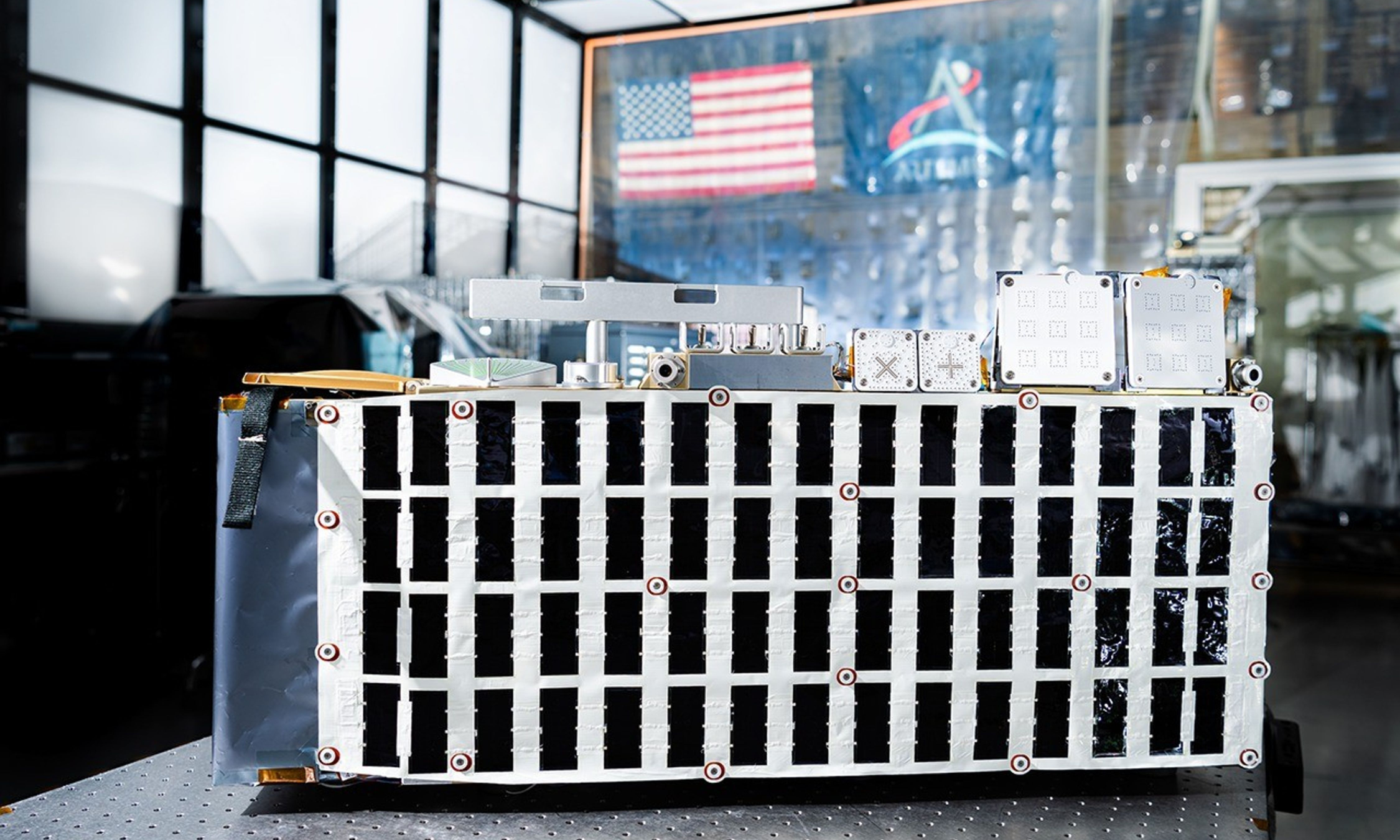
The fully assembled Lunar Environment Monitoring Station, ready for environmental testing. Photo: NASA Goddard/Mike Guinto.
Supporting long-term lunar exploration
One of the central goals of NASA’s Artemis programme is to enable astronauts to conduct sustainable scientific research and exploration on the Moon.
The LEMS instrument package contains two highly sensitive seismometers that will monitor ground vibrations caused by moonquakes and meteorite impacts.
The readings will provide scientists with information about the Moon’s interior and help them assess the seismic hazards astronauts could face on its surface.
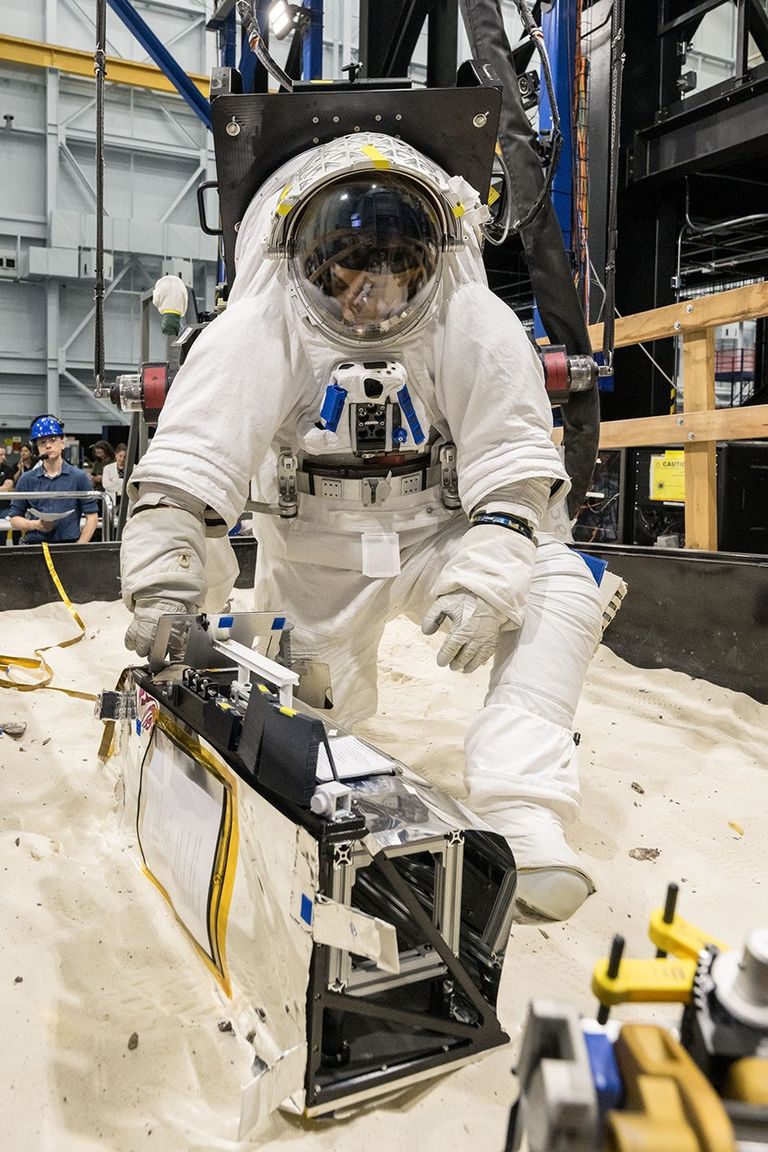
A scientist wearing NASA’s prototype xEMU spacesuit tests the handling of a LEMS mock-up at the Active Response Gravity Offload System, a reduced-gravity simulation facility at NASA’s Johnson Space Center in Houston. Photo: NASA Johnson.
Designed for future expansion
The station’s modular design will allow it to be adapted or expanded to accommodate additional instruments in the future.
This will make LEMS a reusable scientific platform capable of evolving as research priorities develop.
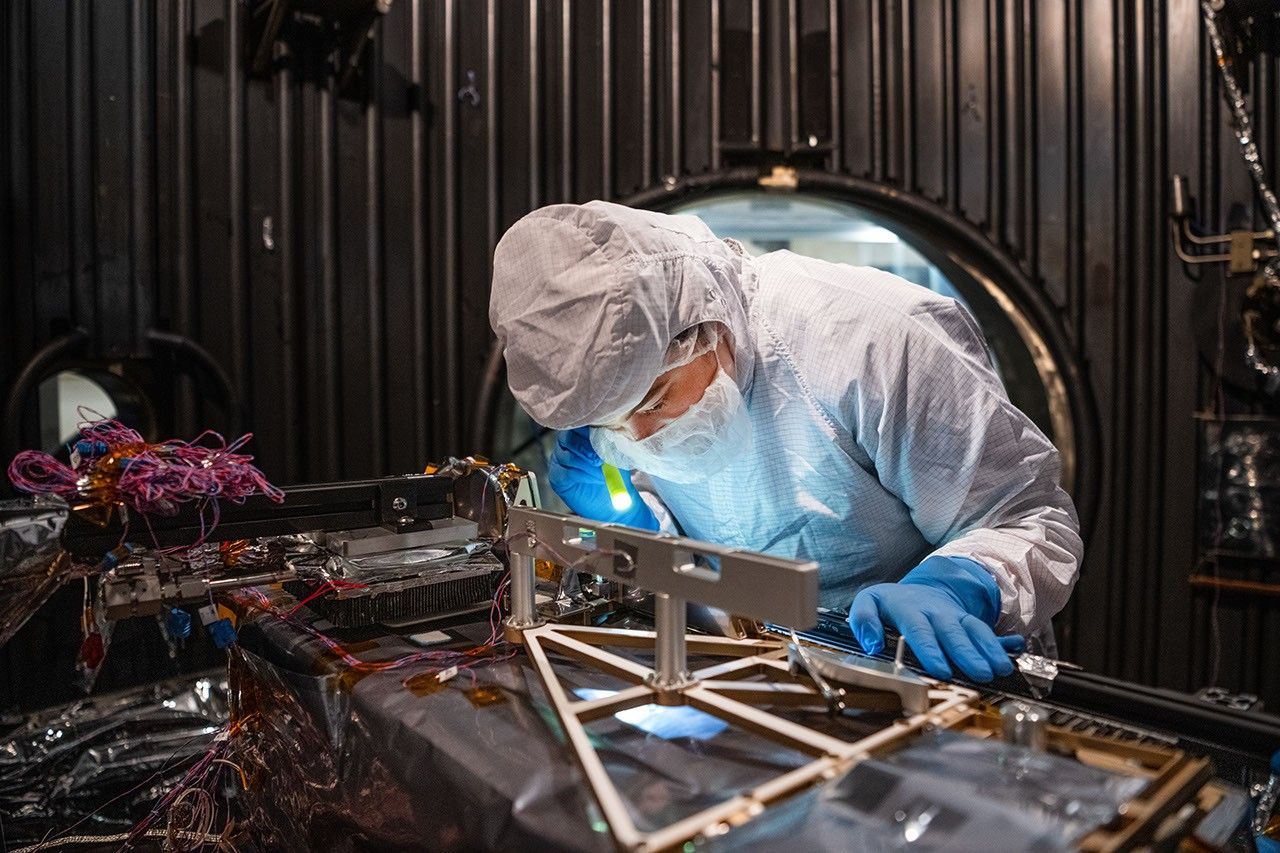
Mechanical engineer Brie Ludwig inspects LEMS ahead of thermal vacuum chamber testing at NASA’s Goddard Space Flight Center in Greenbelt, Maryland, on 31 March 2026. LEMS is a compact, autonomous and self-powered seismometer system designed for continuous, long-term monitoring of seismic activity in the Moon’s southern polar region. Photo: NASA/Denny Henry.
The payload will remain at NASA’s Goddard Space Flight Center until it is assigned to an Artemis mission for deployment on the lunar surface.
Source: CNA