
Repeated violations by unmanned aircraft (drones) launched from the occupied areas were recorded on Saturday night in the Deryneia area, close to the site of Famagusta Municipality's anti-occupation event. According to reports, the competent authorities are examining the incident and are expected to proceed with formal protests over the violation of the status quo in the buffer zone.
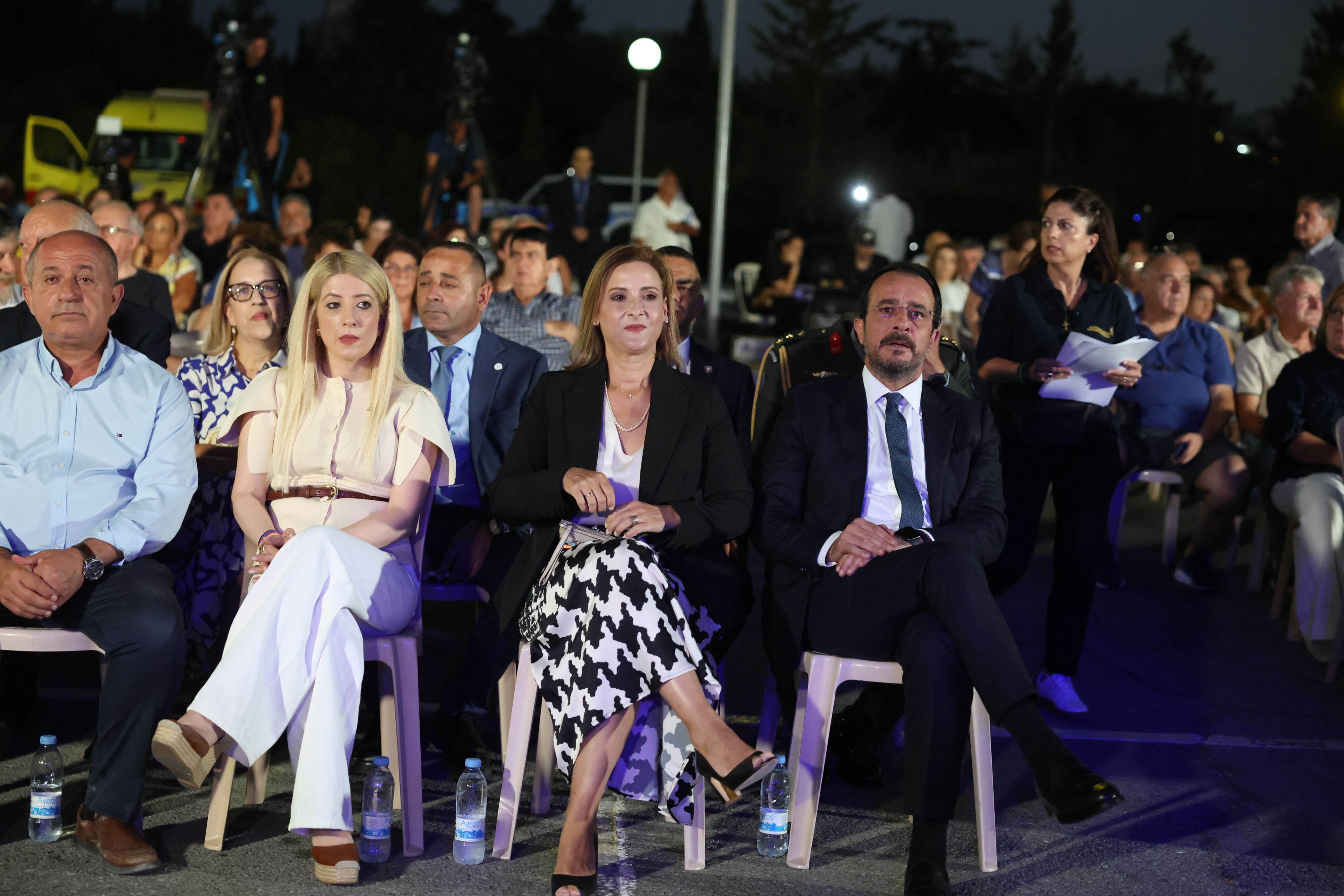
The drones, according to reports, took off from the occupied areas and flew very close to the venue where Famagusta Municipality's anti-occupation event was taking place in Deryneia, causing concern among the authorities.
The relevant services are reviewing the details of the incident, amid reports that the unmanned aircraft entered the airspace of the government-controlled areas and may have violated the existing status quo in the buffer zone. Protests through the appropriate channels are expected to follow, while authorities are assessing all available evidence, including audiovisual material from the incident.
A renewed promise of return
From Deryneia, just metres from occupied Famagusta, residents displaced from the city renewed their promise of return for another year, as part of events organised once again this year by Famagusta Municipality under the theme "Famagusta is not a hashtag. It is your history."
The events began with a twinning ceremony between the displaced municipality and the Serbian municipality of Ljubovija, and culminated in the main anti-occupation event at Famagusta Municipality's Cultural Centre in the border town of Deryneia.
Following the twinning ceremony, Famagustians and other citizens, refugees and non-refugees alike, marched to the Deryneia roadblock, where a resolution adopted by the Famagusta Municipal Council was handed to a UNFICYPdelegation. The resolution again calls on Turkey to end its unlawful actions in Famagusta, to respect international law and UN resolutions, and to contribute to finding a comprehensive solution. It demands the return of the fenced area to its lawful residents under UN administration and calls on the Cypriot people and political leadership to join forces to secure Famagusta's return.
The handover of the resolution was followed by a memorial service at the monument to Famagusta's dead, in memory of those who fell in 1974, murdered civilians, and those who died in exile without ever returning to their place of birth.
The central anti-occupation event took place at the Municipality's Cultural Centre in Deryneia, carrying the message that occupation cannot become normality, with the event poster's slogan "I Love Famagusta" echoing through Famagustians' thoughts.
The event opened with an artistic programme performed by the Municipality's choir, followed by a welcome address from Giorgos Hadjitheodossiou, President of Famagusta Municipality's Cultural Committee, who said Famagusta is the history of its people, its streets, its churches, a part of Cyprus. He said the struggle continues, adding that Famagusta is a symbol of resistance and hope, a promise to new generations that its memory will stay alive. Famagusta, he said, does not belong to oblivion, it belongs to its people. He closed by wishing that this would be the last year Famagustians find themselves away from the city, and that next year they would be celebrating its return.
Mayor of Paralimni-Deryneia addresses the event
Giorgos Nikolettos, Mayor of Paralimni-Deryneia, also addressed the gathering, stressing that Famagusta is not a current affairs topic but an open wound for the whole of Cyprus, and underlining that the return of the fenced city is an obligation stemming from UN resolutions that cannot be set aside. He noted that the recent visit to Cyprus by UN Secretary-General António Guterres had created reasonable expectations of movement on the Cyprus problem. "Every substantive initiative that can lead to the resumption of genuine negotiations must be pursued with seriousness,"he said.
The return of the fenced city to its lawful residents, he said elsewhere in his address, is a clear obligation stemming from the relevant UN resolutions. No unlawful action and no attempt to create new facts on the ground can override that obligation. He also assured that Paralimni-Deryneia Municipality would continue to stand alongside Famagusta Municipality and the city's lawful residents.
"Tonight, a few hundred metres from our cathedral, we are sending a clear message in every direction: Famagusta has lawful residents, it has history, it has rights and it has a future," he added.
Famagusta mayor: the city is "the key and the heart"
The address by Dr Simos Ioannou, Mayor of Famagusta, was particularly charged, as he spoke not only as mayor but as a refugee and a native of Varosha. He described 52 years of displacement as years of waiting, unfulfilled promises and hope that never faded. He said Famagusta remains "the key and the heart of Cyprus," warning that new facts being created in the occupied city make implementing UN Security Council resolutions 550 and 789 all the more urgent.
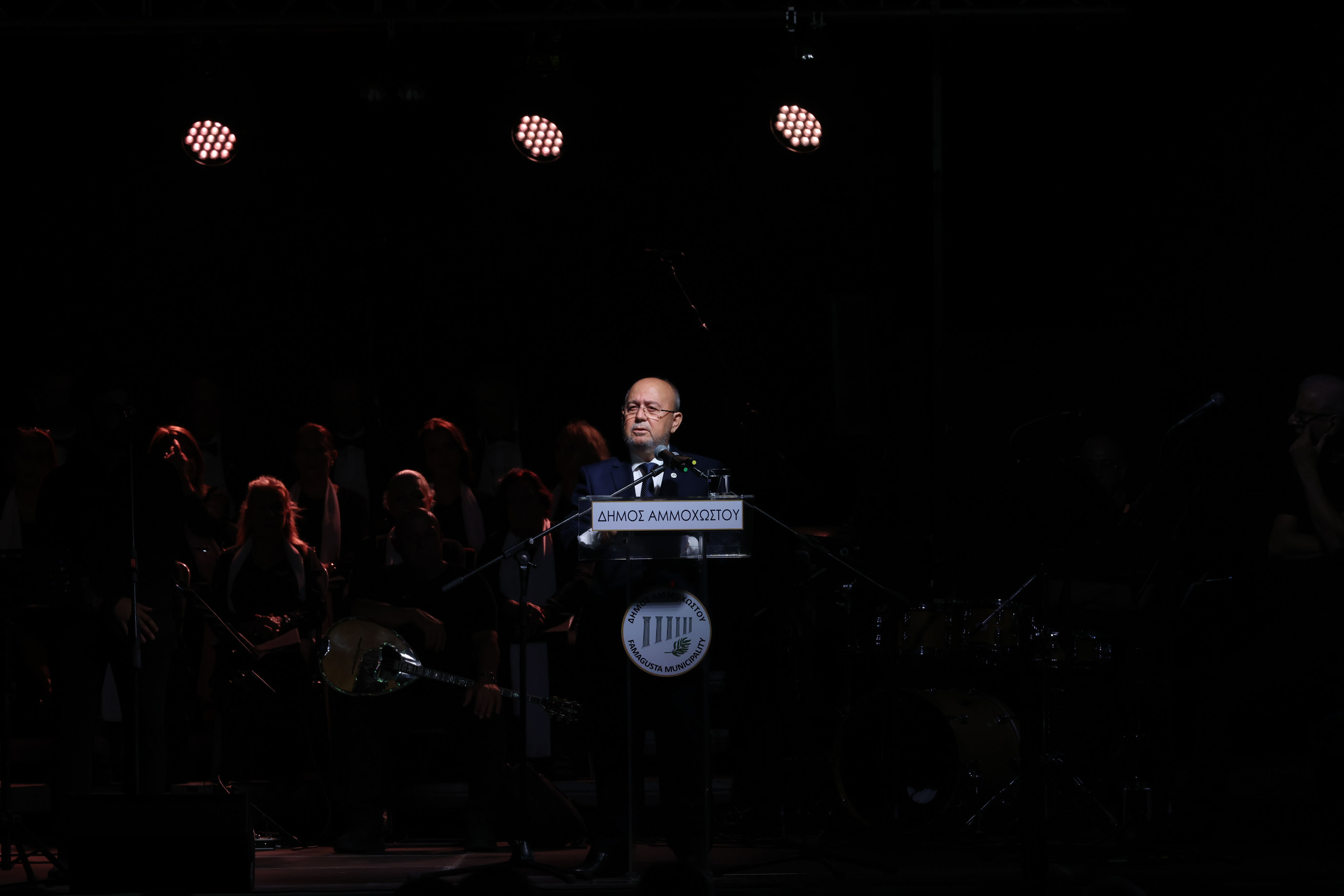
Ioannou said that despite the passing years, the arrival of new generations, and the island's development and inflow of wealth, Cyprus's future is still dictated by the open conflict and the corrosive conditions it sustains. He said the foreign interference and partition plans of the 1950s still weigh on the future of Cyprus's children in 2026 like accrued interest.
He said the reality of occupation breeds undesirable needs and dangerous habits, with necessity presented as virtue and self-interest as realism. He added that entrenchment behind distorted narratives, seeking safety under the wing of opportunists, international protection at the expense of principle, visions of revanchism and chauvinist fantasies all, despite their grandiose declarations, in reality flirt with preserving the comfort of the status quo.
He said the silent acceptance of the fait accompli created by the crimes of 1974 is itself wishful thinking, because the destruction is ongoing. New facts on the ground in Famagusta prove this to be true, he said, noting that the settled part of the city now makes up its largest section.
He said that across this 83% of the city, the changes brought by settlement and development continue unabated, and that for years the community's properties in the city's northern districts have been altered through huge investment projects, with new illegal developments now appearing further south.
He said this is the fate of Famagusta under the silent partition, in the shifting sands of the status quo, the same fate shared by every occupied city and village in Cyprus.
At the same time, he said hope for Famagusta and its return is a promise to the whole of occupied Cyprus, and that implementing resolutions 550 and 789 to return the fenced area of Famagusta to its lawful residents under UN auspices must be a cause pursued by everyone.
He said that even though the fenced area represents only 17% of the city, its return could mark the start of an avalanche of positive developments for the Cyprus problem, for the rest of Famagusta's people, and for refugees as a whole. It could be, he said, the turning of the key that opens the door to a comprehensive settlement, since implementing these resolutions could generate economic and political cooperation dynamics capable of feeding into a Cyprus settlement.
He said that anyone who disagrees with the UN Security Council resolutions, which are also upheld by the European Union and the international community, should say so openly and accept being aligned with Turkey, which, in violation of those resolutions, opened the fenced area of Famagusta, turned the community's pain into a tourist attraction and a product of dark tourism, and has carried out new interventions on residents' properties, demolitions and illegal projects on the city's beaches.
As a municipality, he said, Famagusta has repeatedly condemned new Turkish violations and has stressed again and again that Turkey's aim is to extinguish all hope, because as long as the possibility of returning to the city remains achievable, Turkish efforts to permanently entrench partition cannot succeed.
He said Famagusta Municipality states clearly and unequivocally that its vision for the city is only viable and legitimate if it includes all Famagustians, Greek Cypriots and Turkish Cypriots alike, adding that the municipality supports Turkish Cypriot voices who share both the potential of return, freedom and peace, and an awareness of the dangers posed by the perpetuation of occupation and open conflict.
He said efforts to deepen and expand relations with progressive Turkish Cypriot groups continue to run into the obstacles created by occupation, describing it as a difficult process of building mutual understanding and lasting bridges of communication, in which political courage and determination are needed, and in which he hoped to find allies at both social and state level.
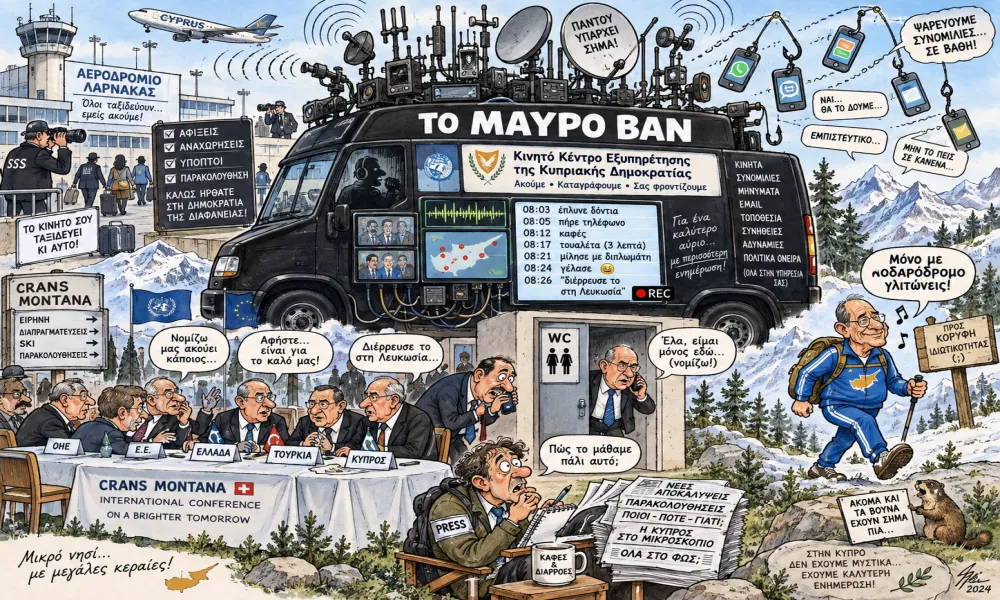
He said the UN Secretary-General's visit to Cyprus this week had watered the tree of hope that nine years of drought since Crans-Montana had left withering. Hope, he said, though something Famagustians have tormented and been tormented by every time they packed their bags in vain hope of returning to Varosha, remains a persistent companion, and one they would renew their appointment with.
Whether Cyprus can, with honesty and unwavering persistence on the convergences and the acquis of the talks, and with insistence on the agreed basis of a bizonal, bicommunal federation, compel Turkey to walk the final mile toward a settlement from where talks were left off at Crans-Montana, he said, is the difficult task facing the island's political leadership, adding that Famagustians too have their own role to play.
He said the city's people are ready for the great, difficult but worthwhile journey of return, for the prospect of a better future for their children, adding that Greek Cypriots and Turkish Cypriots can only count on the future once it is guaranteed they will live it together, free of foreign armies, occupation and settlement.
He said that if Famagustians were denied the future once laid out before them, they owe their children a future of peace, freedom and rebirth in Famagusta and across Cyprus.
He concluded by saying Famagustians remain here, 52 years older but with half a century of conviction that Famagusta is "the key and the heart" for the salvation of Cyprus, neither a slogan, nor an old memory, nor a hashtag on a screen. Famagusta, he said, is their history, and their history continues.
President Christodoulides addresses the gathering
The main speaker at the event was President of the Republic Nikos Christodoulides, who referred to the sense of injustice felt by Famagustians to underline that these feelings strengthen the resolve to free the homeland from the bonds of occupation. He said that for 52 years, Famagusta, like all of Cyprus's occupied towns and villages, has never once been absent from the nation's dreams. He said elsewhere in his address that he shares the feelings and anguish of Famagustians and refugees, repeating that he has the courage to negotiate. "To claim, to compromise. Resolving the Cyprus problem remains my noblest ambition and my life's vow. I will not become the president who puts his signature to a solution that will not stand the test of time, just as I will not become the president of partition," he said.
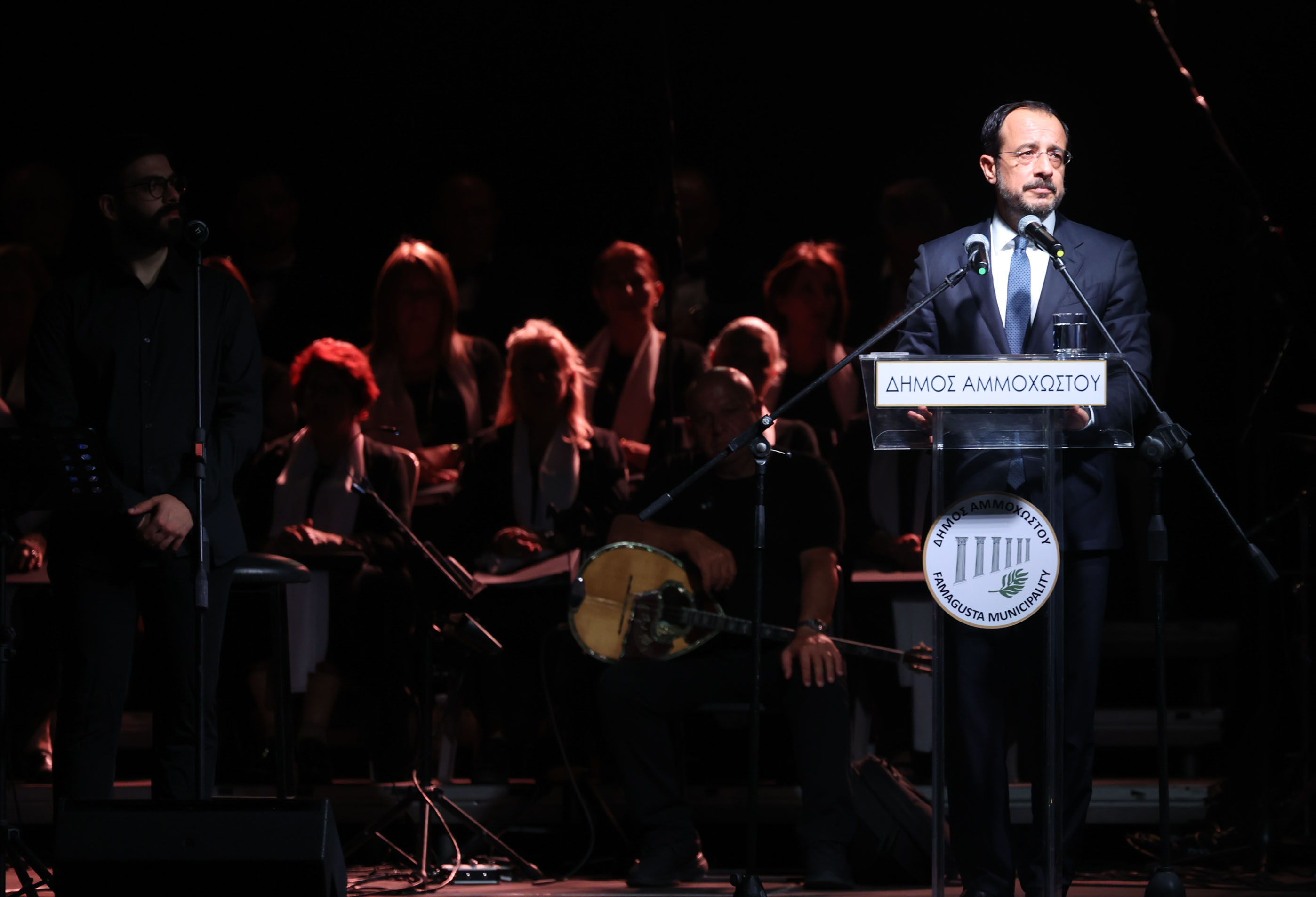
Famagusta, he added, is the flag of the Cypriot cause, stressing that the city's return remains achievable.
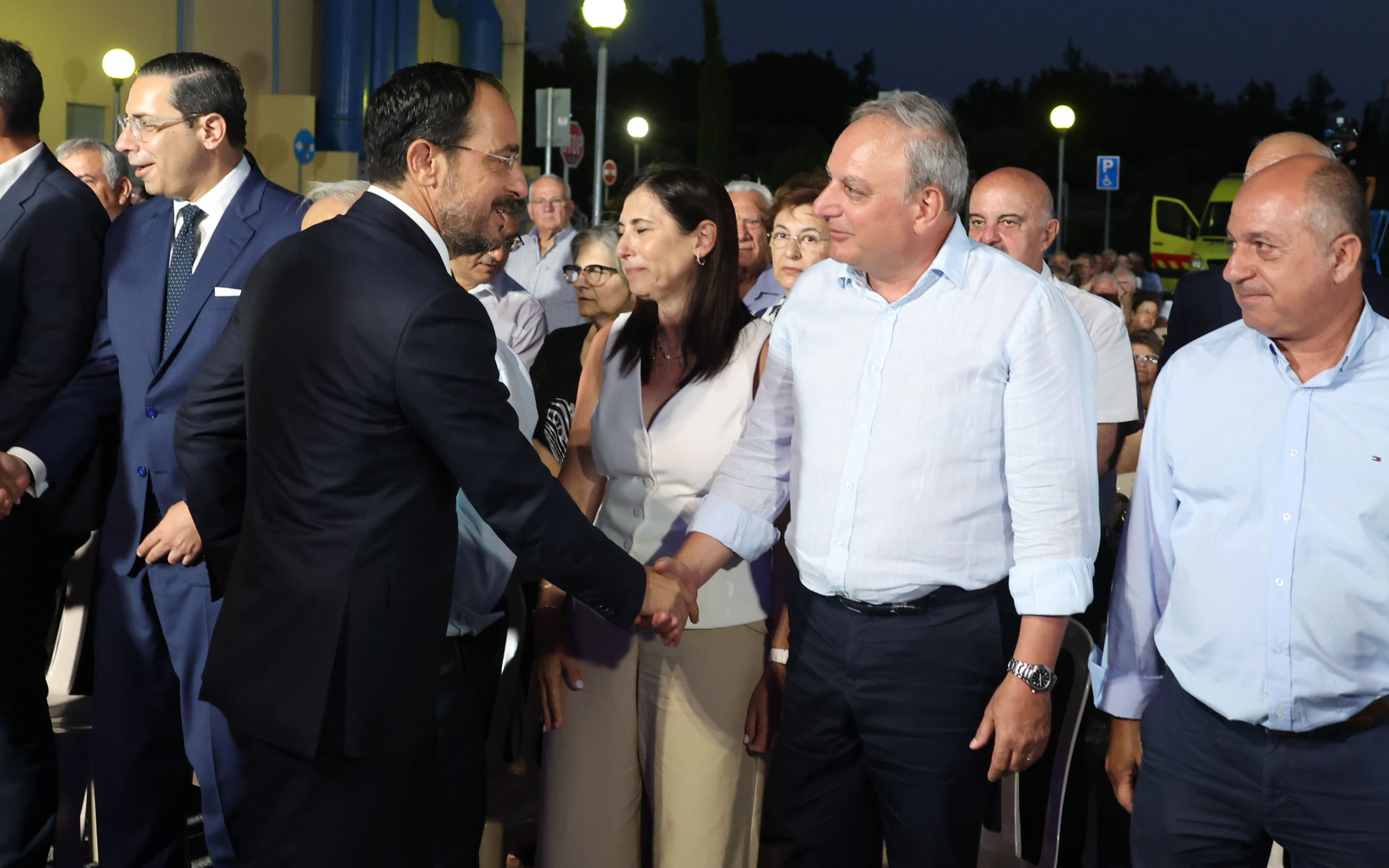
The event was attended by House President Annita Demetriou, government ministers, representatives of the Greek Parliament, delegations from Serbia and Britain, ambassadors of foreign countries accredited to Nicosia, mayors of Greek cities and party leaders, among others.
Cypriot artists, together with Famagusta Municipality's choir, performed throughout the event. The evening closed with an artistic programme, with the central message resonating throughout: that Famagusta is neither a memory nor a slogan, but a living claim, a history, and a right to return.
The Famagusta Municipal Council resolution
Famagustians marched to the Deryneia roadblock, where a resolution adopted by Famagusta Municipal Council was handed to a UNFICYP delegation.
The resolution reaffirms the "unwavering commitment" of Famagusta Municipal Council to a settlement based on a bizonal, bicommunal federation with political equality, as set out in the relevant UN resolutions and high-level agreements.
At the same time, the resolution calls on Turkey to end its unlawful actions in Famagusta, respect international law and UN resolutions, and contribute to finding a comprehensive solution. It also demands the return of the fenced area to its lawful residents under UN administration.
It further calls on the Cypriot people and political leadership to join forces to secure the return of Famagusta and to advance peace, reunification and prosperity for the country. It also appeals to the United Nations, the European Union and the governments of the five permanent members of the Security Council to intensify their efforts to secure Turkey's abandonment of its provocative actions and its return to the negotiating table.
The resolution notes that the election of Turkish Cypriot leader Tufan Erhürman in October 2025 "created expectations for the resumption of substantive dialogue on the Cyprus problem." It also expresses satisfaction with the work of the Secretary-General's Special Envoy and with the consultations under way aimed at restarting talks.
It concludes by welcoming the initiatives of UN Secretary-General António Guterres, which it says "constitute a significant effort to create the conditions for the resumption of substantive negotiations on the Cyprus problem."