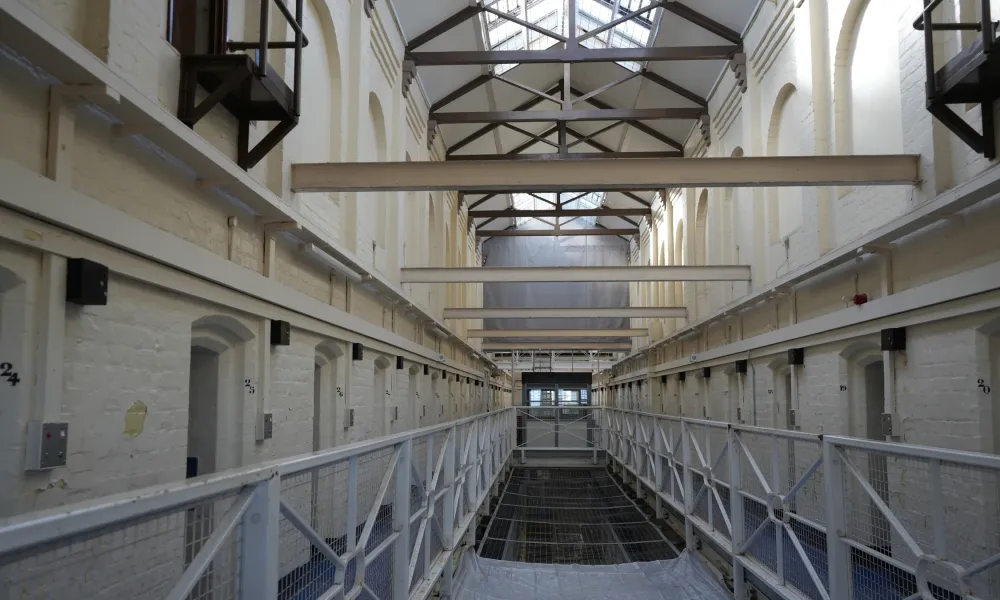

An unannounced inspection by the Audit Office has documented the problems that have built up at the Central Prisons. Inspectors recorded severe overcrowding, prisoners sleeping on mattresses on the floor and on beds made from crates, and an uneven spread of inmates across cells: some cells held one prisoner while others held three or four.
The findings appear in a special report by the Audit Office on prisoners' living conditions. They describe a combination of problems that has created a volatile climate inside the prison.
Findings of the unannounced visit
The Audit Office stresses that overcrowding alone does not explain all the shortcomings identified. According to the report, inspectors found unacceptable living conditions in certain wings during the unannounced on-site visit. These included serious cleanliness failings, the presence of pests, inadequate ventilation, prisoners' exposure to second-hand smoke, extremely limited personal space and the use of improvised beds made from crates.
Prisoners also told the Audit Office of powerful groups of inmates and incidents of intimidation. In addition, remand prisoners, prisoners serving short sentences, prisoners serving long sentences and life prisoners are still held together, which limits the scope for individualised management. The report also notes that the limited presence of prison guards in the living areas increases the risks to effective supervision and the protection of prisoners.
Prison population up 87% in about a decade
On 6 July 2026, the Central Prisons held 1,169 people. Their maximum normal operational capacity is 927, and their emergency capacity is 1,077. On 1 September 2017 the prison population stood at 625, which means it has grown by 87%in roughly a decade.
According to Eurostat data for 2024, Cyprus had the highest prison occupancy rate in the European Union. The Council of Europe's Committee for the Prevention of Torture (CPT) continues to describe overcrowding as one of the most serious and persistent problems in the Cypriot prison system.
Single-cell occupancy and prison regulations
Some wings operate at more than 150% of their designed capacity. Inspectors recorded cases of three or four prisoners living in cells measuring 5.5 square metres. During the on-site visit they also found prisoners sleeping on mattresses on the floor or on improvised beds made from plastic crates.
Despite the severe overcrowding, the audit found that on 19 December 2025, 101 prisoners were living alone in cells. Further checks showed that in a number of cases there was no adequate documented justification for single occupancy. In some cases it had lasted more than 20 months, and there was no record of it being reviewed at regular intervals.
Under Regulation 58(4), prisoners are accommodated in single cells to the extent that the prison's buildings allow. Where this is not possible, they are housed in dormitories of no more than five people.
Regulation 58(8) sets single cells at a minimum of seven square metres. Dormitories must be large enough to give each prisoner at least four square metres. The audit found that, because of overcrowding, even the five-person limit per dormitory is not being met.
Dedicated facility for children not yet operational
According to the Audit Office, the dedicated detention facility for children required under the Children in Conflict with the Law Law of 2021 has not yet started operating. On 6 July 2026, the prison held 44 people under the age of 21, including two remand prisoners under 18.
Young men are held in a separate wing, but its exercise yard is limited and they can only use the larger sports facilities at set times. The lack of a dedicated facility limits full implementation of the legal framework, which provides for rehabilitative, educational and therapeutic treatment.
Cleanliness and hygiene conditions
During the Audit Office's visit, inspectors found some cells in particularly poor condition in terms of cleanliness. The problem was most acute in Wing 10A. One cell visited by the team was in an especially bad state, with cleanliness and hygiene conditions that fell far short of the basic requirements for decent and hygienic accommodation in a prison.
The report states that such conditions are inconsistent with the obligation to ensure basic decent and hygienic living conditions, regardless of the difficulties created by overcrowding. Prisoners in Wing 10A also reported fleas and/or bedbugs in their living quarters.
Prisons Board inactive for two and a half years
The Audit Office identified another equally significant issue: the board responsible for examining prisoners' complaints. The Prisons Board is the main statutory mechanism for external oversight and for examining prisoners' complaints. It is appointed by decision of the Council of Ministers, which sets the number of its members and their term of office. It is chaired by the serving Nicosia District Officer.
According to the Audit Office, the previous board's term expired on 31 January 2022, and no new board was appointed until 19 June 2024. As a result, for around two and a half years the statutory mechanism for examining complaints and independently overseeing conditions of detention was not functioning.
When the complaints boxes were opened in October 2024, they contained letters and complaints from 12 different prisoners, dating back to 2019. Eight of them had already been released. Because some complaints had been placed in the boxes as early as 2019, while the previous board was still in office, the report finds a serious indication that the complaints mechanism was already underperforming before that board's term expired on 31 January 2022.