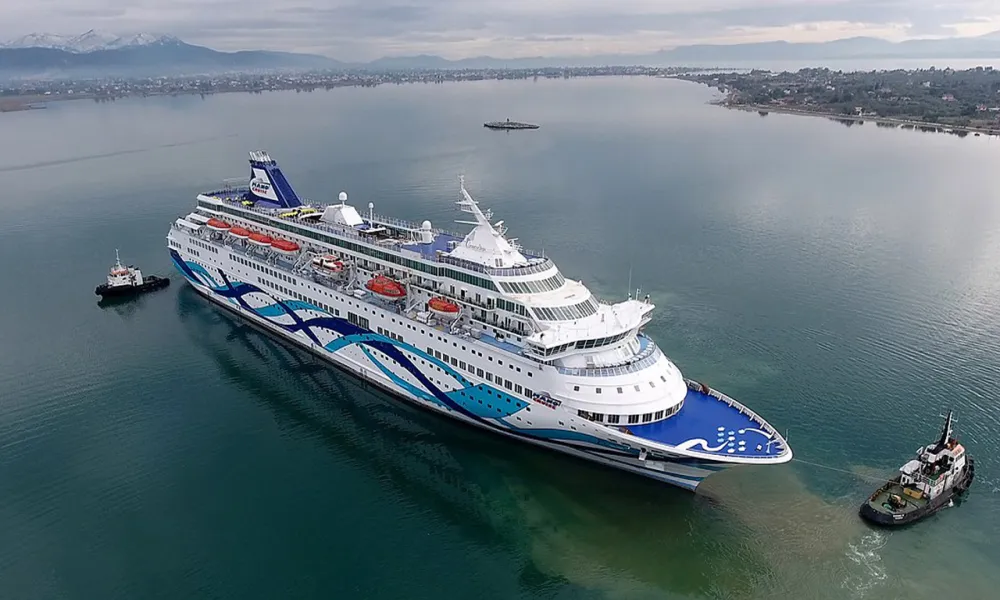
The Haifa-Larnaca sea connection is set to resume this month, with the cruise ship Crown Iris scheduled to arrive at Larnaca port on Friday, 29 May, in what will be the first sailing on this route since the outbreak of hostilities in the region brought regular operations to a halt.
Andreas Michail, the Crown Iris's agent in Cyprus at Louis, told Politis that the first voyage of the season had originally been planned for 18 March, but was cancelled as fighting escalated across the Middle East. All subsequent scheduled sailings over the two months that followed were also cancelled. Following the ceasefire agreed between Iran, the United States and Israel, the route is now set to restart, with Michail saying services will continue at regular intervals through to September, barring any fresh deterioration in the region's security situation.
The ship will depart Haifa on Thursdays and Fridays at around 1pm, dock overnight at Larnaca port, and return from Larnaca at 4pm on Saturdays. The Crown Iris, which has a capacity of 1,800 passengers, is expected to sail at very high occupancy. The majority of passengers will be Israelis, with the remainder consisting largely of foreign nationals resident in Israel, primarily Canadians, Americans and Russians, according to Michail. Passengers will have the option of joining organised excursions to sites including Ayia Napa, Lefkara and Choirokoitia, as well as exploring Larnaca's seafront and commercial centre. The Crown Iris will also call at Limassol port as part of its wider itinerary.
Bookings still 30% below last year
The sea link's resumption comes as Larnaca's tourism sector continues to feel the effects of the prolonged disruption. Marios Polyvios, president of the Larnaca Hoteliers Association, told Politis that Israeli tourists have begun returning by air for leisure purposes, but nowhere near the volumes recorded in previous years when Israel ranked as Larnaca's second-largest tourist market. Polyvios said accommodation bookings for May and the coming summer months remain approximately 30% lower than the equivalent period last year, a decline he attributed both to the uncertainty generated by the Iran-US-Israel conflict and to sharp increases in prices across the board, particularly airfares.