
The failure of the Republic of Cyprus' CY Alert early warning system during Monday's wildfire near Agia Anna and Psevdas has raised serious questions about emergency preparedness, despite a series of successful trial runs conducted only weeks earlier.
The system, which underwent five test exercises between 2 and 18 June, failed to operate at a critical moment during the Kalo Chorio fire due to what authorities described as a technical problem.
Ironically, Psevdas, one of the communities that participated in the June tests, was among the areas threatened by Monday's blaze.
Backup measures activated
While officials say other aspects of the state's wildfire response functioned effectively, the evacuation process became the weakest link after the digital alert system failed.
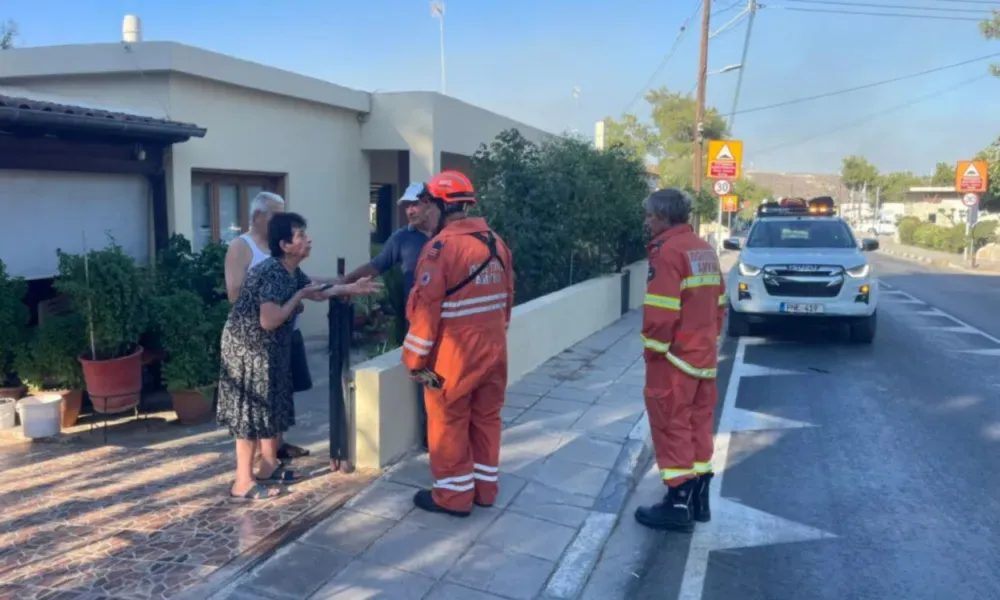
Instead of relying on mobile phone alerts, Civil Defence teams resorted to traditional methods, including church bells, door-to-door notifications and direct communication with community leaders.
National Wildfire Coordinator and Chief Fire Officer Nikos Longinos told Politis that a contingency plan was immediately activated.
"When the deputy commander of Civil Defence informed me that the system was not functioning, I instructed him to activate Plan B by sending Civil Defence teams to Agia Anna and Psevdas for precautionary evacuations."
Longinos said the teams were deployed two to three hours before the fire reached the communities.
Calls for more frequent testing
Speaking to Politis Radio, Longinos suggested that the alert system should be tested regularly, even every 10 to 15 days, to ensure it remains operational.
In a statement issued on Tuesday, Civil Defence said a technical fault had delayed the transmission of evacuation alerts.
"Despite successful test notifications sent through the system, a technical problem was observed, resulting in a delay in the transmission of the alert. The issue is being addressed by technicians from the contractor company under its contractual obligations."
Alert sent hours later
The evacuation message was eventually transmitted at 5.17pm, around two to three hours after the first unsuccessful attempt to send it.
Civil Defence spokesperson Panayiotis Liasides said the system had shown no signs of malfunction during testing in June.
"During the test exercises and checks carried out last month, the system responded normally and gave no indication that it might fail in real-time conditions."
Asked why some residents reported never receiving the warning, Liasides said mobile phone coverage remained a prerequisite.
"To receive the message, a person must have mobile signal. If a subscriber had no signal, they would obviously not have been able to receive it."
Safe evacuation despite outage
Evacuations were ultimately carried out with the assistance of Civil Defence, the Police and local volunteers, with residents safely transferred to designated reception centres despite the alert system outage.
According to Liasides, the technical problem was resolved later in the day, allowing a second message informing residents that the emergency had ended and it was safe to return home to be delivered successfully and on time.
Civil Defence said it is awaiting the results of the technical investigation before deciding on any additional measures to prevent similar failures in future emergencies.