
The Union of Municipalities has accused the Christodoulides administration of placing local government under severe financial pressure, warning that the local government reform is at risk unless municipalities receive substantially greater state support.
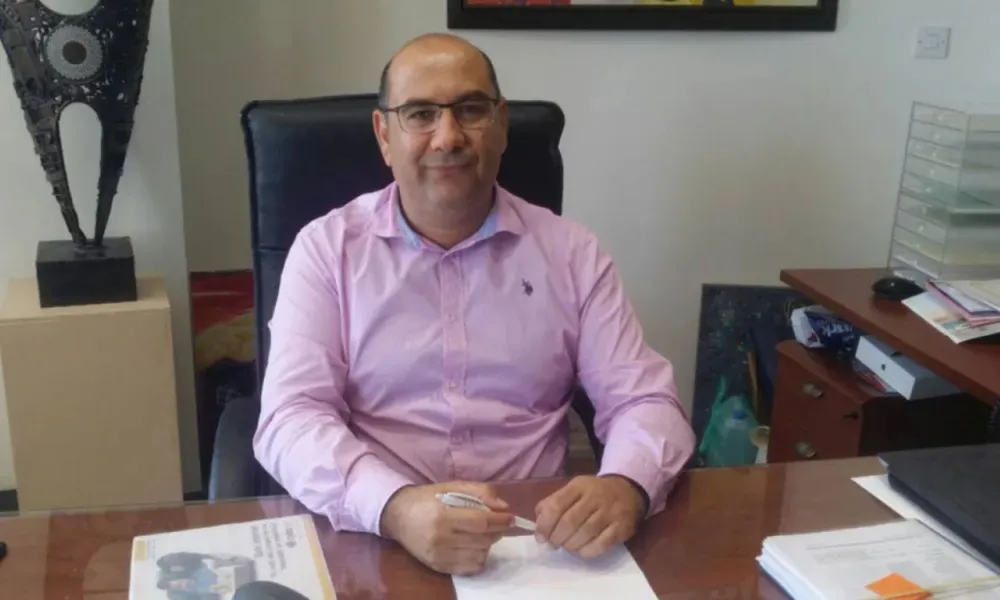
In an interview with Politis, Union President and Larnaca Mayor Andreas Vyras defended municipalities against criticism over rising local taxes and fees, arguing that the state transferred new powers, accumulated obligations, debts and higher operating costs to the newly merged municipalities without providing adequate funding.
"When central government does not cover the real cost of the responsibilities it transferred to us, only two painful options remain: either we drastically reduce services and projects or we are forced to impose new and higher taxes and fees on citizens," Mr Vyras said.
The dispute comes as municipalities proceed with a three-hour work stoppage on Monday from 9am to 12pm, the first step in what they describe as a series of escalating actions following the rejection of a revised government proposal on state grants.
Expectations remained on paper
Mr Vyras rejected claims that the reform itself had failed.
He argued that the original goal of municipal mergers was to create larger and stronger local authorities capable of achieving economies of scale and providing better services.
According to him, the real problem lies in inadequate state funding.
He said municipalities had repeatedly warned that transferring additional responsibilities without corresponding resources would inevitably lead to financial strain and leave local authorities with limited options.
The consequences, he argued, are either reduced services and fewer development projects or increased charges for residents.
Mr Vyras said citizens would only begin to see the financial benefits promised by the reform when the government assumes its financial responsibilities instead of passing the costs of the reform on to local communities.
Mergers not the cause, says Vyras
Responding to criticism that mergers mainly served to rescue financially troubled councils, Mr Vyras described that interpretation as superficial and unfair.
He said the objective was to create stronger entities capable of delivering higher-quality services through cooperation and economies of scale.
The real issue, he argued, was that the state transferred new responsibilities, old obligations, deficits and substantial operating costs to the new municipalities without matching financial support.
He pointed to the acceptance of a €117 million annual state grant, which was originally calculated for 20 municipalities. Subsequently, however, 63 communities were added to those municipalities, significantly increasing populations, territory, infrastructure demands and maintenance costs.
According to Mr Vyras, municipalities also inherited debts and obligations that had not previously been fully pursued by the state.
He claimed that some municipalities now face pressure over obligations they did not create.
€117 million is no longer enough
Mr Vyras said it was a mistake that the method for calculating state funding had not been finalised before implementation of the reform.
He described the arrangement as a product of political pressure, arguing that municipalities accepted the €117 million figure because they were told the reform itself could collapse if they refused.
At the time, he said, municipalities were assured that funding arrangements would later be reviewed.
Instead, rising inflation, energy prices, fuel costs and construction expenses have significantly eroded the value of that funding.
He argued that state support should be linked permanently to a fixed percentage of the national budget, in line with practice elsewhere in Europe and the principles of the European Charter of Local Self-Government.
The Union also seeks compensation for deficits and obligations inherited from the 63 communities added after the funding framework had already been agreed.
Mr Vyras further criticised what he described as the state's failure to conduct comprehensive financial viability studies and impact assessments before implementing the mergers.
Financial pressure threatens the reform
Asked about the biggest unresolved issues, Mr Vyras said financial sustainability remained the most urgent challenge facing local government.
He called for legislation establishing municipal grants as a fixed percentage of the state budget rather than relying on what he described as arbitrary amounts.
According to him, local government receives less than 2% of the state budget, compared with substantially higher levels of support in several European countries.
He also highlighted a series of unresolved financial disputes with central government.
One concerns a commitment to compensate municipalities after changes were made to arrangements governing revenues from development licensing through the District Local Government Organisations (EOAs).
Another relates to responsibility for maintaining roads previously overseen by the Public Works Department.
Mr Vyras said municipalities had demonstrated that annual maintenance costs were closer to €15 million than the €3 million initially proposed by government, even before accounting for pavements, landscaping and cleaning.
He accused the state of including disputed figures in its calculations in order to present state support as having increased to €144 million.
Demand for greater autonomy
Beyond funding, Mr Vyras argued that municipalities face excessive intervention from central government ministries.
He said state oversight should be limited to reviewing legality rather than assessing the necessity of municipal staffing decisions or development plans.
According to him, elected municipal councils are best placed to assess the needs of their communities and should be allowed to operate with greater autonomy.
What he would change
Asked what he would do differently if given the chance to revisit the reform process, Mr Vyras said municipalities should never have accepted the 2022 Municipalities Law without first securing a legally guaranteed funding formula linked to a percentage of the state budget.
He described that concession as a tactical mistake that allowed municipalities to become trapped in static funding levels subsequently eroded by inflation and rising costs.
"If we could turn back time, we would have said a loud 'no' until we saw written into law the minimum percentage of state revenue that belongs to local government," he said.
Mr Vyras also said municipalities should have insisted on more rigorous cost calculations for every responsibility transferred from central government.
New concerns over future responsibilities
Looking ahead, he warned that similar problems could emerge with plans for Municipal Police services and the future transfer of School Boards to local authorities.
He expressed particular concern about School Boards, noting that legislation requires responsibility for them to pass to municipalities after the next local elections.
Despite the scale of that transition, he said no substantive discussions had yet taken place with the state on how it would be financed or implemented.