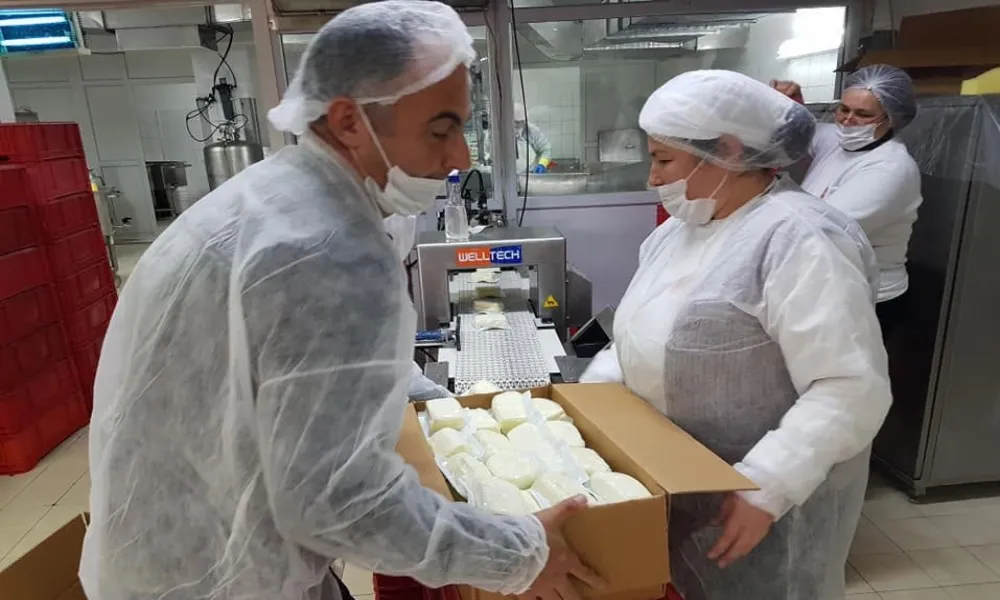

The historic Koop-Süt dairy cooperative in the north is facing growing scrutiny following allegations concerning spoiled products valued at 75 million Turkish lira and questions over whether any such products may have reached retail shelves. The developments come as the company is reportedly facing a severe operational and financial crisis.
Speaking to Turkish Cypriot news website Kıbrıs Postası, former Koop-Süt board chairman Mehmet Temel called for a full investigation into the allegations, arguing that if they are substantiated, the issue would extend beyond financial losses and into the field of food safety and public health.
Former chairman cites political influence
Temel argued that cooperative institutions in the north have for years operated under administrations influenced by political considerations, which he said hindered Koop-Süt's development.
According to Temel, the company also experienced significant financial difficulties between 2009 and 2013, reaching a point where it was allegedly unable to pay staff salaries and 13th-month salaries.
He said a rescue effort was launched in 2013 with the participation of 15 local cooperatives, each contributing approximately 100,000 Turkish lira.
Claims over hidden debts
Temel said that when a new board took office following the restructuring effort, it identified debts that he alleged had not been properly reflected in company records.
According to his account, the new board included representatives from the Livestock Breeders Association, the Cooperative Central Bank, Koop-Sen and educational cooperatives.
Concerns over staffing and production
Describing the company's operations at the time, Temel said the plant processed approximately 30 to 40 tonnes of milk daily while employing 160 to 170 workers.
He argued that such staffing levels were not consistent with international productivity standards.
"Thirty to forty tonnes of milk were being processed and 160 to 170 people were employed. According to international standards, this is not sustainable," he said.
Regarding current operations, Temel stated that the company processes around 30 tonnes of milk per day and employs approximately 120 workers.
He further claimed that international benchmarks would require only around 45 employees for that level of production.
Allegations involving products worth 75 million Turkish lira
Temel also referred to allegations reportedly raised by Koop-Sen chairman Mehmet Ali Güroz concerning spoiled products valued at 75 million Turkish lira and the sale of products through post-dated cheques without guarantees.
He stressed that these were allegations that should be examined by the relevant cooperative oversight authority.
"The responsibility for inspection belongs to the registrar. They should investigate and, if there is a responsible party, accountability should follow and the necessary complaints should be filed," Temel said.
He added that if claims regarding spoiled products were proven, the matter would represent a significant food safety issue.
"If there are spoiled products worth 75 million, citizens will ask whether any of them reached stores. Food safety must be a priority," he said.
Calls for stronger food controls
Temel criticised the food inspection system in the occupied north, claiming it does not operate effectively.
He proposed the establishment of independent food testing laboratories in all six districts so inspections could be carried out locally rather than requiring producers to transport products to Nicosia for testing.
He also advocated inspection procedures free from political influence and involving scientific organisations, professional bodies and universities.
Temel said he had previously prepared two draft food protection regulations and submitted them to the self-styled "Ministry of Agriculture".
Concerns over milk testing
The former chairman additionally expressed concerns regarding milk testing procedures and risks such as aflatoxins, arguing that stricter control mechanisms are needed.
He maintained that stronger monitoring systems would help safeguard public health and strengthen confidence in food production standards.
Company's role in the market
Temel also argued that Koop-Süt historically played a broader role in the market by acting as a balancing force in milk and dairy pricing.
According to him, the gradual disappearance of local cooperatives and cooperative stores has reduced competition and limited opportunities to offer products at lower prices.
He called on the administration in the occupied north to take what he described as a more serious approach to the cooperative sector and to take steps aimed at preserving Koop-Süt and other cooperative enterprises.