
As energy prices soar, the Russia-Ukraine war continues unabated and freedom of navigation remains precarious in the Straits of Bab el-Mandeb and Hormuz, Cyprus is keen to highlight its own hydrocarbon deposits as a potential alternative source of energy for Europe.
US Secretary of State Marco Rubio’s visit to Athens highlighted the push to develop alternative sources of energy for Europe, with the American diplomat giving weight to the development of energy routes such as the ‘Vertical Corridor’ in Greece, supplying natural gas to southern and eastern Europe, but also to Greece-Cyprus electricity interconnection through the Great Sea Interconnector (GSI).
For its part, the Cypriot government has tried to elevate its regional standing, promoting the potential transfer of Cypriot natural gas to Europe.
In a recent interview with Breitbart News, President Nikos Christodoulides said Cypriot gas would not only be sent to the island but also to European markets.
However, this assumes two things: a) Cyprus is in a position to receive liquefied natural gas (LNG) at Vasilikos by then, given there are no plans to link Cypriot gas to the island via pipeline, and b) the commercial operators of the offshore gas decide to sell to European buyers and not wherever else they find higher prices.

He also anticipated “a major announcement” regarding the presence of US energy companies in Cyprus’ exclusive economic zone (EEZ) within the first two weeks of October.
This may relate to ExxonMobil or Chevron acquiring further concessions. Exxonmobil, operator of the Glaucus and Pegasus fields in partnership with QatarEnergy, is reportedly interested in adding Blocks 4 and 10A to its Block 10 concession.
Europe offers favourable prices
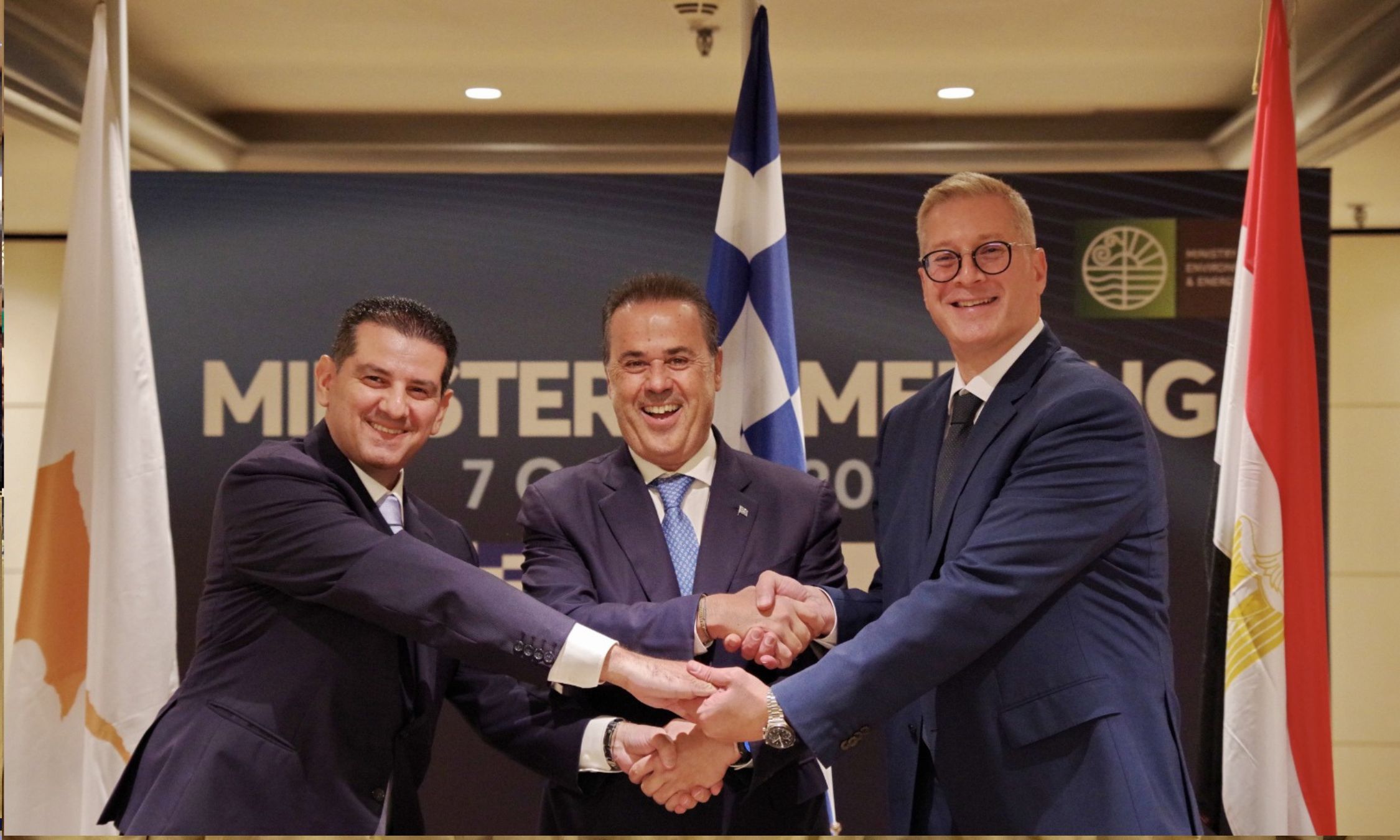
Energy Minister Michael Damianos recently attended an East Mediterranean Gas Forum discussion in Athens, on the sidelines of which he met his Greek and Egyptian counterparts to discuss the GSI and development of gas discoveries in the Cypriot EEZ respectively.
Speaking to Politis, Damianos said he discussed Cronos and Aphrodite gas fields with Egyptian Minister of Petroleum and Mineral Resources Karim Badawi.
While he acknowledged the decision on where to sell Cronos gas ultimately rests with the commercial partners, the minister argued that Europe will be an attractive option in terms of pricing.
Cronos gas in 2028
The Cronos field in Block 6 of Cyprus’ EEZ, operated by Eni in partnership with Total, is believed to hold around 3.1 trillion cubic feet (tcf) of gas. This will go to the Damietta LNG plant for liquefaction, and from there on, to wherever it is sold, noted Damianos.
The first Cypriot gas to market is expected in the first half of 2028, he said, noting that the quicker the 105km pipeline from Cronos to Egypt’s Zohr field is built, the earlier the first sales will be.
Aphrodite milestones
The consortium responsible for the 3.7 tcf Aphrodite concession in Block 12 of Cyprus’ EEZ comprises operator Chevron, along with Shell and NewMed. Shell has agreed to sell its 35% stake to Hungarian MOL Group for up to $720 million, subject to regulatory approval. Damianos said the Legal Service is currently examining the potential handover.
Despite being the first gas discovery in Cyprus, in 2011, Aphrodite has suffered a series of delays and setbacks.
According to the energy minister, the Chevron-led consortium is due to complete its Front-End Engineering Design (FEED) by December-January and make a Final Investment Decision (FID) within 2027. The aim is to have first gas by 2031.
Ishai still pending
One component of that trajectory is reaching agreement on the Israeli Ishai concession, adjacent to Aphrodite. Negotiations have been ongoing for some time now, including the Cypriot and Israeli governments, along with the commercial partners in Aphrodite and Ishai. Commercial terms have been agreed, while legal terms remain pending, said Damianos.
A meeting on the issue was due to be held today, Friday, but the minister was less than confident the issue would close by the end of the month, as the two governments had hoped.
With legislative elections due in Israel on 27 October, it remains to be seen whether this particular chapter will finally close or whether it will remain pending, and if so, what impact that will have on the course of developments.