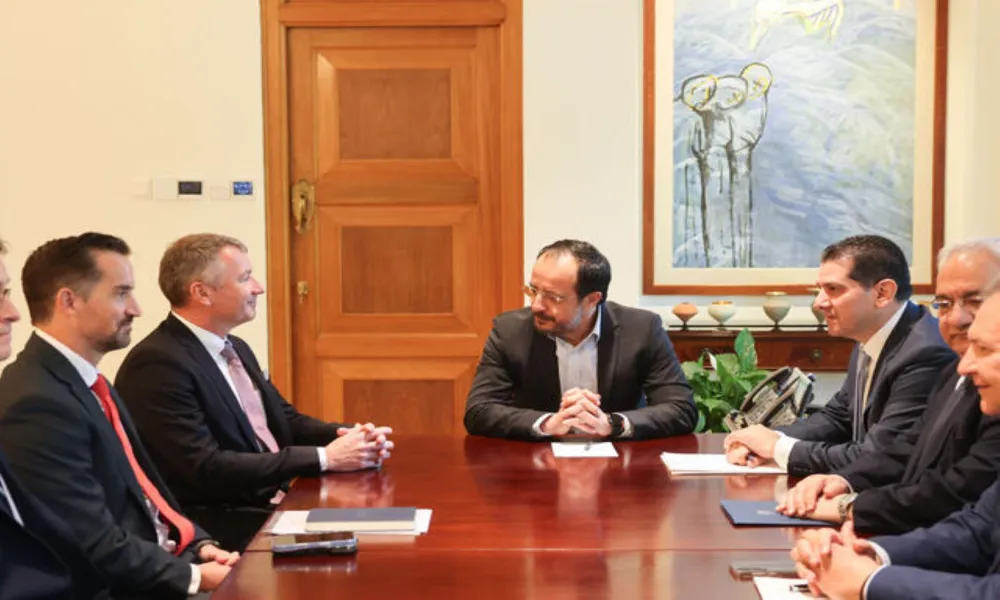

ExxonMobil is preparing a new round of drilling and testing at the Pegasus gas field in December, with the findings set to determine the project's next development steps. The update followed a meeting between ExxonMobil's vice-president of global exploration, John Ardill, President Nikos Christodoulides, and Energy Minister Michalis Damianos.
December programme seen as key milestone
According to Ardill, the upcoming work at Pegasus is necessary for preparing the field's development and production plan, which is expected to be submitted next year.
He described the programme as a critical step in advancing the project following the declaration earlier this year of the commercial viability of the Glaucus-Pegasus reservoir complex.
Ardill said ExxonMobil was pleased with the progress achieved so far and revealed that new seismic surveys are planned for early 2027 as part of a broader exploration programme in Cyprus' exclusive economic zone.
Discussions on additional offshore blocks
Energy Minister Michalis Damianos said work was progressing according to established timelines and that discussions also covered developments relating to Blocks 4 and 10A.
Asked whether an agreement had been reached or specific timelines set for the exploitation of the two blocks, Damianos said discussions were currently focused on the legal aspects of contractual arrangements.
"We are at the legal stage of exchanging views regarding the signing of the various contracts based on our criteria," he said, adding that there was a two-to-three-month timeframe within which the agreements could be signed to allow progress on the projects.
Investment decision targeted for 2029
The main milestone remains the final investment decision for the Glaucus and Pegasus fields in 2029, with natural gas production expected to begin in 2033.
Cyprus gas resources estimated at 20 trillion cubic feet
Speaking at the 22nd Economist Conference Cyprus on Monday, Damianos said the six natural gas discoveries in Cyprus' exclusive economic zone contain an estimated 20 trillion cubic feet of natural gas resources.
He noted that the first gas production from the Cronos field is expected in the first half of 2028, following the final investment decision taken by Eni and TotalEnergies in July and the signing of key agreements in October.
The project will utilise existing energy infrastructure in Egypt to export natural gas to international markets, primarily Europe.
Development plans for other discoveries
Damianos said work is also advancing on the Aphrodite field, while authorities and companies are examining the most suitable commercialisation options for discoveries in Blocks 5 and 10.
He added that close cooperation with Egypt allows Cyprus to reduce development costs, utilise existing infrastructure and accelerate the delivery of natural gas to international markets.
The minister said Cyprus' regional partnerships, reputation as an energy partner and strategic location create favourable conditions for the development of its offshore resources while strengthening energy security in Europe and the Eastern Mediterranean.