
Tensions between the Education Ministry and teachers’ unions are escalating early in the new school year as the two sides remain at odds over proposed changes to the teacher appointment system.
POED, OELMEK and OLTEK have announced their first joint protest for 8 October, outside school hours but at a highly symbolic location: the Presidential Palace. The move takes pressure beyond the Education Ministry and directly to the government, which the unions accuse of leaving teachers in prolonged employment uncertainty.
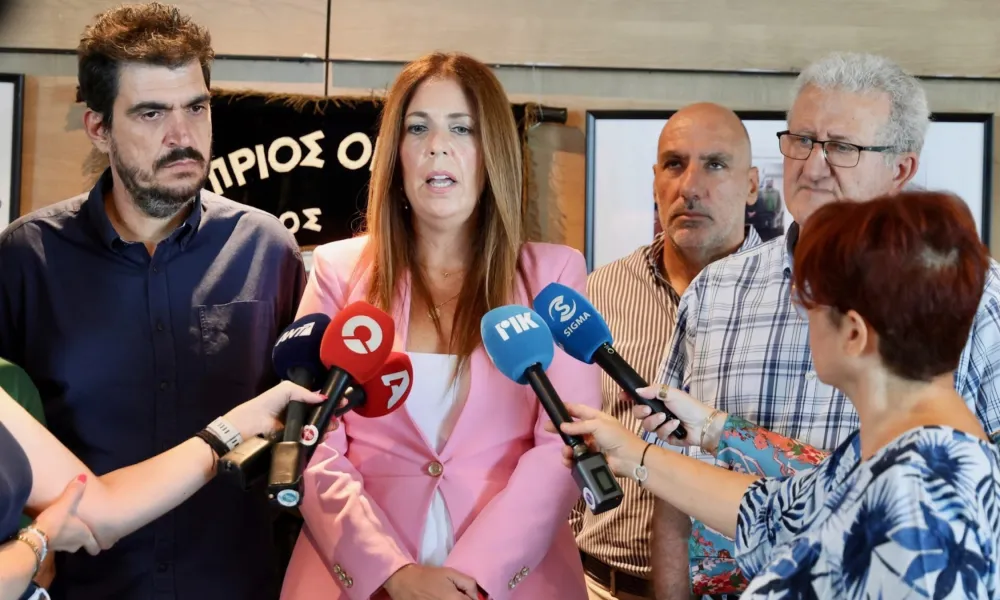
Education Minister Athena Michaelidou, however, described the decision to protest as “completely misguided” and told Politis that the ministry would not tolerate “blackmail”.
‘Protest is completely misguided’
Michaelidou rejected allegations that the ministry has been delaying the process and said an updated proposal will be submitted to the teachers’ unions within the coming days and, in any event, before the scheduled protest.
“I consider it completely misguided for them to come at this point and announce a protest,” she said.
She stressed that the updated proposal was already being prepared and that its submission was not being accelerated because of the unions’ announcement.
According to Michaelidou, consultations followed the submission of the ministry’s first working document at the end of July, during which the ministry listened to the positions presented by the unions.
The Education Ministry is now consulting the Legal Service over which changes can be incorporated into its revised proposal.
Michaelidou also indicated that the ministry is prepared to move away from some of its original positions.
“We are ready to make changes which will, to a large extent, satisfy the demands of the teachers’ organisations,” she said.
She stressed, however, that any changes must be legally sound and receive the approval of the Legal Service, as amendments to the legislation raise legal questions and affect individuals with a legitimate interest.
“We will not do anything illegal, but we will not tolerate blackmail,” she said.
Unions remain unconvinced
POED, OELMEK and OLTEK argue that the 29 July working document and subsequent verbal statements do not constitute a comprehensive proposal offering specific safeguards.
Central to their concerns is the employment future of teachers who have served in public schools for years, particularly those employed on indefinite-term contracts.
“It is unacceptable to consider their service necessary for schools to operate, but insufficient when it comes to safeguarding their employment future,” the unions said.
They also rejected the suggestion that placing affected teachers in a “temporary mechanism for covering emergency needs” would in itself secure their employment prospects.
“General assurances convince no one,” they said.
The unions are also warning of potential staffing problems in public schools from 2027 onwards, arguing that the proposed arrangements could create new distortions rather than resolve existing ones.
Michaelidou says current system cannot continue
Despite the disagreement, the Education Minister insists that the existing appointment system cannot remain unchanged.
“You cannot appoint someone to education with the sole criterion being the date on which they obtained their degree,” Michaelidou said.
The dispute centres on how the appointment system can be reformed while protecting the employment prospects of teachers who have accumulated years of service under the existing arrangements.
Next steps remain uncertain
The first joint protest is scheduled for 8 October at 5pm and, if held as announced, will not affect the operation of schools.
What follows, however, remains uncertain.
On 5 October, the three unions will hold a joint press conference at which they intend to present the “framework for their next actions”.
They have also indicated that further measures could be announced in the coming days.
With both sides now increasing pressure, attention turns to the Education Ministry’s revised proposal and whether it can narrow the differences before the planned demonstration or instead trigger a further escalation in the dispute.