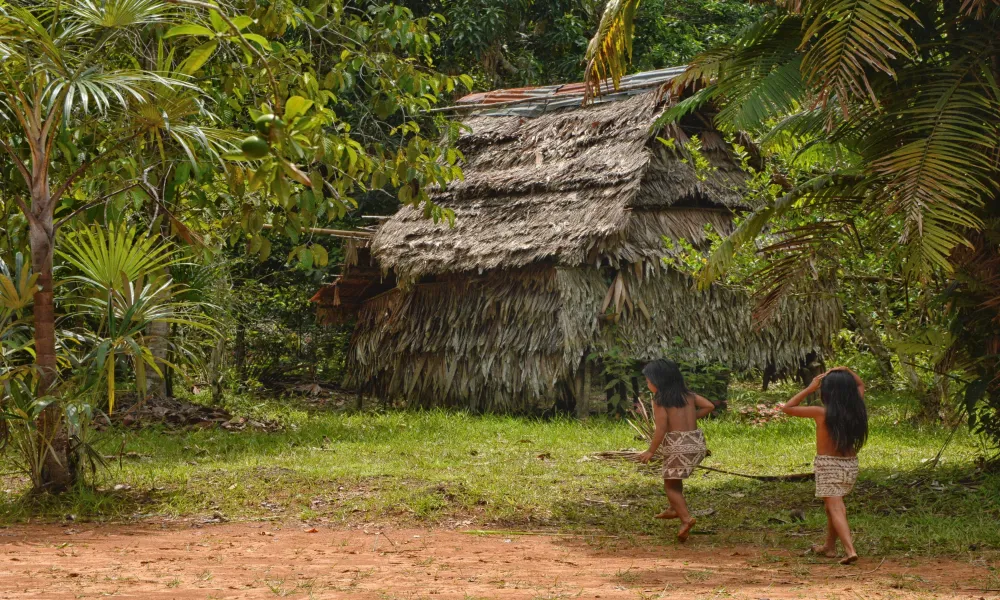

The sudden appearance of members of an isolated Indigenous community in Brazil has raised concerns among Indigenous rights groups and government officials about the future of one of the world's most vulnerable peoples.
According to the non-governmental organisation Survival International, around 20 members of the Awá tribe, who live in voluntary isolation in the Amazon rainforest, emerged on November 16 at a village inside the protected Arariboia Indigenous Territory in the northeastern state of Maranhão.
There, they made contact with members of the Guajajara Indigenous people and representatives of a government team in what campaigners described as a rare and significant encounter.
Residents reportedly welcomed the group and offered them food. According to Survival International, the Awá specifically requested sweet potatoes, which they took with them before returning to the forest.
Videos capture rare encounter
Videos released by Survival International show men, women and children standing at the edge of the forest, partially obscured by dense vegetation.
Some of the men are carrying bows and long arrows, while members of the group are also seen wearing traditional necklaces.
What alarmed local residents most, however, was not the unexpected appearance itself but the apparent physical condition of some members of the group.
İlk kez oluyor... Brezilya’nın Maranhão eyaletinde dış dünyayla temas kurmayan yaklaşık 20 Awá yerlisi bir hükümet ekibine yaklaşarak yiyecek istedi. Amazon’da izole yaşayan yerli topluluklar, son yıllarda yasa dışı madencilik, ağaç kesimi, avcılık ve hayvancılık faaliyetlerinin baskısı altında. Survival International Direktörü Caroline Pearce, Awáların topraklarına dört bir yandan girildiğini ve grubun giderek daralan bir orman alanına sıkıştığını söyledi.
— Odak TV (@OdakTV1) November 18, 2026
Coapima, an organisation representing Indigenous communities in Maranhão, reported visible signs of severe malnutrition, particularly among children and older members of the tribe.
A new video has emerged showing members of the isolated Awa tribe who live in the remote part of Brazil’s Amazon forest. The group ventured out of the forest and accepted food as aid workers raise concerns about the dangers posed by illegal loggers and hunters. https://t.co/h8UrlQfdoA
— Al Jazeera English (@AJEnglish) November 18, 2026
The organisation also warned that contact with outsiders could pose serious health risks because isolated Indigenous populations may have little immunity to infectious diseases common in the outside world.
A ancestralidade presente! Não há palavras que expressem a riqueza desse momento: 15 indígenas da etnia Awá-Guajá (povo isolado) foram avistados dentro da Terra Indígena Arariboia, no Maranhão. São muitas as ameaças contra eles. A @funaioficial oficial tenta protegê-los. Força! https://t.co/9W0BtceGZA
— André Trigueiro (@andretrig) November 17, 2026
Brazil's Indigenous affairs agency, Funai, told AFP that specialist teams are monitoring the situation and assessing information regarding the group's health.
Forest destruction threatens their existence
The Awá traditionally rely on hunting, gathering and forest resources for survival.
However, campaigners say illegal logging, hunting and the expansion of cattle ranching continue to reduce the forest on which they depend.
Indigenous rights organisations fear the group's appearance outside the forest may be linked to growing difficulties in finding food, although the precise reasons for their movement remain unclear.
Caroline Pearce, director of Survival International, described the development as an alarming sign of the impact that continued encroachment on Indigenous lands is having on isolated communities.
She said the Awá are increasingly confined to shrinking areas of rainforest surrounded by territory that has already been heavily degraded.
Forest Guardians on the front line
The protected Arariboia territory is home to the Forest Guardians, members of the Guajajara people who patrol the region in an effort to prevent illegal activities on Indigenous land.
The group has repeatedly warned that deforestation, fires, climate change and land invasions threaten both their community and isolated Awá groups.
According to Survival International, several Forest Guardians have been killed over the years while trying to defend the rainforest.
The organisation estimates that around 196 Indigenous peoples and groups worldwide continue to live in voluntary isolation across 10 countries.
More than 90 per cent are believed to live in the Amazon basin, primarily in Brazil, while other isolated communities are found in countries including Indonesia and India.
The appearance of the Awá has renewed calls for stronger protection of Indigenous territories and highlighted the risks isolated communities face when environmental destruction pushes them into contact with the outside world.
Source: AFP