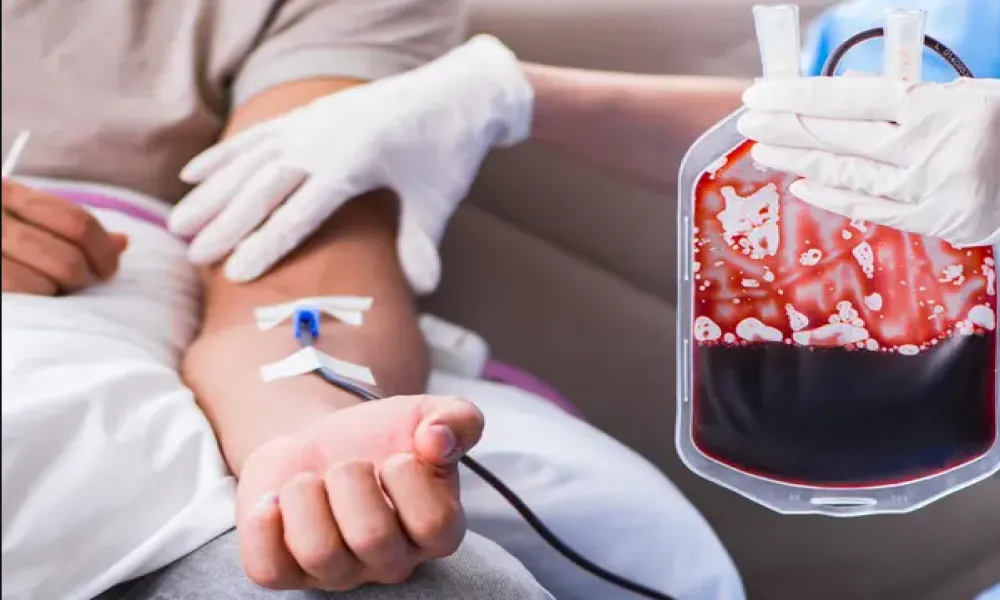

Efforts to address blood shortages in Cyprus are increasingly focusing on three priorities: attracting more donors, reducing the need for transfusions and making better use of every unit of blood collected.
The proposals and developments were presented to the House Health Committee, where officials and stakeholders stressed that increasing blood donations alone will not be sufficient to meet future needs. Blood conservation measures are now being given equal importance.
Incentives under consideration for blood donors
A range of non-financial incentives is being discussed to encourage both new and existing voluntary blood donors.
Proposals include:
- Graduated reductions in vehicle road tax based on donation frequency.
- Free or discounted public transport.
- Parking benefits.
- Priority access to selected public services.
- Access to cultural and sporting facilities.
- A digital blood donor card.
- Extended donation centre opening hours.
The measures remain at the discussion stage and would require coordination among government departments and, in some cases, legislative changes.
Additional suggestions include operating donation centres from 7.30am to 8pm, increasing the number of mobile donation units and reducing unnecessary exclusions of prospective donors.
Two treatments could reduce transfusion needs
Significant developments were also reported in the treatment of thalassemia.
According to Health Insurance Organisation (HIO) representative Panayiotis Petrou, a tablet treatment capable of reducing the need for blood transfusions has been available for the past six months through an early access programme for eligible patients.
A second medication, which patients had been awaiting, completed its pricing process on Wednesday. Individual applications can now be submitted to the HIO, while procedures for inclusion in the GeSY reimbursement list are expected to follow.
Dr Sotiroula Christou, a physician at the Makarios Hospital Thalassemia Clinic, said such treatments can increase haemoglobin levels in suitable patients and reduce the frequency of transfusions.
Blood recovery techniques highlighted
The committee also discussed surgical techniques that allow blood lost during an operation to be collected, processed and returned to the same patient.
Petrou highlighted the need for such procedures to be formally recognised and reimbursed.
Marios Karaiskakis, president of the Pancyprian Association of Private Hospitals (PASIN), said consumable materials for the procedure cost approximately €600 per case and are currently not reimbursed. He estimated that the technique can save an average of four units of blood per patient.
Karaiskakis also called for an electronic monitoring system allowing hospitals to track available blood units more effectively and identify supplies that remain unused while urgently needed elsewhere.
Staffing shortages remain a challenge
Andri Panayiotou, head of the Blood Centre, said increased staffing remains essential.
She noted that all-day operation of the Limassol blood donation centre currently relies on more than 100 hours of overtime each month, while similar service expansions are not currently possible in Larnaca, Famagusta and Paphos because of personnel shortages.
Although blood donations have increased, demand for blood products has also risen.
Focus on recruiting younger donors
Miltos Miltiadou, president of both OSAK and the Pancyprian Thalassaemia Association, relayed concerns from thalassaemia patients about the uncertainty and hardship caused by blood shortages.
He called for immediate reinforcement of the Blood Centre and a more systematic effort to engage younger generations.
Panayiotis Zezos, a member of the Thalassemia Council, argued that incentives alone are insufficient if younger people do not understand the importance of blood donation.
He suggested that patients themselves should visit schools and speak directly to students about the impact of blood donation, even during school breaks.