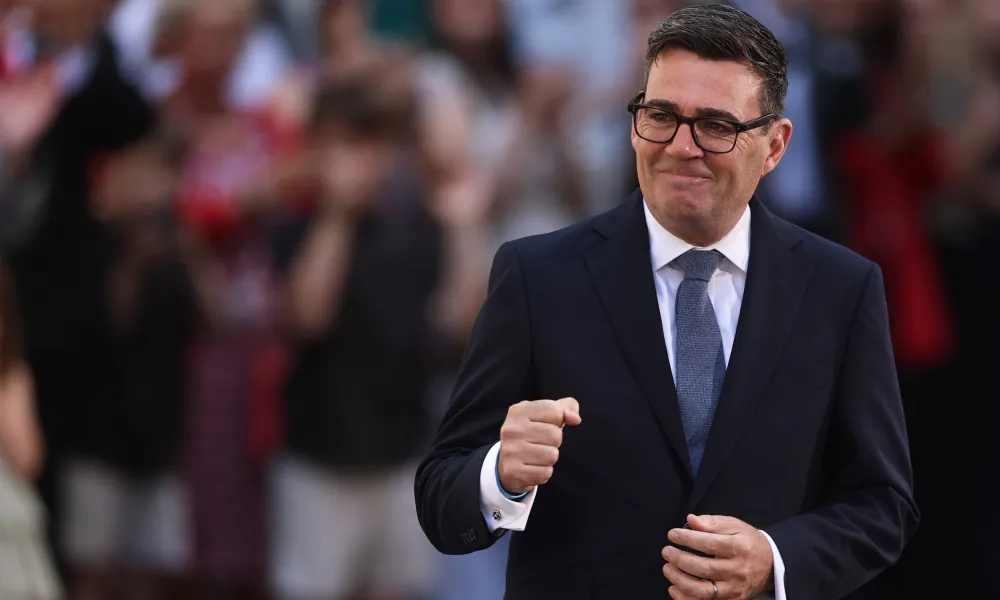

Andy Burnham has become Britain's seventh prime minister in a decade, taking over from Keir Starmer, who resigned two years after leading Labour to a large parliamentary majority. Burnham was elected Labour leader unopposed on Friday, and the final formal step took place on Monday when Starmer met King Charles at Buckingham Palace to tender his resignation before Burnham was received by the king and accepted his invitation to form a government.
Speaking outside Downing Street shortly afterwards, Burnham said he was conscious of being the seventh prime minister since 2016, calling the moment one for reflection and renewed resolve. He said Britain needed to show the world it could regain its stability, describing the moment as a chance to bring forward the biggest changes the country has seen in 40 years, spanning both its political and economic model. He closed his remarks by saying he wanted to put people's care at the heart of everything he does, and that he would give the role everything he has.
Burnham said his very first act as prime minister would be issuing an instruction aimed at ending rough sleeping in the country. He also set out early plans to use public procurement to reindustrialise Britain, and said he would bring forward a ten-year plan for the country later this year. On the cost of living, he said he intends to give people some breathing space and will detail specific measures, including how they will be funded, starting Tuesday.
Since returning to parliament in June, Burnham has laid out several policy priorities. He has promised what he calls the biggest rebalancing of power in Britain's history, aimed at reducing the dominance of Whitehall over the country's regions. On industry, he wants to rebuild domestic manufacturing capacity in sectors including steel, defence, energy and farming. On education, he has said he wants greater parity between academic and technical qualifications, with more emphasis on apprenticeships. On housing, he has pledged the largest social housing building programme since the post-war period. On tax, he has committed to sticking with Labour's existing fiscal rules and its manifesto pledge not to raise taxes on working people.
Burnham's first major decision will be the makeup of his cabinet, particularly his choice of finance minister, a relationship whose breakdown has undone previous governments. Energy and net zero minister Ed Miliband had been seen as an early frontrunner for the post, though interior minister Shabana Mahmood now appears the favourite. Burnham has asked his party to disregard speculation on the matter, saying no final decisions have been made.
The Ukrainian flag flew over Downing Street as the handover took place. In his farewell remarks, Starmer referenced the war in Ukraine directly, warning that Britain's adversaries would stop at nothing to divide the country over its values and its support for Ukraine, a remark that underscored the international pressures his successor now inherits.
Source: Reuters