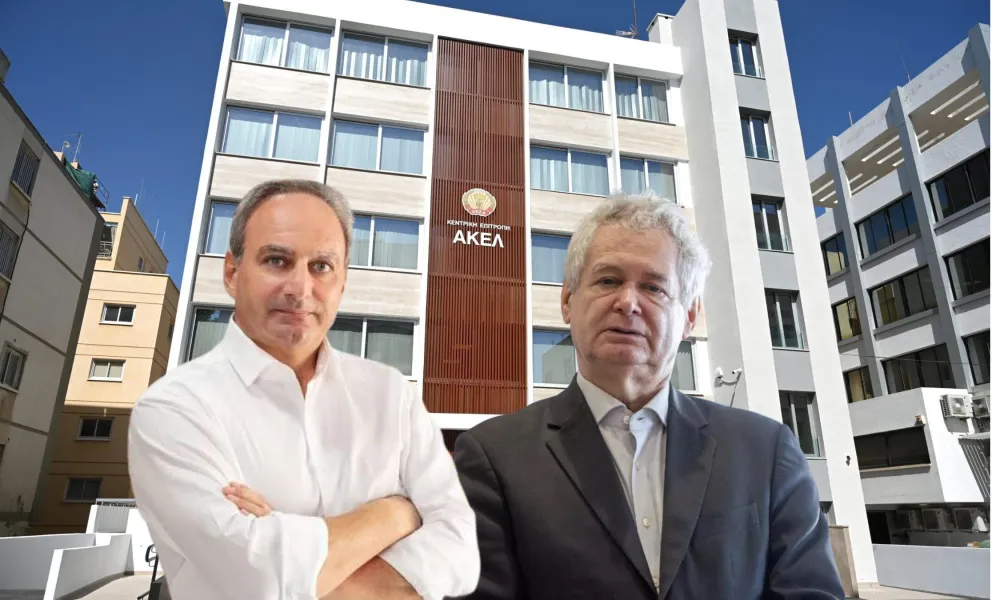

August will certainly be a month of holidays for most Akel officials. September, however, will mark the starting gun for the party's process ahead of the presidential election. Discussion will begin within its collective bodies over Akel's candidate, and specific names are expected to be put on the table. This time, the Left wants to avoid the long delay that marked the search for a candidate in the previous two election cycles, which left little time for campaigning. Akel officials expect everything to be settled by March 2027 at the latest.
Momentum
The parliamentary election concluded on Sunday 24 May, but Akel has not eased off. On the contrary, it continues at an intensive pace to engage with citizens and organised groups in workplaces and at regional events, sending the message that voters "are not remembered only when there's an election." It is clear the Left is trying to keep alive the momentum generated at the ballot box.
On the night of the parliamentary election, Akel General Secretary Stefanos Stefanou delivered his most celebratory speech yet. The tone and intensity in Stefanou's voice reflected the great joy of an unexpected electoral win. The party's decade-long decline in the polls was halted. Akel was also the only one of the traditional parties to increase both its percentage and the absolute number of votes it received. Encouraged by the result, Stefanou said a new page had opened for Cyprus, promising that Akel would bring change, a statement that pointed ahead to the 2028 presidential election.
Starting from zero
A party source told Politis that discussion of the presidential election would start from zero, with no names ruled out. The source noted that the profile of Akel's presidential candidate would be shaped by today's political conditions. The candidate would need to be a figure with progressive credentials, able to forcefully promote the policy proposals under Akel's "social agenda," including the cost of living, the housing crisis and labour rights. They would also need to inspire public trust in an environment marked by disillusionment and a widespread sense of corruption.
The Akel candidate would also need to hold positions on the Cyprus problem consistent with the party's own, and to carry social and political weight, meaning the ability to appeal to as many as possible of the roughly 300,000 citizens currently unrepresented in parliament. Most important of all, the candidate would need to be electable against a candidacy from Nikos Christodoulides and Disy's own chosen candidate. This, of course, will become clearer through the autumn's polling, which will be decisive for the parties' decisions.
The political landscape
Akel's decision on its presidential candidate will also depend on the scope for cooperation with other parties. The Left does not consider an alliance with Diko likely, given that it sits in the governing coalition and is flirting with Disy. It does, however, consider cooperation feasible with the other coalition partners, Edek and Dipa, and efforts appear likely toward such an alliance.
Cooperation with Volt and other forces of the extra-parliamentary opposition looks more straightforward. Also in the picture is the Ecologists Movement-Citizens' Cooperation, which will elect new leadership in the autumn, at which point its political direction will become clearer. A major open question remains the stance Alma will take, after the movement's MP Eirini Charalambidou recently said it should run independently in the presidential election. There are also the presidential ambitions of the movement's leader, Odysseas Michaelides, though these were weakened by the party's single-digit result in the parliamentary election.
The 24 May ballot reshaped the political landscape. Also part of the new party landscape is Fidias Panayiotou's Direct Democracy of Cyprus, a party that backed Annita Demetriou for the presidency of parliament. This was the MEP's party's first political act, and one that sends certain signals for the presidential election too.
A candidate from within Akel?
Akel officials may maintain that discussion within the party over a suitable candidate will start from zero, but certain facts are already on the table. First among them, the scenario of a candidacy by party General Secretary Stefanos Stefanou will be discussed, and this time there is cautious optimism.
In a recent interview with Kathimerini, Stefanou did not rule out an Akel candidacy in the presidential election, stressing that it would depend on whether he would be electable. Asked to comment on Stefanou's remarks, a party official told Politis that a considerable number of party members are pushing in that direction. The election result, the official said, boosted confidence within Akel, while Stefanou's own standing was strengthened during the campaign.
Akel has contested the presidential election with a party candidate only once. That was in 2008, with Demetris Christofias, who had placed the Cyprus problem at the centre of his campaign. Conditions today are not so different from 2008, with the Cyprus problem once again at a highly critical and decisive juncture. On every other occasion, the Left pursued a strategy of backing a Centrist figure. The logic behind that strategy is that the Left does not command a majority on its own, and therefore needs votes beyond Akel's own base. The party won 23.9% in the parliamentary election, while a presidential candidate needs more than 50% of valid votes. In Cyprus, an Akel official stressed emphatically, 40% of the electorate identifies with the Left and the remaining 60% with the Right.
The split on the Right, however, with Nikos Christodoulides' candidacy on one side and Disy's own candidacy on the other, creates favourable conditions for the Left. There is also the fact that a right-wing politician has occupied the Presidential Palace for a number of years now. By 2028, that will mean 20 years of right-wing governance, a span that often produces political fatigue and pushes the electorate toward other options, in the hope of bringing about change.
Andreas Mavroyiannis
Discussion within Akel over a suitable candidate will certainly include the name of Andreas Mavroyiannis, the Left's candidate in 2023. He is a figure with access to the Centre-Right and a wide range of contacts across the political spectrum, owing to his long career in the diplomatic service. He served as the Greek Cypriot negotiator on the Cyprus problem and knows the issue as few others in Cyprus do. Mavroyiannis' experience and knowledge would represent a significant comparative advantage, particularly if there are major developments on the Cyprus problem.
In the previous presidential election, Mavroyiannis advanced to the second round with relative ease, ahead of the candidacies of Averof Neophytou and Nikos Christodoulides. In the second round, however, he lost by a narrow margin. Christodoulides prevailed by 15,532 votes. This time, Mavroyiannis would carry the political experience of 2023 into the race, meaning his campaign would likely be considerably stronger.
In the meantime, Mavroyiannis has kept his political presence alive, issuing a written statement during the parliamentary election in which he aligned himself with Akel. Even so, some voices within Akel are expected to speak out against a Mavroyiannis candidacy. Some believe the party should not repeat the Stavros Malas model, who ran as the Left's candidate for a second time without a positive result.