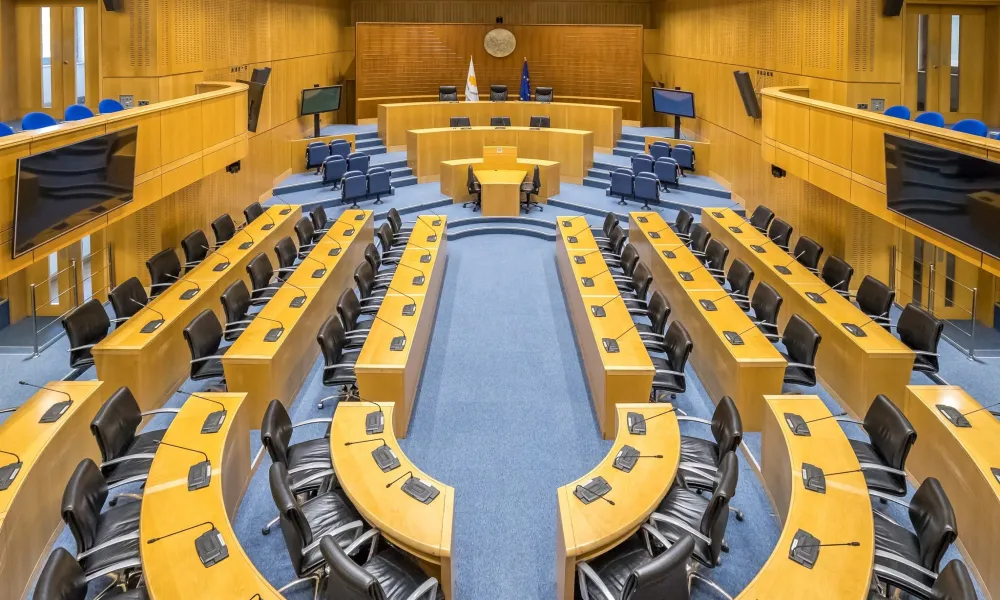

The Legal Service has raised concerns about a bill that would extend MPs' protection from defamation claims to public statements made outside the House of Representatives. It warns that the measure could be abused and questions whether it is compatible with rights protected by the Constitution.
What the bill proposes
The Legal Service set out its views in an information note circulated to help explain the issue. The bill is being discussed by the House Institutions Committee.
It would create a special defence for public statements made by MPs outside the House, as long as they have any connection to "parliamentary work".
According to the Legal Service, the bill interprets "parliamentary work" broadly. This creates a risk that the protection could reach beyond the purpose it was designed for.
Against the international trend
The Legal Service also notes that the bill goes against the international trend of limiting parliamentary privileges. Under that trend, privileges should not go beyond what MPs need to carry out their parliamentary duties.
In support, it refers to texts from the Council of Europe, the Venice Commission and GRECO.
Existing legal protections
Under Article 83 of the Constitution, MPs are already protected for any opinion they express or vote they cast in the House.
The Civil Wrongs Law also protects statements, acts and publications made in the House, and any reproduction of or reference to them. Fair comment on matters of public interest is also already available as a defence.
"Introducing a more specific provision with vague concepts may create overlaps with existing provisions and uncertainty as to which protection applies and in which cases," the Legal Service states.
Equality before the law
According to the note, the bill also raises questions about equality before the law, which is guaranteed by Article 28 of the Constitution.
The note questions whether extra, specialised protection can be justified for MPs alone, compared with other state officials and ordinary citizens.
Access to justice
The Legal Service also raises concerns about the right of access to justice, which is guaranteed by Article 30 of the Constitution.
It notes the principles and case law of the European Court of Human Rights. Under these, provisions on MPs' immunity or privileges must not be so disproportionate that they make it harder for people to go to court, or make it impossible for them to obtain a remedy in practice.
Summary of concerns
In summary, the Legal Service says its concerns mainly relate to the "broad and undefined scope of the proposed provision", which creates a risk that MPs' legal protection could be abused.
It also raises questions about whether the bill is compatible with the Constitution. This applies in particular to equality before the law under Article 28 and the right of access to justice under Article 30.
The information note is not an official announcement by the Legal Service. It was circulated only to inform and to explain the issues under discussion.
Source: CNA